
3M Window Film Installation in Bensenville & Rosemont, IL gives drivers a way to reduce glare, block much of the UV light entering through vehicle glass, manage solar heat, and choose a tint shade that fits their vehicle. For drivers who spend time around O’Hare, I-90, I-294, Mannheim Road, Irving Park Road, and nearby suburban routes, sunlight through the side and rear glass can become noticeable during long commutes and summer driving.
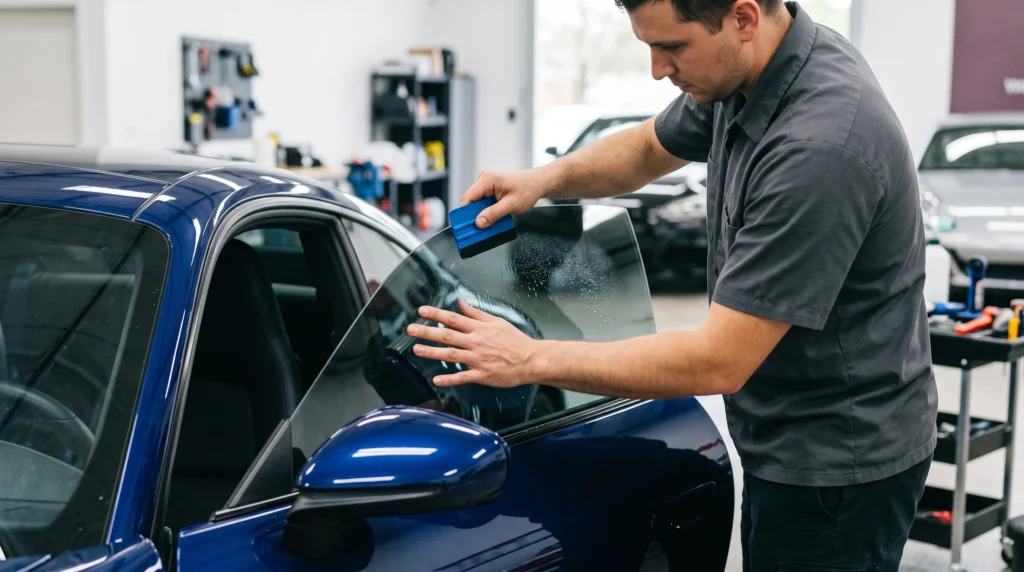
The film you choose matters, but so does the installation. Automotive glass has curves, seals, defroster lines, trim, sensors, and tight borders that require careful preparation and film placement. A clean indoor setting also helps limit dust and debris during the work.
The Detail Dynasty provides professional window tint installation from its dedicated garage in Skokie, IL & Chicago’s North Shore, serving vehicle owners from Bensenville, Rosemont, and surrounding Chicagoland communities.
If you are looking for 3M Window Film Installation in Bensenville & Rosemont, IL, call (773) 216-3104 or use the contact page to ask about current film choices and appointment availability.
Table of Contents
- What Is 3M Automotive Window Film?
- Why Drivers in Bensenville and Rosemont Choose Window Film
- How 3M Window Film Helps With UV Exposure
- How Window Film Can Reduce Glare
- Understanding Solar Heat Rejection
- 3M Crystalline Window Film
- 3M Ceramic IR Window Film
- 3M Color Stable Window Film
- Does Darker Tint Mean Better Heat Control?
- Understanding VLT Before Choosing Tint
- Why Existing Vehicle Glass Matters
- Why Professional 3M Window Film Installation Matters
- Window Tint for Daily Driving Near O’Hare
- Choosing Film for Your Vehicle
- Window Tint and Illinois Law
- Schedule 3M Window Film Installation
- Frequently Asked Questions
- Sources
What Is 3M Automotive Window Film?
Automotive window film is a thin material applied to the inside surface of vehicle glass.
Depending on the product selected, film can change how much visible light passes through the glass while also reducing glare, UV transmission, solar energy, or infrared energy.
3M currently offers several automotive window film families, including Crystalline Series, Ceramic IR Series, and Color Stable Series.
Each film has its own shade range and performance figures.
That is why shopping for 3M Window Film Installation in Bensenville & Rosemont, IL should involve more than asking for “dark tint.”
A driver who wants a darker appearance may choose differently from someone who cares mostly about cabin heat or UV exposure.
Before selecting film, think about what you want to change when you are sitting inside the vehicle.
Why Drivers in Bensenville and Rosemont Choose Window Film
Bensenville and Rosemont sit near some of the busiest roads and transportation areas in the Chicago region.
Drivers around O’Hare International Airport may spend plenty of time in slow traffic, exposed parking areas, airport access roads, and expressway lanes.
Bright sunlight coming through the driver’s or passenger’s side glass can create glare during certain parts of the day.
Window film can help address several concerns at once.
Drivers often look at automotive tint for:
- Reduced visible glare
- Lower UV transmission through filmed glass
- Solar heat control
- More privacy
- A darker exterior appearance
- A more consistent look between different windows
- Less direct sunlight reaching seats and interior trim
The right product depends on which of these matters most to you.
If you regularly commute between Bensenville, Rosemont, Chicago, and nearby suburbs, choosing film based on your actual driving habits can make more sense than selecting a shade based only on a photo.
How 3M Window Film Helps With UV Exposure
Ultraviolet light is one reason vehicle owners consider automotive window film.
3M says its current automotive window film lineup can block up to 99.9% of UV rays, depending on the film.
Its August 2025 technical data for Crystalline Series lists 99.9% UV block for several Crystalline CR BLK film levels when tested on the referenced automotive glass.
UV exposure can contribute to fading and wear on vehicle interior materials over time.
Film can reduce the amount of UV light that passes through treated glass.
That does not mean tint stops every cause of interior aging. Heat, cleaning methods, normal use, moisture, and other forms of exposure can still affect seats, dashboards, trim, and upholstery.
Still, if reducing UV transmission is one of your reasons for tinting, ask about the published UV rating of the exact film being considered.
How Window Film Can Reduce Glare
Glare can become tiring when bright light enters through the side or rear windows.
The amount of glare reduction varies with the film and shade.
Darker films generally reduce more visible light than lighter films within the same product family.
3M’s current Crystalline Series technical data shows this difference.
On the automotive glass used for its published testing, Crystalline CR BLK 30 lists a 61% glare reduction, while CR BLK 35 lists a 55% glare reduction.
Those numbers are tied to the manufacturer’s testing setup and should not be treated as a promise that every vehicle will produce the exact same finished reading.
What they show is that tint shade and glare reduction are related.
If bright afternoon light is a problem during your commute through Bensenville or Rosemont, ask to compare tint levels from inside the vehicle before choosing.
Understanding Solar Heat Rejection
Window film can also change how much solar energy passes through vehicle glass.
One common measurement is Total Solar Energy Rejected, often shortened to TSER.
TSER looks at the portion of total solar energy rejected by the glass-and-film system used for the test.
3M currently states that its Crystalline Series can reject up to 64% of total solar energy.
The company states that Ceramic IR Series can reject up to 66% of total solar energy, depending on film selection and testing conditions.
These figures should be read alongside the tint shade and testing information.
A very dark-looking film is not automatically the film with the strongest solar heat performance.
That distinction can help Bensenville and Rosemont drivers who want less heat through the glass without making every window extremely dark.
3M Crystalline Window Film
3M Crystalline Series is designed around a multilayer optical film construction.
3M says the film uses more than 200 layers in material thinner than a Post-it Note.
The current 3M product page states that Crystalline Series can reject up to:
- 64% of total solar energy
- 99% of infrared rays under the specified IRR measurement
- 99.9% of UV rays
3M also describes the film as non-metalized.
That can matter in vehicles that rely on mobile devices, GPS, satellite radio, and other electronic signals.
The August 2025 Crystalline technical data sheet lists several tint levels, allowing vehicle owners to compare visible light transmission with solar, infrared, UV, and glare figures.
For 3M Window Film Installation in Bensenville & Rosemont, IL, Crystalline may be worth discussing if heat control is high on your list and you do not want to judge the film solely by darkness.
3M Ceramic IR Window Film
3M Ceramic IR Series uses nano-ceramic film technology.
3M currently states that the series can reject up to 66% of total solar energy and up to 95% of infrared rays, depending on the selected film and referenced measurement.
Ceramic IR is also non-metalized.
According to 3M, that construction is designed so the film does not interfere with mobile devices, GPS, satellite radio, or 5G signals.
This can make ceramic film appealing for newer vehicles with a large amount of onboard technology.
Ceramic IR comes in different visible light levels, so drivers can compare lighter and darker shades without assuming there is only one ceramic tint appearance.
If you want to learn about film choices for your car, The Detail Dynasty’s window tint service page is a useful place to start.
3M Color Stable Window Film
3M also offers Color Stable Series.
The current 3M product page says Color Stable uses ceramic nanoparticles along with dye technology designed for a stable charcoal appearance.
3M states that current Color Stable film can reject up to 64% of total solar energy, depending on film choice and testing conditions.
The series is also non-metallized.
Different VLT choices allow owners to select how light or dark they want the vehicle to appear while comparing the performance data for each film.
This type of choice can be useful for drivers who care about appearance, glare, privacy, and solar performance at the same time.
Does Darker Tint Mean Better Heat Control?
Not always.
This is one of the biggest misunderstandings around automotive tint.
Darkness describes how much visible light passes through the window.
Heat performance is measured differently.
A very dark tint will reduce visible light, but a lighter film with stronger solar or infrared performance can perform differently than a darker film from another product line.
Here is what matters when comparing 3M Window Film Installation in Bensenville & Rosemont, IL:
- VLT tells you about visible light
- Glare reduction tells you how much visible glare is reduced
- UV rejection concerns ultraviolet transmission
- TSER concerns total solar energy
- IRR and IRER concern infrared energy using defined test ranges
Do not choose a film based on one number unless that number matches your main concern.
Understanding VLT Before Choosing Tint
VLT stands for Visible Light Transmission.
A higher VLT allows more visible light through.
A lower VLT allows less visible light through and looks darker.
For a simple comparison:
- 50% is lighter than 35%
- 35% is lighter than 20%
- 20% is lighter than 15%
- 15% is much darker than 50%
VLT becomes especially relevant in Illinois because state tint law sets light-transmission rules for certain vehicle windows.
The percentage listed for film by itself may not always equal the finished VLT once the film is installed on automotive glass.
That brings us to another part of choosing tint.
Why Existing Vehicle Glass Matters
Vehicle glass is not always perfectly clear before tint is installed.
Factory glass itself can reduce some visible light.
SUVs, trucks, vans, and crossovers may also have factory privacy glass behind the driver.
When aftermarket film is placed over existing glass, the combined light-transmission reading can differ from the film label by itself.
This is why it helps to have an installer examine the vehicle before deciding which film fits your desired result.
Tell the shop if:
- The vehicle already has aftermarket tint
- The rear glass is factory darkened
- Tint was installed by a previous owner
- You want the front and rear glass to look similar
- You are trying to stay near a legal VLT threshold
The finished glass matters more than a shade name alone.
Why Professional 3M Window Film Installation Matters
Film selection is only half of the job.
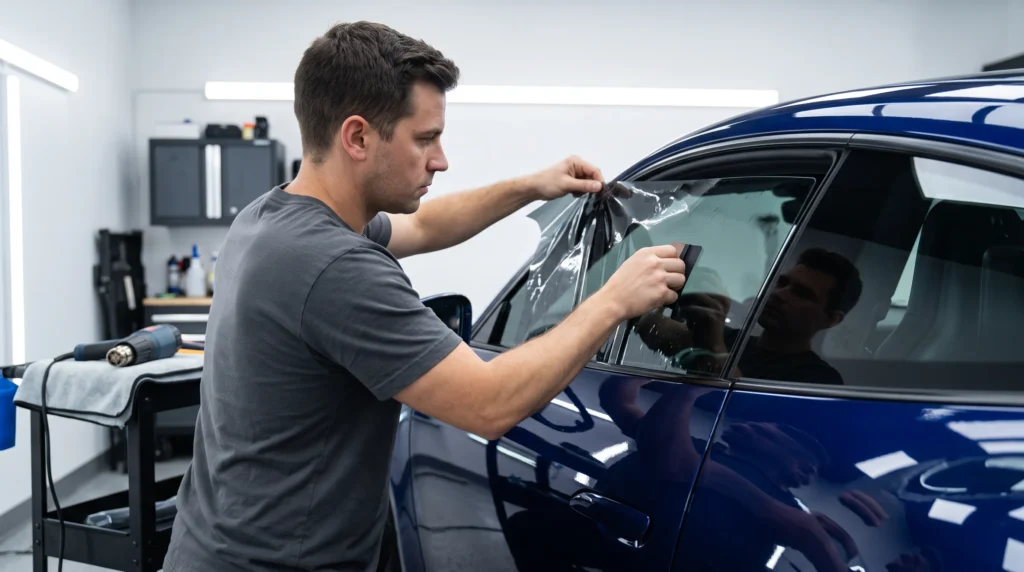
Automotive window tint needs to be fitted to curved glass and finished around seals, borders, defroster lines, and other features.
Preparation matters too.
Dust, hair, dirt, or debris trapped between the film and glass can remain visible after installation.
The rear window presents another challenge because it commonly contains defroster lines and has a broad curved surface.
Professional installation gives the technician a chance to clean the glass thoroughly, shape the film, position it, remove installation solution, and inspect the finished window.
3M’s current United States automotive film pages direct vehicle owners to 3M Authorized Dealers for professional installation.
If receiving a certain 3M product or manufacturer-backed warranty is part of your decision, confirm the exact film, current installer status, and warranty terms with the shop before scheduling.
The Detail Dynasty works from a dedicated garage facility in Skokie, IL & Chicago’s North Shore, giving installers an indoor setting for vehicle preparation and film installation.
Window Tint for Daily Driving Near O’Hare
Bensenville and Rosemont drivers have a particular mix of local driving conditions.
Trips may include:
- O’Hare access roads
- I-90
- I-294
- Mannheim Road
- Irving Park Road
- Airport parking areas
- Hotel and convention traffic
- Daily trips into Chicago
Drivers may spend long periods surrounded by reflective pavement, vehicle glass, buildings, and bright afternoon sunlight.
This can make glare and direct sunlight through the side windows noticeable.
For someone who spends plenty of time behind the wheel, the better film choice may not be the darkest one.
Think about daytime glare and nighttime visibility together.
A shade that feels comfortable during a bright afternoon should still work for you when driving through a dark parking structure or a poorly lit street.
Choosing Film for Your Vehicle
Start with the reason you want window film.
If Glare Is Your Main Concern
Compare the glare-reduction figures and VLT levels.
A darker shade will generally reduce more visible light, but think about nighttime visibility before deciding.
If Heat Is Your Main Concern
Compare TSER and infrared figures rather than shade alone.
3M’s Crystalline and Ceramic IR lines are examples of films where solar and infrared performance can be compared separately from tint darkness.
If UV Exposure Is Your Main Concern
Ask for the UV rejection specification for the exact product.
3M states that its automotive window film lineup can block up to 99.9% of UV rays.
If Privacy Is Your Main Concern
A darker film will generally make it harder to see into a vehicle during daylight.
Keep Illinois tint rules in mind before choosing a darker shade for front side glass.
If Appearance Is Your Main Concern
Look at film samples on actual glass when possible.
A shade can look different depending on the vehicle’s interior color, factory glass, body color, weather, and lighting.
Window Tint and Illinois Law
Illinois sets rules for windshield and side-window tint.
Under the current Illinois Vehicle Code, the front windshield generally cannot have full-film tint under the ordinary rule. A nonreflective strip may be placed along the upper portion of the windshield if it extends no more than six inches down from the top.
For the windows immediately beside the driver, Illinois provides two common aftermarket configurations.
One allows at least:
- 50% light transmission on the front side windows
- 30% light transmission on treated rear windows
The other allows at least:
- 35% light transmission on the front side windows
- 35% light transmission on treated rear windows
There is also a provision addressing vehicles with rear smoked or tinted glass installed by the manufacturer.
Window tint laws can change, so check the current Illinois Vehicle Code when planning an installation.
Tell your installer that legal light transmission matters to you before choosing the film.
Schedule 3M Window Film Installation
3M Window Film Installation in Bensenville & Rosemont, IL gives vehicle owners several ways to approach tint.
You may want less glare during an airport commute.
You may want to reduce UV transmission.
You may want solar heat control without choosing extremely dark glass.
Or you may simply want the side and rear windows to have a cleaner, more consistent appearance.
The best starting point is to compare film based on your vehicle and driving habits.
The Detail Dynasty provides automotive window tint from its dedicated facility at 5050 Dempster St, Skokie, IL 60077, in Skokie, IL & Chicago’s North Shore, serving drivers from Bensenville, Rosemont, and surrounding Chicagoland areas.
Tesla owners can also review the shop’s Tesla window tint service.
If you want to ask about current 3M film availability, tint shades, glass coverage, or scheduling, call (773) 216-3104 or use the contact form.
Frequently Asked Questions
1. What does 3M Window Film Installation in Bensenville & Rosemont, IL help with?
Depending on the film chosen, 3M automotive window film can reduce visible glare, reject solar energy, reduce infrared energy, block much of the UV light passing through filmed glass, and change the appearance of the vehicle. Performance varies by film and shade.
2. Does 3M window tint block UV rays?
Yes. 3M states that its automotive window films can block up to 99.9% of UV rays. Its current Crystalline technical data lists 99.9% UV block for several film levels under the manufacturer’s referenced test conditions.
3. Does darker 3M tint always block more heat?
No. Tint darkness and heat rejection are different measurements. A darker film reduces more visible light, while TSER and infrared figures describe other parts of solar performance. Compare the technical data for the exact film rather than relying on shade alone.
4. What is the difference between 3M Crystalline and Ceramic IR window film?
3M Crystalline uses a multilayer optical film construction with more than 200 layers, while Ceramic IR uses nano-ceramic technology. 3M publishes different solar, infrared, VLT, glare, and UV figures for each series. Your choice should depend on the performance and appearance you want.
5. Will 3M window film interfere with GPS or mobile devices?
3M describes both Crystalline and Ceramic IR as non-metalized films. The company says these films are designed not to interfere with electronics such as mobile devices, GPS, satellite radio, and 5G connectivity.
6. Is automotive window tint legal in Illinois?
Illinois permits certain tint configurations based on the window location and light transmission. The current statute includes a 35% front and 35% rear configuration as well as a 50% front and 30% rear configuration. The front windshield follows a separate rule. Check the current Illinois Vehicle Code before installation.
7. Where can Bensenville and Rosemont drivers schedule window tint installation?
The Detail Dynasty serves Bensenville and Rosemont drivers from its dedicated garage at 5050 Dempster St, Skokie, IL 60077, in Skokie, IL & Chicago’s North Shore. Call (773) 216-3104 or visit the contact page to ask about film choices and appointment scheduling.
Sources
- 3M Automotive Window Films
Publisher: 3M
Publication Date: No publication date listed on current page
Used for: Current Crystalline, Ceramic IR, Color Stable, UV, solar energy, infrared, film construction, and professional installation information. - 3M Automotive Window Film Crystalline Series Technical Data Sheet
Publisher: 3M
Publication Date: Revision F, August 2025
Used for: Current Crystalline VLT, UV block, total solar energy rejection, glare reduction, IRER, and IRR figures. - 3M Automotive Window Film Color Stable Series
Publisher: 3M
Publication Date: No publication date listed on current page
Used for: Color Stable construction, solar performance, VLT choices, non-metalized design, professional installation, and warranty information. - 625 ILCS 5/12-503
Publisher: Illinois General Assembly
Publication Date: Current statutory text accessed August 2026
Used for: Illinois windshield, front-side, rear-window, manufacturer-glass, and light-transmission rules. - The Detail Dynasty Window Tint Service
Publisher: The Detail Dynasty
Publication Date: No publication date listed
Used for: Internal window tint service link. - The Detail Dynasty Tesla Window Tint Service
Publisher: The Detail Dynasty
Publication Date: No publication date listed
Used for: Internal Tesla window tint service link. - The Detail Dynasty Contact Page
Publisher: The Detail Dynasty
Publication Date: No publication date listed
Used for: Appointment and contact link.
