
3M Window Film in Wilmette, IL gives drivers a practical way to cut glare, reduce UV exposure, manage solar heat, and change how much visible light passes through vehicle glass. For drivers moving between Wilmette, the North Shore, Chicago, and nearby suburbs, window film can make bright afternoon sun and long stretches behind the wheel more comfortable while giving the vehicle a cleaner finished appearance.
Not every window film works the same way. Film construction, visible light transmission, infrared rejection, UV rejection, and glare reduction can vary from one product line to another. That is why choosing automotive window film should start with how you use your vehicle rather than simply choosing the darkest shade available.
The Detail Dynasty installs automotive window tint from its dedicated garage facility in Skokie, IL & Chicago’s North Shore. If you are researching 3M Window Film in Wilmette, IL, call (773) 216-3104 or visit the contact page to discuss film choices, vehicle glass, and appointment availability.
Table of Contents
- What Is 3M Automotive Window Film?
- Why Wilmette Drivers Consider Window Film
- How 3M Window Film Helps With Glare
- How 3M Window Film Helps Block UV Rays
- Understanding Heat Rejection
- Understanding Visible Light Transmission
- 3M Ceramic IR Window Film
- 3M Crystalline Window Film
- Does Darker Tint Always Reject More Heat?
- Window Film and Vehicle Electronics
- Which Vehicle Windows Can Receive Film?
- Why Professional Window Film Installation Matters
- Caring for 3M Automotive Window Film
- Choosing Window Film for Your Vehicle
- Schedule Window Tint Service Near Wilmette
- Frequently Asked Questions
- Sources
What Is 3M Automotive Window Film?
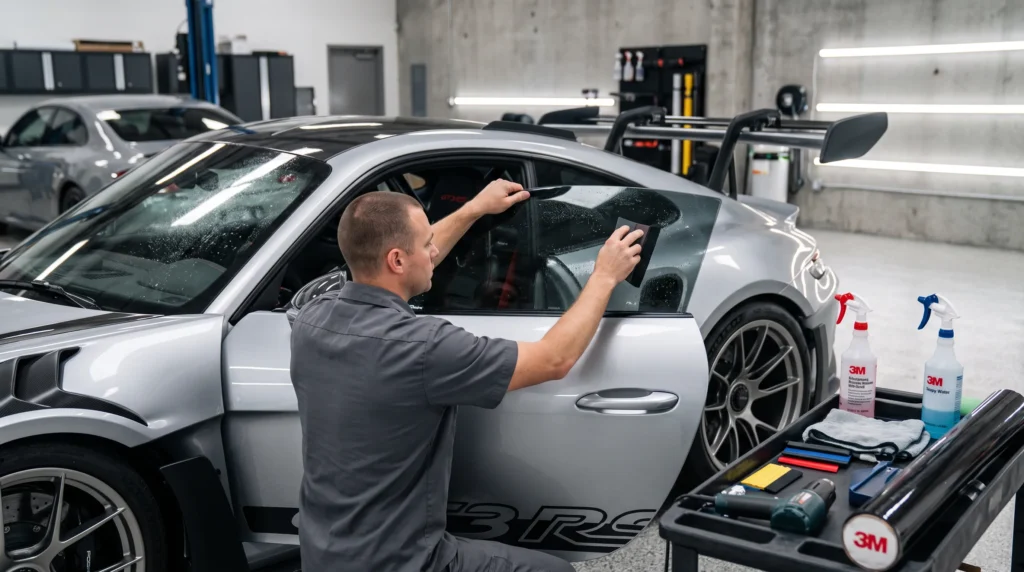
Automotive window film is a thin material applied to the inside surface of vehicle glass. Depending on the film, it can change visible light transmission, reduce glare, reject UV light, and reduce part of the solar energy passing through the glass.
3M offers several automotive window film families with different performance levels and tint shades.
Drivers researching 3M Window Film in Wilmette, IL may come across terms such as VLT, TSER, UV rejection, IRR, and IRER. These terms describe different parts of window film performance.
Here is what matters. Dark appearance and heat performance are not always the same thing. A film can allow more visible light through while still rejecting a portion of solar energy and infrared energy.
That makes product selection more useful than choosing window tint based only on how dark it looks.
Why Wilmette Drivers Consider Window Film
Driving around Wilmette and Chicago’s North Shore can mean changing sun angles throughout the day, bright reflections from surrounding vehicles, summer heat, and strong light entering through the side glass.
Window film can help manage several of those conditions.
Drivers may choose film because they want:
- Less glare through side and rear glass
- Reduced UV transmission
- Less solar heat entering the cabin
- More privacy
- A darker or more uniform exterior appearance
- Less direct sunlight hitting seats and interior trim
- A more comfortable cabin during sunny weather
The right combination depends on the film and shade selected.
If you want to compare 3M Window Film in Wilmette, IL with other tint choices, The Detail Dynasty also provides a dedicated window tint service for local vehicle owners.
How 3M Window Film Helps With Glare
Glare reduction describes how much visible light is reduced after film is applied to the glass.
3M defines glare reduction as the percentage by which visible light is reduced through the addition of window film.
This can matter when sunlight enters the vehicle from the side or rear and makes it harder to see comfortably.
Different film shades produce different levels of glare reduction. A darker film generally reduces more visible light than a lighter version within the same product family, though drivers should still consider visibility and applicable tint rules when choosing a shade.
3M Window Film in Wilmette, IL can be useful for drivers who regularly deal with bright afternoon sun, long commutes, or low-angle sunlight.
Glare control is only one part of the decision. UV rejection, solar energy rejection, infrared performance, and appearance also deserve attention.
How 3M Window Film Helps Block UV Rays
Ultraviolet light is another reason many vehicle owners consider window film.
3M states that its Ceramic IR Series can reject up to 99.9% of ultraviolet light.
Its Crystalline Series product information also lists UV rejection of up to 99.9%, depending on the film and glass configuration.
UV light can contribute to fading and deterioration of vehicle fabrics and leather over time, according to 3M.
That means UV-blocking automotive film can help reduce the amount of UV energy passing through filmed glass and reaching occupants or interior materials.
The film does not eliminate every cause of interior aging. Heat, cleaning products, regular wear, and other environmental conditions also affect vehicle interiors.
Still, if UV exposure is one of your concerns, ask about the UV rejection rating of the exact 3M Window Film in Wilmette, IL that you are considering.
Understanding Heat Rejection
Window tint is often described as a way to keep a vehicle cooler, but there are several measurements behind that claim.
One is TSER, or Total Solar Energy Rejection.
3M describes TSER as the percentage of total solar energy rejected by filmed glass. A higher TSER value means less solar energy passes through the glass.
Another measurement is infrared rejection.
3M states that infrared rays account for much of the heat people feel while driving.
Its product data uses terms including IRR and IRER to describe infrared performance across defined wavelength ranges.
For the driver, the numbers help compare films.
If reducing the feeling of sun through the glass matters more to you than achieving a very dark appearance, it can make sense to compare solar and infrared specifications rather than picking shade alone.
Understanding Visible Light Transmission
Visible Light Transmission, usually shortened to VLT, tells you how much visible light passes through the filmed glass.
A higher VLT number means more visible light can pass through.
A lower VLT number means less visible light passes through, giving the glass a darker appearance.
This is one of the most common numbers shoppers encounter when comparing 3M Window Film in Wilmette, IL.
VLT affects more than appearance. It also changes how much visible light enters the cabin.
The right shade depends on your goals, the existing factory glass, the windows being tinted, and applicable Illinois requirements.
If you are unsure which film shade fits your vehicle, the better approach is to compare actual film samples and discuss how you use the car.
3M Ceramic IR Window Film
3M Ceramic IR Series is one of the company’s automotive window film lines.
According to 3M, Ceramic IR Series can reject up to 66% of total solar energy and provide up to 95% infrared rejection, depending on film selection and glass conditions.
3M says the film uses nano-ceramic technology.
The film is also metal-free, which 3M says means it will not interfere with GPS, satellite radio, mobile devices, or 5G signals.
Ceramic IR Series is available in multiple tint levels. 3M states that darker choices can block up to 95% of visible light.
For drivers comparing 3M Window Film in Wilmette, IL, Ceramic IR can be worth discussing when heat rejection, UV protection, glare reduction, and a non-metal film construction are priorities.
3M Crystalline Window Film
3M Crystalline Series takes a different approach.
3M describes Crystalline as a multilayer optical film using more than 200 layers in a film thinner than a Post-it Note.
Its current product information says Crystalline can reject up to 64% of total solar energy and up to 99% infrared rejection, depending on the selected film and testing conditions.
3M also lists UV rejection up to 99.9%.
One reason drivers compare Crystalline with darker tint films is that its construction allows strong solar performance without always requiring very dark glass.
What this means is that someone who wants a lighter appearance may still have options for solar heat and UV control.
Film specifications differ by shade. Before choosing, compare the exact VLT, total solar energy rejection, UV rejection, and infrared figures for the film under consideration.
Does Darker Tint Always Reject More Heat?
No. Darkness and heat rejection should not be treated as the same measurement.
A dark film reduces visible light. Solar energy rejection and infrared rejection are separate performance measurements.
This is one of the biggest reasons to compare film specifications instead of deciding based only on shade.
A driver may want fairly light glass with strong UV and solar performance. Another driver may care more about privacy and appearance.
Both are reasonable goals, but they can point toward different products.
When comparing 3M Window Film in Wilmette, IL, ask about:
- Visible Light Transmission
- Total Solar Energy Rejection
- Infrared performance
- UV rejection
- Glare reduction
- Film construction
- Available shades
Looking at those figures together gives you a much clearer picture of what the film will do.
Window Film and Vehicle Electronics
Some older window films contain metal components that can affect certain electronic signals.
3M states that both Ceramic IR Series and Crystalline Series use non-metal constructions.
For Ceramic IR, 3M says the metal-free design does not interfere with electronics, GPS, satellite radio, mobile devices, or 5G.
Its Crystalline product information also identifies the film as non-metalized.
This can matter in modern vehicles filled with navigation, connected devices, antennas, and communication systems.
Owners of EVs and technology-heavy vehicles may want to include film construction in their comparison.
The Detail Dynasty also works with Tesla owners through its Tesla window tint service.
Which Vehicle Windows Can Receive Film?
Window film can be installed on several areas of a vehicle, depending on the glass and applicable regulations.
Common areas include:
- Front side windows
- Rear side windows
- Rear glass
- Quarter glass
- Certain windshield areas where permitted
A full tint setup can give the vehicle a more uniform look while addressing sunlight from several directions.
Some owners choose only side and rear glass. Others want a lighter film on certain sections and darker film elsewhere.
The vehicle’s existing factory glass also matters. Many SUVs and crossovers already have darker privacy glass in the rear.
Factory privacy glass and aftermarket window film are not the same thing. If heat or UV performance matters, ask what your existing glass does before deciding what film should be added.
Why Professional Window Film Installation Matters
Good film can still look poor when installation is rushed.
Automotive glass has curves, borders, weather seals, defroster lines, sensors, and tight edges. The film must be cut, formed, placed, and finished around those areas.
Dust trapped between the film and glass can remain visible after installation. Poor edge work can also affect appearance.
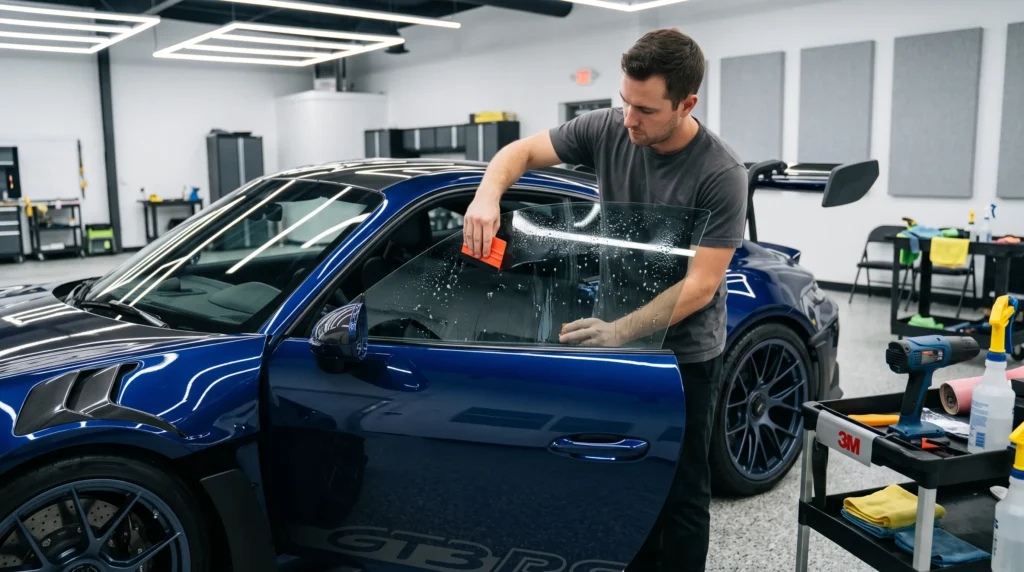
The Detail Dynasty installs window film from a dedicated garage facility at 5050 Dempster St, Skokie, IL 60077, serving drivers in Skokie, IL & Chicago’s North Shore as well as Wilmette and other nearby communities.
Indoor installation gives the technician a controlled place to clean the glass, inspect the vehicle, position the film, and finish the edges.
If you are choosing an installer for 3M Window Film in Wilmette, IL, ask about the film being installed, the installation setting, and aftercare instructions.
Caring for 3M Automotive Window Film
Window film needs a short period to settle after installation.
3M advises waiting 30 days before cleaning its automotive window film.
After that period, 3M says its films can be cleaned with commercially available neutral, non-abrasive glass cleaners and a soft, lint-free cloth or towel.
Following the film maker’s care instructions can help protect the surface and avoid unnecessary scratching.
Avoid scraping the inside of tinted glass with sharp objects.
If anything looks unusual after installation, contact the installer before trying to peel, press, or cut the film yourself.
Choosing Window Film for Your Vehicle
The best starting point is deciding what bothers you most about your existing glass.
Is it glare?
Heat?
UV exposure?
Privacy?
Appearance?
Or some combination of those?
From there, compare film specifications rather than choosing solely by tint shade.
For someone researching 3M Window Film in Wilmette, IL, these questions can help narrow the choices:
- Do you want lighter or darker glass?
- Is heat rejection one of your top concerns?
- How much glare do you want to reduce?
- Is UV rejection a major reason for tinting?
- Are you concerned about signal interference?
- Which windows do you want covered?
- Does your vehicle already have factory privacy glass?
- Do you frequently drive during bright afternoon hours?
The answers can help determine which film family and shade make sense for the vehicle.
You can also review The Detail Dynasty’s window tint service page before scheduling.
Schedule Window Tint Service Near Wilmette
3M Window Film in Wilmette, IL can address several concerns at once, including glare, UV transmission, solar heat, privacy, and exterior appearance.
The right film depends on what you expect from the glass.
Some drivers want a dark tint for privacy. Others prefer lighter glass with stronger heat and UV performance. Some want to tint every side and rear window, while others are only concerned with specific areas.
The Detail Dynasty serves Wilmette-area vehicle owners from its dedicated garage in Skokie, IL & Chicago’s North Shore.
Call (773) 216-3104 or visit the contact page to discuss your vehicle, window film choices, and scheduling.
You can also review the shop’s window tint services or browse all vehicle services.
Frequently Asked Questions
1. What does 3M Window Film in Wilmette, IL protect against?
Depending on the selected 3M film, automotive window film can reduce UV transmission, visible glare, solar energy, and infrared energy passing through filmed glass. Performance differs by product and shade, so compare the specifications for the exact film being installed.
2. How much UV does 3M automotive window film block?
3M states that its Ceramic IR Series rejects up to 99.9% of ultraviolet light. Its Crystalline Series product information also lists UV rejection up to 99.9%, depending on the film and glass setup.
3. Does 3M window film reduce glare?
Yes. 3M provides glare-reduction figures for its automotive films. The amount depends on the film and visible light transmission. Darker options within a product family generally reduce more visible light.
4. Does darker window tint mean better heat rejection?
Not necessarily. Visible Light Transmission describes how much visible light passes through the glass, while solar and infrared rejection measure different parts of the sun’s energy. A lighter film can still provide strong heat-rejection performance.
5. Will 3M window tint interfere with GPS or mobile signals?
3M states that Ceramic IR Series has a metal-free construction that will not interfere with GPS, satellite radio, mobile devices, or 5G. 3M also describes Crystalline Series as non-metalized.
6. Can 3M window film help protect vehicle interiors from UV exposure?
Yes. 3M states that UV light contributes to fading and deterioration of fabrics and leather. Films with high UV rejection reduce the amount of UV light passing through filmed glass, though other forms of wear and sun exposure can still affect interior materials.
7. Where can Wilmette drivers schedule automotive window tint service?
The Detail Dynasty serves Wilmette-area drivers from 5050 Dempster St, Skokie, IL 60077, in Skokie, IL & Chicago’s North Shore. Call (773) 216-3104 or use the contact form to discuss window film choices and appointment availability.
Sources
- 3M Automotive Window Film Ceramic IR Series
Publisher: 3M
Publication Date: No publication date listed on product page
Used for: UV rejection, total solar energy rejection, infrared rejection, ceramic construction, tint levels, and non-metal film information. - 3M Automotive Window Films: Light, Sun & Heat Control
Publisher: 3M
Publication Date: No publication date listed on page
Used for: Crystalline Series construction, solar performance, infrared performance, UV blocking, and glare information. - 3M Automotive Film Support
Publisher: 3M
Publication Date: No publication date listed on page
Used for: Definitions of TSER, VLT, UV rejection, IRR, IRER, and glare reduction. - The Detail Dynasty Window Tint Services
Publisher: The Detail Dynasty
Publication Date: No publication date listed
Used for: Internal service information and local service linking. - The Detail Dynasty Contact Page
Publisher: The Detail Dynasty
Publication Date: No publication date listed
Used for: Appointment and contact link.
