

Window Tinting in Berwyn & Cicero, IL gives drivers a way to reduce solar heat, glare, and UV exposure while adding privacy and changing how a vehicle looks. The right film is not always the darkest film available. Film construction, visible light transmission, solar-energy rejection, the vehicle’s factory glass, nighttime driving, and Illinois tint rules all play a role.
That matters for daily drivers around Berwyn and Cicero. A vehicle can spend hours sitting in direct sunlight, moving through traffic, or parked outdoors. Window film can reduce the amount of solar energy entering through treated glass while giving the cabin a more private appearance.
The Detail Dynasty installs automotive Window Tint from our dedicated garage facility in Skokie, IL & Chicago’s North Shore. If you are coming from Berwyn or Cicero, this guide explains tint percentages, ceramic film, heat rejection, privacy, Illinois law, factory privacy glass, installation, and aftercare.
Table of Contents
- What Is Automotive Window Tint?
- Why Berwyn and Cicero Drivers Choose Window Tint
- What Does VLT Mean?
- Common Window Tint Shades
- What Is Ceramic Window Tint?
- Does Darker Tint Reject More Heat?
- Window Tint for Heat Control
- Window Tint for Privacy
- Window Tint for UV Reduction
- Illinois Window Tint Rules
- Factory Privacy Glass vs Window Tint
- Choosing Tint for a Daily Driver
- Window Tint for SUVs and Crossovers
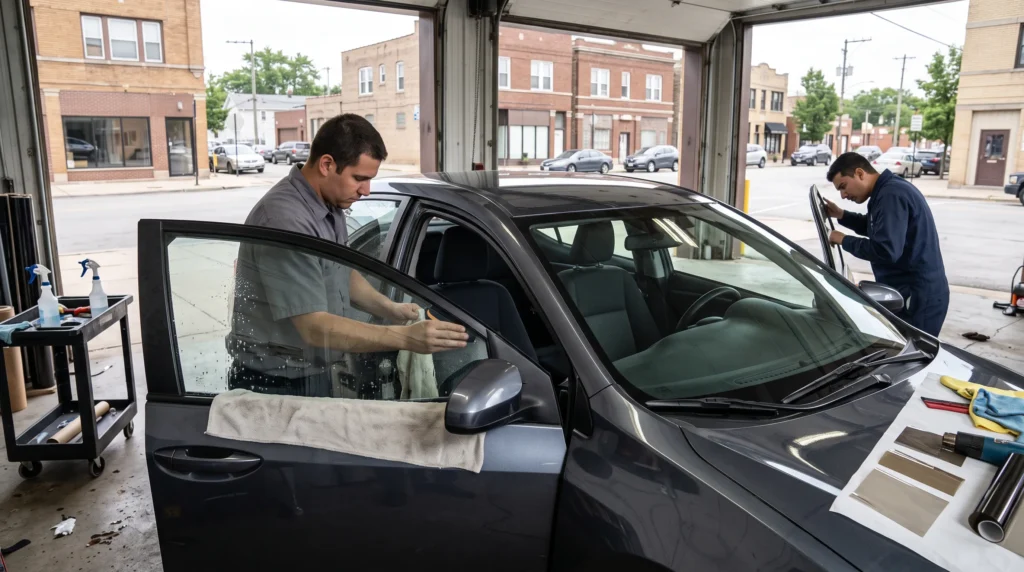
- What Happens During Window Tint Installation?
- What Fresh Window Tint Looks Like
- Window Tint Aftercare
- Tesla Window Tint Near Berwyn and Cicero
- Schedule Window Tint Near Berwyn and Cicero
- Frequently Asked Questions
What Is Automotive Window Tint?
Automotive window tint is a thin film installed on vehicle glass.
Depending on the film, it can affect:
- Visible light entering the cabin
- Solar heat
- Infrared energy
- UV exposure
- Glare
- Privacy
- Exterior appearance
Film specifications matter because two tint films can appear similar while performing differently.
A darker film may block more visible light but not necessarily reject more solar heat than a lighter film with a different construction.
That distinction can make a big difference when choosing Window Tinting in Berwyn & Cicero, IL.
If your biggest concern is privacy, VLT deserves close attention.
If heat is your concern, look at solar and infrared performance.
If you spend a lot of time driving after dark, outward visibility deserves attention too.
Why Berwyn and Cicero Drivers Choose Window Tint
Drivers around Berwyn and Cicero may choose automotive window tint for several reasons:
- Less solar heat entering the cabin
- Reduced glare
- More daytime privacy
- Reduced UV exposure
- A darker exterior appearance
- More comfortable sunny-day driving
The reason you want tint should guide which film and shade you choose.
Someone who wants more privacy may select differently from a driver whose main concern is solar heat.
The same is true for someone who frequently drives at night. A very dark film may look good during the day while reducing the amount of visible light available through the window after sunset.
What Does VLT Mean?
VLT stands for Visible Light Transmittance.
It describes the percentage of visible light that passes through the filmed glass.
A higher number allows more visible light through.
A lower number allows less visible light through and usually creates a darker appearance.
| VLT | General Appearance |
|---|---|
| 70% | Very light |
| 50% | Light |
| 35% | Medium |
| 20% | Dark |
| 5% | Very dark |
These descriptions are visual references rather than legal recommendations.
The number printed on a film is also not always the same as the final reading once that film is installed on vehicle glass.
Factory glass already transmits a certain amount of light.
When film is added, the combined glass-and-film reading can be lower.
That is especially relevant when choosing film for windows covered by Illinois tint rules.
Common Window Tint Shades
70% Window Tint
A 70% film has a very light appearance.
Some drivers choose lighter film because they want solar control and UV reduction without making the glass look heavily tinted.
A quality lighter film can still offer strong solar performance depending on its construction.
50% Window Tint
A 50% film creates a noticeable but relatively light shaded appearance.
It allows much more visible light into the cabin than darker options such as 20% or 5%.
Illinois law also references a 50% light-transmission configuration for certain front side-window setups.
35% Window Tint
A 35% film creates a darker appearance while still allowing a fair amount of visible light through.
Illinois law also references a 35% configuration under certain conditions involving the rear windows.
The complete vehicle setup matters, not only the film number.
20% Window Tint
A 20% film creates stronger daytime privacy.
It also lets much less visible light through the glass.
Nighttime visibility should be considered before choosing darker film for windows you regularly look through while driving.
5% Window Tint
A 5% film is extremely dark.
Very little visible light passes through.
That can create strong privacy during daylight but can also make seeing through the glass harder in low-light conditions.
Do not assume a film is legal on a certain window simply because it is sold for automotive use.
What Is Ceramic Window Tint?
Ceramic window tint uses ceramic particles or related ceramic technology within the film to manage solar energy without relying on a metallic construction.
3M’s current Color Stable Series uses ceramic nanoparticles and is available in several VLT choices. 3M states that the film can reject up to 64% of total solar energy and is made with a non-metal construction that will not interfere with GPS, satellite radio, mobile devices, or 5G signals. 3M Automotive Window Film Color Stable Series
Ceramic film can appeal to drivers who want:
- Heat reduction
- UV control
- Less glare
- Non-metal film
- Several shade choices
- Privacy without relying only on very dark glass
For Window Tinting in Berwyn & Cicero, IL, ceramic film can be worth comparing when heat control matters just as much as appearance.
Does Darker Tint Reject More Heat?
Not automatically.
This is one of the most common misunderstandings around automotive tint.
VLT measures visible light.
Solar-energy rejection and infrared performance are separate measurements.
That means one film can look darker while another lighter film may still provide stronger heat control.
3M lists visible-light transmission and total solar-energy rejection as separate specifications for its automotive window-film products. 3M Color Stable Series
So if heat is your main concern, do not choose based only on darkness.
Ask about the performance of the exact film and shade.
Window Tint for Heat Control
A vehicle parked in direct sunlight can build heat quickly.
Window tint can reduce the amount of solar energy passing through treated glass.
The result depends on the film.
When comparing Window Tinting in Berwyn & Cicero, IL, look at figures such as:
- Total Solar Energy Rejection
- Infrared Energy Rejection
- Infrared Rejection
- Visible Light Transmittance
- UV rejection
These numbers describe different parts of film performance.
A film that provides good heat control does not need to look extremely dark.
That gives drivers more freedom to choose a shade based on visibility and appearance while still paying attention to solar performance.
Window Tint for Privacy
Tint can make the inside of a vehicle harder to see during daylight.
Lower VLT generally creates more privacy.
Lighting still changes the effect.
A dark interior can make tint appear darker from outside.
Bright cabin lighting at night can make people and objects easier to see even through dark glass.
Window tint should not be treated as theft prevention.
It can reduce visibility into the cabin, but valuables should still be stored out of sight.
Privacy and Night Visibility
Privacy has a tradeoff.
As less visible light passes through the glass, less light is also available when looking outward.
That can become more noticeable after sunset, in rain, or on poorly lit streets.
Choose a shade you are comfortable using under the conditions in which you normally drive.
Window Tint for UV Reduction
UV reduction is another reason drivers consider film.
3M says its automotive window films can reject very high percentages of UV light, depending on the film family. Its Color Stable Series is designed around solar control, UV protection, and privacy. 3M Color Stable Series
Reducing UV entering through treated glass also reduces the amount reaching:
- Seats
- Dashboard surfaces
- Door panels
- Interior trim
- Other cabin materials
Tint will not stop every type of interior aging.
Heat, normal use, cleaning, and the materials themselves still affect how an interior changes over time.
Illinois Window Tint Rules
Drivers considering Window Tinting in Berwyn & Cicero, IL need to account for Illinois law before choosing film.
The current statute is found in 625 ILCS 5/12-503.
Front Windshield Tint in Illinois
Illinois generally does not permit tinted film across the full front windshield.
The statute permits nonreflective tint along the uppermost portion of the windshield as long as the material does not extend more than six inches downward from the top.
That rule is written directly into Section 12-503.
Front Side-Window Tint in Illinois
The windows immediately beside the driver have separate conditions.
One permitted configuration allows nonreflective film that permits at least 50% light transmittance when none of the windows behind the driver’s seat are treated below 30% light transmittance.
Illinois law also provides for a 5% variance when law enforcement measures that light transmission.
Another permitted configuration allows at least 35% light transmittance on the windows immediately beside the driver when none of the windows behind the driver’s seat are treated below 35%, subject to the conditions in the statute.
You can review the wording in Illinois Public Act 98-0153.
Why the Whole Vehicle Matters
You cannot always choose the front windows without considering the rear.
Rear-window darkness can affect which front side-window configuration fits the statute.
Factory-tinted rear glass is also addressed in Illinois law.
Medical provisions appear in the statute as well.
This information is meant as a general overview. The current vehicle setup and current Illinois law should be checked when the tint plan is selected.
Factory Privacy Glass vs Window Tint
Many SUVs, trucks, vans, and crossovers already have dark rear glass.
This is commonly called factory privacy glass.
Factory privacy glass and aftermarket window film are not the same thing.
Privacy glass gets its darker appearance from the glass itself.
Aftermarket tint places a film layer onto the glass.
That matters for two reasons.
First, a vehicle with dark rear privacy glass may already have the appearance you want.
Second, adding film on top of factory glass changes the final light transmission.
If you want to tint the front windows to look closer to the rear, the existing rear glass should be considered before the front film is chosen.
Choosing Tint for a Daily Driver
A daily-use vehicle sees different conditions throughout the week.
You may drive in:
- Bright afternoon sun
- Rain
- Cloudy weather
- Dawn
- Dusk
- Nighttime traffic
- Poorly lit residential streets
That makes balance worth thinking about.
If Heat Is Your Main Concern
Compare solar and infrared performance rather than picking the darkest sample.
Ceramic film can provide strong heat control in lighter shades.
If Privacy Is Your Main Concern
Lower VLT can make the cabin less visible from outside.
Consider nighttime outward visibility before choosing very dark film.
If You Drive at Night Frequently
A lighter shade may feel easier to live with.
What looks comfortable in midday sun can feel much darker at night.
If Appearance Matters Most
Look at actual samples.
A 50%, 35%, and 20% film can give the same vehicle very different looks.
Window Tint for SUVs and Crossovers
SUVs and crossovers often have dark factory rear privacy glass.
Owners commonly come in with one of two goals.
One is trying to make the front side windows look closer to the rear.
The other is adding solar-control film to the rear even though the rear glass already looks dark.
Those goals are different.
If appearance already looks good, a lighter film may still add heat and UV control over compatible rear glass.
The final VLT should still be considered because aftermarket film and factory glass work together.
What Happens During Window Tint Installation?
Professional tint installation involves several stages.
The installer first needs clean glass.
Contamination trapped under the film can remain visible after installation.
The process may include:
- Inspecting the windows
- Checking existing film
- Removing old tint if needed
- Cleaning the glass
- Cleaning edges and lower areas
- Fitting film to the window
- Applying the film with mounting solution
- Removing moisture
- Checking alignment
- Inspecting the finished installation
Curved rear windows can require additional shaping.
Door windows also need careful edge work because they move through window seals.
The Detail Dynasty performs window-tint installations indoors at our dedicated facility in Skokie, IL & Chicago’s North Shore.
What Fresh Window Tint Looks Like
Fresh tint may not look completely dry the moment the vehicle leaves the shop.
XPEL says newly installed automotive window film may have a hazy appearance or small moisture bubbles for up to 10 days while installation moisture dries. XPEL Product Care
Temporary signs can include:
- Light haze
- Small moisture pockets
- Slight cloudiness
These can be part of the normal drying period.
Do not press on moisture pockets or peel at film edges because the tint still needs time to settle.
Drying speed can change with temperature and climate.
Window Tint Aftercare
Fresh film should be treated carefully after installation.
3M says newly tinted windows should not be opened, closed, or cleaned for at least 48 hours so the film can bond to the glass. 3M Window Tint Product Care
XPEL gives a broader range of approximately 1 to 5 days before rolling windows down or cleaning them, depending on climate. XPEL Product Care
Follow the directions provided for the film on your vehicle.
Do Not Roll the Windows Down Too Early
Moving the window too soon can put pressure on the film edge before the adhesive has settled.
Wait Before Cleaning
Fresh tint needs time before interior glass cleaning begins.
Use Soft Towels
3M recommends a soft cloth or sponge and a soft microfiber towel for drying.
Avoid Abrasive Cleaning Materials
Do not scrub tint with abrasive pads or rough brushes.
XPEL recommends microfiber towels and mild non-ammonia glass cleaner when needed after the film has dried.
Give Moisture Time to Dry
Small water pockets or haze may disappear as the installation moisture leaves the film.
If something still looks unusual after the normal drying period, contact the installer instead of trying to repair the area yourself.
How Long Does Automotive Window Tint Last?
Tint lifespan depends on the film, installation, exposure, cleaning, and vehicle storage.
Good film can remain clear and stable for years.
Film quality matters because lower-grade material may show changes such as fading, bubbling, peeling, or color shifts sooner.
Manufacturer warranty terms can also give useful information when comparing films.
3M currently lists a limited lifetime warranty for qualifying professionally installed Color Stable Series film under its written warranty terms. 3M Color Stable Series
Ask what exact film is being installed rather than relying only on a broad phrase such as “ceramic tint.”
Window Tinting in Berwyn & Cicero, IL: What Should You Choose?
Start with what you want to change.
Is the cabin too hot in direct sun?
Do you want more privacy?
Does glare bother you?
Do you want the front windows to look closer to factory rear privacy glass?
Do you spend a lot of time driving after dark?
Once those questions are answered, compare the film.
For heat control, look at solar-energy and infrared data.
For privacy, look at VLT.
For daily driving, think about low-light visibility.
For Illinois rules, consider the front and rear glass together.
That approach makes Window Tinting in Berwyn & Cicero, IL easier to plan than simply asking for the darkest film available.
Tesla Window Tint Near Berwyn and Cicero
Tesla vehicles can have large glass areas and model-specific window shapes.
The Detail Dynasty offers Tesla Window Tint along with other Tesla-focused services.
Tesla owners can also review:
Cybertruck owners can review our Cybertruck Window Tint service.
Illinois tint rules still need to be considered when choosing film for a Tesla or Cybertruck.
Other Vehicle Protection Services
Window tint can be installed on its own or discussed alongside other vehicle work.
The Detail Dynasty also provides:
- Paint Protection Film
- Color PPF
- Ceramic Coating
- Paint Correction
- Vinyl Wrap
- Exterior Detailing
- Interior Detailing
- Auto Detailing
If you plan to have several services completed, mention them when scheduling so the vehicle can be planned around the work you want.
Schedule Window Tint Near Berwyn and Cicero
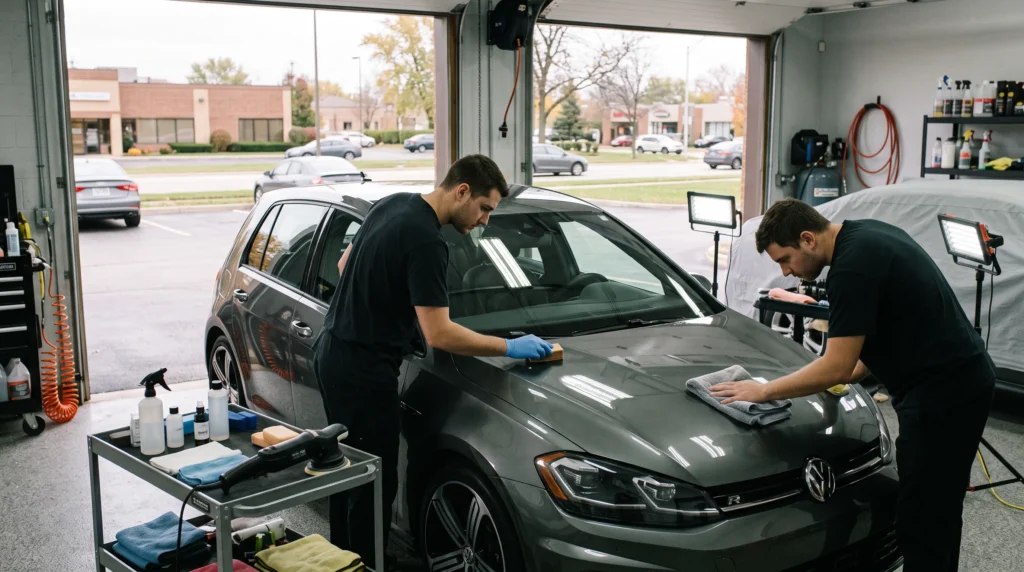
If you are researching Window Tinting in Berwyn & Cicero, IL, The Detail Dynasty can help you compare film types, shade levels, privacy, heat control, and your vehicle’s existing glass.
Our automotive detailing and protection studio is based in Skokie, IL & Chicago’s North Shore.
Tell us what vehicle you drive and what you want from your tint. We can discuss the film and window coverage before installation.
Call (773) 216-3104 or visit our contact page to schedule an appointment.
Frequently Asked Questions
1. What tint percentage should I choose for a daily driver?
The right VLT depends on your privacy goals, nighttime driving, heat concerns, existing factory glass, and Illinois law. A lighter film allows more visible light through, while a lower VLT creates a darker appearance.
2. Does ceramic window tint help reduce heat?
Yes, depending on the film. Ceramic window films are made to manage solar and infrared energy. 3M’s Color Stable Series uses ceramic nanoparticles and can reject up to 64% of total solar energy across the product family.
3. Does darker window tint always block more heat?
No. Darkness and heat rejection are measured differently. A lighter film with stronger solar performance may reject more heat than a darker film with a different construction.
4. Is 35% tint legal on front side windows in Illinois?
Illinois permits at least 35% light transmittance on windows immediately beside the driver under one configuration where none of the windows behind the driver’s seat are treated below 35% light transmittance, subject to the conditions in the statute.
5. Can I tint my entire windshield in Illinois?
Illinois generally does not permit tinted film across the full front windshield. Nonreflective tint may be placed along the uppermost section as long as it does not extend more than six inches downward from the top.
6. How long should I wait before rolling down newly tinted windows?
Follow the instructions for your exact film. 3M says to wait at least 48 hours before opening or closing newly tinted windows. XPEL advises approximately 1 to 5 days depending on climate.
7. Where can I get Window Tinting near Berwyn and Cicero, IL?
The Detail Dynasty provides professional Window Tint installation from our dedicated garage facility in Skokie, IL & Chicago’s North Shore. Drivers from Berwyn and Cicero can call (773) 216-3104 or visit our contact page to schedule an appointment.
Sources
- Illinois Compiled Statutes, 625 ILCS 5/12-503
Publisher: Illinois General Assembly
Publication Date: Current statute accessed October 2026
Used for: Front windshield tint restrictions, six-inch upper windshield strip, front side-window requirements, and other Illinois window-treatment rules. - Illinois Public Act 98-0153
Publisher: Illinois General Assembly
Publication Date: 2013
Used for: 50% and 35% light-transmission configurations and the stated 5% law-enforcement measurement variance. - 3M Automotive Window Film Color Stable Series
Publisher: 3M
Publication Date: Not listed, accessed October 2026
Used for: Ceramic nanoparticles, total solar-energy rejection, VLT options, non-metal construction, privacy, electronics compatibility, and warranty information. - 3M After Installation Product Care Instructions
Publisher: 3M
Publication Date: Current page accessed October 2026
Used for: Waiting at least 48 hours before operating or cleaning freshly tinted windows, microfiber care, clean water, and non-abrasive cleaning guidance. - XPEL Product Care Instructions
Publisher: XPEL
Publication Date: Current page accessed October 2026
Used for: Temporary haze, moisture pockets, approximately 1-to-5-day wait before operating tinted windows, microfiber cleaning, and non-ammonia cleaner guidance.
