

Is mirror or reflective window tint legal in Illinois? Illinois law expressly requires nonreflective film for the legal tint configurations on the windows directly beside the driver. The state also bars reflective material across the front windshield and permits only a nonreflective tint strip along the upper portion of the windshield. Because mirror-style film is made to create a reflective exterior appearance, Illinois drivers should be careful before choosing it for a road vehicle.
The Detail Dynasty provides professional window tint installation from its dedicated garage serving Skokie, IL & Chicago’s North Shore. If you like the appearance of mirrored tint but want to stay within Illinois rules, a nonreflective ceramic or charcoal film may give you the privacy, glare reduction, and darker appearance you want without the mirror-like exterior finish.
This guide explains how Illinois law treats reflective material, what “nonreflective” means for front windows, what happens with rear glass, how visible light transmission works, and which tint types can make more sense for Illinois drivers.
Legal notice: This article is general information and is not legal advice. Illinois vehicle laws can change, and the exact film, glass, vehicle configuration, and installation can affect compliance. Review the current Illinois Vehicle Code before choosing window film.
Table of Contents
- Is Mirror or Reflective Window Tint Legal in Illinois?
- What Illinois Law Says About Reflective Tint
- Is Reflective Tint Legal on Front Side Windows?
- Can You Put Reflective Tint on the Windshield?
- What About Reflective Tint on Rear Windows?
- What Does Nonreflective Tint Mean?
- Reflective Tint vs Dark Tint
- Illinois Window Tint Darkness Limits
- Ceramic Tint as an Alternative to Mirror Tint
- Metallized Tint and Reflective Appearance
- Why VLT and Reflectivity Are Different
- Does Factory Privacy Glass Count as Reflective Tint?
- Medical Tint Rules in Illinois
- Choosing Illinois-Legal Window Tint
- Schedule Window Tint Installation
- Reflective Window Tint FAQs
- Sources
Is Mirror or Reflective Window Tint Legal in Illinois?
For the front side windows, the short answer is no if the film has a mirror-like reflective finish.
Illinois Vehicle Code Section 12-503 allows certain tint configurations on the windows immediately beside the driver, but the statute repeatedly describes the permitted material as nonreflective tinted film.
That wording matters.
A film can meet a darkness percentage and still fail to match the type of film permitted by the statute if it has a reflective or mirrored exterior appearance.
Illinois law also directly mentions reflective material on the windshield. Reflective material is not allowed across the windshield under the standard rule.
So when someone asks, “Is mirror or reflective window tint legal in Illinois?”, checking only the VLT percentage is not enough.
You need to look at both:
- Light transmission
- Film reflectivity
What Illinois Law Says About Reflective Tint
The main Illinois window tint rule is found in 625 ILCS 5/12-503.
The statute uses the word nonreflective several times.
For the legal front side window configurations, Illinois permits:
- Nonreflective film with at least 50% light transmission under one rear-window configuration
- Nonreflective film with at least 35% light transmission under another rear-window configuration
- Nonreflective tint with at least 50% light transmission when the vehicle has qualifying factory-tinted rear glass
The windshield rule also permits only a nonreflective strip along the top.
That tells Illinois drivers something beyond darkness.
A legal tint setup is not simply a matter of installing a film with the right VLT number.
The film itself must fit the nonreflective language in the statute.
Is Reflective Tint Legal on Front Side Windows?
Illinois law allows window tint directly beside the driver only through stated exceptions, and those exceptions call for nonreflective tinted film.
That means a silver mirror finish, chrome-style tint, or another highly reflective automotive film should not be treated as legal front-side tint just because it has an acceptable VLT.
The front side windows are:
- Driver-side front window
- Front passenger-side window
If you are considering mirror or reflective window tint in Illinois, these are the windows where the statutory language is most direct.
What If the Mirror Tint Is Light?
A light VLT does not solve the reflectivity issue.
A reflective film could allow a large amount of light through while still creating a mirrored exterior surface.
Illinois law separates these ideas by requiring a certain level of light transmission while also calling for nonreflective film.

Here’s what matters: VLT and reflectivity are not the same measurement.
Can You Put Reflective Tint on the Windshield?
Illinois law is direct about the front windshield.
Section 12-503 says a person may not drive with reflective material, nonreflective material, tinted film, or other listed applications across the front windshield.
There is one standard tint exception.
A nonreflective tinted strip may be installed along the uppermost portion of the windshield as long as it does not extend more than 6 inches down from the top.
That means a mirror-style sun strip is not what the standard windshield exception describes.
If you want a windshield shade strip, choose a film intended to meet the nonreflective requirement.
The 2026 Illinois Secretary of State Rules of the Road also tells drivers that tinted windows are not allowed across the front windshield and that a six-inch strip is allowed across the top.
What About Reflective Tint on Rear Windows?
Rear glass needs a little more care when reading Illinois law.
The current statute has detailed rules tying rear-window treatment to what may be installed on the front side windows. It also contains rules for rear-window applications and side mirrors.
What the statute does not give drivers is a simple published reflectivity percentage such as “no more than 20% reflective.”
That can make online summaries confusing.
Some Illinois law-enforcement guidance describes both front and rear tint as needing to be nonreflective. The Wabash County Sheriff’s Office, for example, states that front and rear side windows must be nonreflective and notes that state law does not give a numerical definition for reflectivity.
Because the Illinois Vehicle Code expressly calls for nonreflective film in the legal front configurations and does not give a simple mirror-film allowance for rear glass, drivers should not assume a chrome or mirror finish is legal on rear windows simply because those windows can be darker.
If the goal is an Illinois road vehicle, choosing nonreflective automotive film is the safer route.
What Does Nonreflective Tint Mean?
This is where Illinois law leaves some room for interpretation.
Section 12-503 repeatedly uses the term nonreflective, but it does not give drivers a numerical visible-light-reflectance limit in the same way that it gives VLT percentages.
That is different from states that publish an exact maximum reflection percentage.
A normal automotive tint can reflect some light.
Even untreated automotive glass has measurable visible-light reflectance.
3M technical sheets show this in their film testing. Their tables include separate measurements for:
- Visible light transmission
- Exterior visible light reflectance
- Interior visible light reflectance
A film does not need to absorb every ray of visible light to be considered a normal non-mirror tint.
The issue is the highly reflective, mirror-like appearance commonly associated with silver, chrome, or mirrored films.
Reflective Tint vs Dark Tint
Dark does not automatically mean reflective.
Reflective does not automatically mean dark.
A charcoal film can look very dark from outside while having relatively low visible-light reflection.
A mirrored silver film can create a bright reflective exterior appearance even when its light-transmission percentage is different.
This matters when researching mirror or reflective window tint legal in Illinois because drivers sometimes compare films only by percentages.
Consider these as separate film characteristics:
| Film Characteristic | What It Describes |
|---|---|
| VLT | How much visible light passes through |
| Exterior reflectance | How much visible light reflects from the outside surface |
| Interior reflectance | How much visible light reflects inside |
| Shade | How dark the film appears |
| Film construction | Ceramic, dyed, metallized, or another type |
The legal VLT does not give permission to ignore the nonreflective requirement.
Illinois Window Tint Darkness Limits
Even if your film is nonreflective, it still needs to fit Illinois darkness rules.
35% Front Side Configuration
Illinois permits nonreflective tint allowing at least 35% light transmission on the windows directly beside the driver when the windows behind the driver’s seat are not treated below 35% light transmission.
50% Front With Rear Glass at 30% or Lighter
Illinois permits nonreflective tint allowing at least 50% light transmission on the windows beside the driver when the rear windows are not treated below 30% light transmission.
50% Front With Factory Rear Privacy Glass
When the vehicle came with qualifying manufacturer-installed smoked or tinted rear glass, Illinois allows nonreflective tint with at least 50% light transmission on the windows beside the driver.
The statute also states that law enforcement observes a 5% variance when metering these front-side configurations.
That variance should not be treated as permission to intentionally install film below the listed limit.
Ceramic Tint as an Alternative to Mirror Tint
If you like window tint because you want less glare, more privacy, UV blocking, or solar control, you do not need mirrored film to get those results.
Ceramic film can be a good alternative.
3M offers ceramic automotive film in several VLT ranges. Its technical information shows that ceramic film can provide solar, infrared, glare, and UV performance while maintaining relatively low visible-light reflectance.
Ceramic film is also metal-free.
For Illinois drivers, that gives you a way to choose a dark or light appearance without seeking a mirror finish.
The Detail Dynasty offers window tint installation for drivers who want film selected around their vehicle, factory glass, and Illinois tint configuration.
Tesla owners can also review the dedicated Tesla window tint service.
Metallized Tint and Reflective Appearance
Metallized film deserves separate attention.
LLumar explains that metallized tint contains a thin metallic layer that reflects part of the sun’s heat and gives the glass a slightly reflective appearance.
That does not mean every metallized product looks like chrome mirror film.
Reflectivity varies by product.
Still, the Illinois requirement for nonreflective front-side film means a driver should check the exterior appearance and published reflectance data before choosing a metallized film.
Do not assume a product is acceptable simply because it is sold as automotive tint.
The film still needs to fit the law where the vehicle is registered and used.
If you want solar control without a metallic appearance, ceramic film is another option to discuss with your installer.
Why VLT and Reflectivity Are Different
VLT answers this question:
How much visible light passes through the glass?
Reflectivity answers another:
How much visible light bounces back from the glass?
Those are different measurements.
3M’s automotive film data demonstrates this clearly. A technical sheet can list a VLT percentage and a separate exterior reflectance percentage for the same film.
This is one reason the question “Is mirror or reflective window tint legal in Illinois?” cannot be answered by checking VLT alone.
A film may need to satisfy:
- The correct VLT for the window
- The nonreflective requirement
- Windshield placement rules
- The rear-window configuration used on the vehicle
Looking at the whole setup is better than choosing tint from a shade sample alone.
Does Factory Privacy Glass Count as Reflective Tint?
Factory privacy glass is not the same as mirrored aftermarket film.
Many SUVs, crossovers, vans, and trucks have darker rear glass installed by the vehicle manufacturer.
Illinois law refers to this as nonreflective smoked or tinted glass originally installed by the manufacturer.
That wording is useful because the state recognizes factory privacy glass as its own rear-window configuration.
When qualifying manufacturer-installed tinted glass is behind the driver’s seat, Illinois allows at least 50% light transmission through nonreflective tint on the windows immediately beside the driver.
Do not use the dark appearance of factory rear glass as a reason to install reflective tint on the front windows.
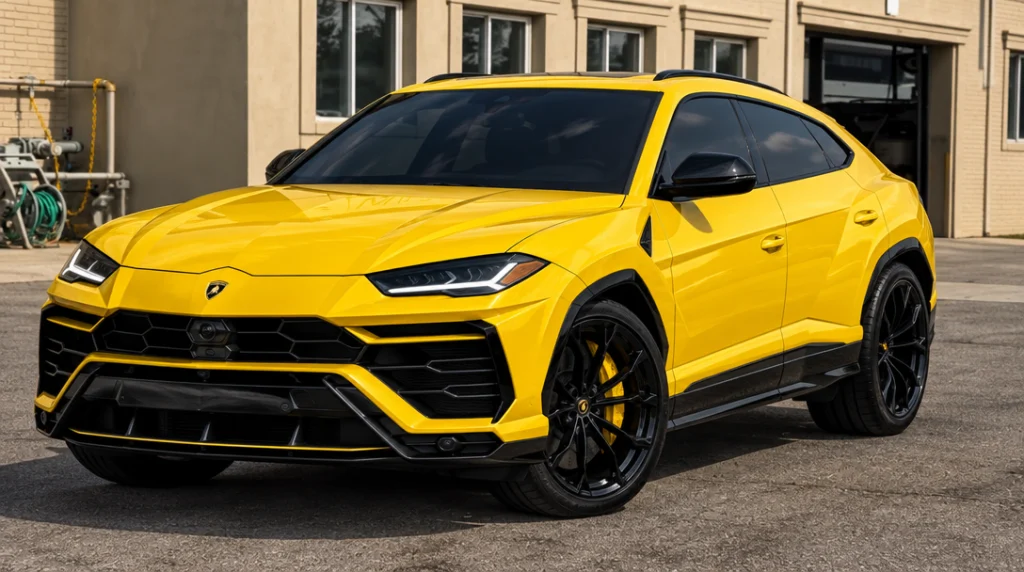
The front film still needs to fit the nonreflective rule.
Medical Tint Rules in Illinois
Illinois has a medical window-treatment process for people with qualifying conditions.
The Illinois Secretary of State requires physician documentation and the applicable tinted-window license plate or sticker process.
The physician certification must be carried in the vehicle and renewed according to state requirements.
The medical provisions do not mean every tint material or mirror finish automatically becomes acceptable.
If you are seeking medical window treatment, review the current Illinois Secretary of State instructions and the applicable sections of the Illinois Vehicle Code before choosing film.
You can read the state’s current information on the Illinois Secretary of State tinted-window page.
Choosing Illinois-Legal Window Tint
If your goal is a darker or more private appearance, mirror tint is not your only choice.
A nonreflective charcoal or ceramic film can give the vehicle a darker look without producing a chrome-like exterior surface.
Before installing tint, review:
- Factory rear glass
- Existing aftermarket film
- Front side VLT
- Rear-window VLT
- Exterior film reflectance
- Film construction
- Windshield placement
- Nighttime visibility
The real question is: what film gives you the appearance and solar performance you want while fitting Illinois rules?
A professional installer can help you compare film specifications before anything goes on the glass.
Schedule Window Tint Installation
If you are asking “Is mirror or reflective window tint legal in Illinois?”, the safest approach for a road vehicle is to choose nonreflective automotive film and build the tint configuration around the current Illinois Vehicle Code.
The Detail Dynasty provides professional window tint services from its dedicated garage serving Skokie, IL & Chicago’s North Shore.
The shop can review the vehicle’s existing glass, factory privacy tint, desired shade, and film type before installation.
You can also combine window tint with other vehicle services such as paint protection film, ceramic coating, vinyl wrap, or auto detailing.
To discuss legal nonreflective tint options, call The Detail Dynasty at (773) 216-3104 or use the contact page to schedule an appointment.
Reflective Window Tint FAQs
1. Is mirror or reflective window tint legal in Illinois?
Illinois law requires nonreflective film for the standard legal tint configurations on the windows directly beside the driver. Reflective material is also prohibited across the front windshield. A mirror-style front tint should not be treated as legal merely because its VLT meets a darkness number.
2. Can I put silver mirror tint on my front windows in Illinois?
The Illinois Vehicle Code permits nonreflective film on the windows immediately beside the driver under its stated VLT configurations. A silver mirror finish does not fit that nonreflective description.
3. Is reflective tint legal on the windshield in Illinois?
Reflective material is not permitted across the windshield under the standard rule. Illinois permits a nonreflective tinted strip along the uppermost portion of the windshield, extending no more than 6 inches down from the top.
4. Is reflective tint the same as dark tint?
No. Darkness is usually discussed through VLT, which measures visible light passing through the filmed glass. Reflectivity measures light bouncing from the glass. A film can be dark without having a mirrored appearance.
5. Is ceramic tint reflective?
Ceramic automotive tint can have some measurable visible-light reflectance, just as automotive glass does, but many ceramic products are designed with low visible reflectivity and do not have the mirror-style appearance associated with chrome or silver films. Check the specifications for the exact product.
6. Can I use metallized window tint in Illinois?
Metallized film can have a slightly reflective appearance, and reflectivity varies by product. Illinois requires nonreflective film for the standard front-side tint configurations, so the exact metallized film should be reviewed before installation.
7. Where can I get legal window tint installed in Illinois?
Call The Detail Dynasty at (773) 216-3104 or visit the contact page. The Detail Dynasty installs automotive window tint from its dedicated garage serving Skokie, IL & Chicago’s North Shore.
Sources
Illinois Window Tint Law
- Title: 625 ILCS 5/12-503, Windshields Must Be Unobstructed and Equipped With Wipers
- Publisher: Illinois General Assembly
- Publication Date: Current statute page, publication date not listed
- URL: Illinois General Assembly, 625 ILCS 5/12-503
Illinois Rules of the Road
- Title: Rules of the Road 2026
- Publisher: Illinois Secretary of State
- Publication Date: 2026
- URL: Illinois Secretary of State, Rules of the Road 2026
Illinois Medical Tint Information
- Title: Tinted Windows License Plates
- Publisher: Illinois Secretary of State
- Publication Date: Current webpage, publication date not listed
- URL: Illinois Secretary of State, Tinted Windows License Plates
Illinois Law-Enforcement Tint Guidance
- Title: Illinois Window Tint Law
- Publisher: Wabash County, IL Sheriff’s Office
- Publication Date: Current webpage, publication date not listed
- URL: Wabash County Sheriff’s Office, Illinois Window Tint Law
Automotive Window Film Measurements
- Title: 3M Automotive Window Film Product Comparison Guide
- Publisher: 3M
- Publication Date: January 2025
- URL: 3M Automotive Window Film Product Comparison Guide
Automotive Film Reflectance Data
- Title: 3M Automotive Window Film Obsidian Series Technical Data Sheet
- Publisher: 3M
- Publication Date: September 2024
- URL: 3M Obsidian Series Technical Data Sheet
Metallized Automotive Tint
- Title: Control Heat and Protect Your Ride with Metallized Tint
- Publisher: LLumar
- Publication Date: Current webpage, publication date not listed
- URL: LLumar Metallized Window Tint
