

Paint Correction vs Ceramic Coating is a common question for drivers who want their vehicle to look glossier, cleaner, and better cared for. The simple difference is this: paint correction improves the paint by polishing away or reducing visible defects, while ceramic coating protects the corrected surface and makes it easier to maintain.
At The Detail Dynasty, we offer both paint correction and ceramic coating for drivers in Skokie, IL & Chicago’s North Shore and the wider Chicagoland area. Our studio is located at 5050 Dempster St, Skokie, IL 60077, where we inspect, prep, polish, and protect vehicles in a controlled garage setting.
Here’s what matters. Paint correction and ceramic coating are not competing services. They often work best together. Paint correction helps make the paint look cleaner before protection is applied. Ceramic coating helps preserve that look by adding slickness, water beading, gloss, and easier washing.
Table of Contents
- What is paint correction?
- What is ceramic coating?
- Paint Correction vs Ceramic Coating at a glance
- What paint correction can fix
- What ceramic coating can do
- What neither service can do
- Do you need paint correction before ceramic coating?
- Paint correction stages explained
- How long does ceramic coating last after correction?
- Paint Correction vs Ceramic Coating for daily drivers
- Paint Correction vs Ceramic Coating for Tesla owners
- Paint Correction vs Ceramic Coating vs PPF
- What affects the cost of paint correction and ceramic coating?
- How to maintain your paint after correction and coating
- Why choose The Detail Dynasty?
- Schedule paint correction and ceramic coating in Skokie, IL & Chicago’s North Shore
- FAQs about Paint Correction vs Ceramic Coating
- Sources
What is paint correction?
Paint correction is the polishing process used to reduce visible paint defects. It can improve swirls, haze, oxidation, light scratches, water spot marks, buffer trails, and dull paint. The goal is to refine the clear coat so the paint looks clearer, glossier, and more even under light.
3M describes its paint finishing system as a process that moves from paint defect removal to ultrafine swirl elimination using compounds, polishes, abrasives, and pads. 3M also states that its ultrafine machine polish removes ultrafine swirl marks, even on dark-colored vehicles.
What this means for drivers is simple. Paint correction is the service that improves how the paint looks before any long-term protection is applied.
Paint correction may be a good fit if your vehicle has:
- Swirl marks from washing
- Fine scratches
- Haze or dullness
- Water spot marks
- Light oxidation
- Buffer trails
- Uneven gloss
- Paint that looks cloudy under sunlight
- Black or dark paint that shows spiderweb marks
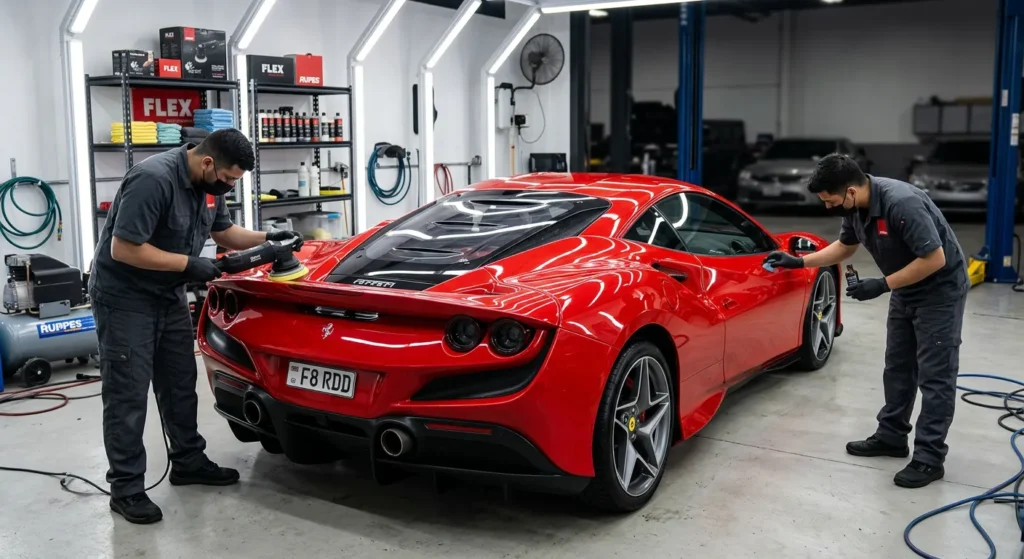
Paint correction does not add a coating by itself. It improves the surface. After correction, many drivers choose ceramic coating to protect the finish and make washing easier.
What is ceramic coating?
Ceramic coating is a liquid paint protection product applied after the surface is cleaned and prepared. Once installed, it adds slickness, water beading, gloss, and easier maintenance. It does not polish the paint or remove defects by itself.
3M describes its ceramic coating as a professionally applied paint treatment that adds depth and luster, leaves a slick surface for easier maintenance, improves water beading, and can last up to five years with proper care. Gtechniq describes EXOv5 as a hydrophobic coating with water beading, UV protection, swirl protection, and up to two years of durability.
Let’s break it down. Ceramic coating can help with:
- Gloss
- Slickness
- Water beading
- Easier washing
- Dirt release
- Surface maintenance
- A cleaner look between washes
- Longer-lasting protection than traditional wax
Ceramic coating does not make paint scratchproof. It does not stop rock chips. It does not replace safe washing. It works best when applied to paint that has already been cleaned, decontaminated, and corrected when needed.
Paint Correction vs Ceramic Coating at a glance
Paint Correction vs Ceramic Coating comes down to purpose.
Paint correction improves the paint
Paint correction removes or reduces visible defects through polishing. It is used when the paint has swirls, haze, light scratches, water spots, dullness, or oxidation.
Ceramic coating protects the paint
Ceramic coating protects the surface after prep. It helps with gloss, slickness, water behavior, and easier cleaning.
Paint correction is the prep
Paint correction is often done before ceramic coating so the coating locks in a cleaner, glossier finish.
Ceramic coating is the protection
Ceramic coating helps maintain the corrected finish and makes future washing easier.
Best result: use both together
For many vehicles, the best result is paint correction followed by ceramic coating. Correction improves the look. Coating helps preserve it.
What paint correction can fix
Paint correction is for visible defects in the paint’s clear coat. The level of improvement depends on the depth of the defects, paint thickness, paint hardness, vehicle condition, and polishing approach.
Swirl marks
Swirl marks are fine circular scratches often caused by poor washing, dirty towels, automatic brush washes, or improper drying. Paint correction can reduce these marks and improve clarity.
Light scratches
Light scratches that have not gone too deep into the clear coat may be improved through polishing. Deeper scratches may still remain.
Haze and dullness
Paint can look cloudy from oxidation, poor washing, old products, or surface wear. Paint correction can restore clarity and gloss.
Water spot marks
Some water spots sit on top of the paint. Others etch into the clear coat. Paint correction may reduce etched water spot marks depending on severity.
Buffer trails
Poor polishing can leave holograms or trails in the paint. Correct polishing can reduce or remove these marks.
Oxidation
Paint correction can improve light oxidation and restore shine, depending on the condition of the clear coat.
Dark paint defects
Black, blue, red, and dark gray vehicles often show defects more clearly. Paint correction can make a major visual difference on these colors.
What ceramic coating can do
Ceramic coating is for protection and maintenance after the paint is properly prepared.
Add gloss
A coating can make the surface look richer and glossier. On corrected paint, this effect can be more noticeable because the surface underneath is already refined.
Improve water beading
Ceramic coating helps water bead and move off the surface more easily. This is one of the most visible signs of a healthy coating.
Make washing easier
A coated surface is slicker, so dirt and grime often release more easily during proper washing.
Help reduce grime buildup
Ceramic coating can help reduce how strongly road film, dust, and dirt cling to the surface.
Last longer than wax
A professional ceramic coating can last much longer than traditional wax when maintained properly. 3M states its ceramic coating can be durable up to five years with proper care, while Gtechniq lists EXOv5 at up to two years of durability.
Protect the corrected finish
After paint correction, ceramic coating helps preserve the improved finish by adding a protective layer over the paint.
What neither service can do
Paint Correction vs Ceramic Coating is easier to understand when you know the limits of both services.
Paint correction cannot fix missing paint
If a scratch goes through the clear coat or paint layer, polishing cannot replace missing paint.
Paint correction cannot repair dents
Dents, body damage, and deep gouges need other repair methods.
Ceramic coating cannot remove scratches
Ceramic coating does not polish the paint. If the paint has swirls before coating, they can still show after coating.
Ceramic coating cannot stop rock chips
Ceramic coating is not a thick impact film. If rock chips are your main concern, paint protection film is the better service.
Ceramic coating does not make paint scratchproof
Safe washing still matters. Dirty towels, brush washes, and rough contact can still mark the paint.
Neither service replaces regular care
Even corrected and coated paint needs washing, drying, and maintenance.
Do you need paint correction before ceramic coating?
In many cases, yes. Paint correction before ceramic coating is recommended when the paint has visible swirls, haze, water spots, oxidation, or light scratches. Since ceramic coating adds protection over the existing surface, it can lock in the way the paint currently looks.
If the paint is dull or swirled, coating alone will not make those defects disappear. The car may be shinier, but the defects can still be visible under sunlight or shop lighting.
Here is why paint correction matters before coating:
- It improves gloss before protection
- It reduces defects before coating
- It creates a cleaner surface
- It helps the final result look better
- It gives the coating a better-prepped surface
Some new vehicles still need light correction. Dealer washes, transport, storage, and poor drying methods can leave swirl marks before the owner ever schedules protection.

The real question is not, “Is my car new?” It is, “What does the paint look like under proper lighting?”
Paint correction stages explained
Paint correction can vary based on vehicle condition and desired results. Not every vehicle needs the same level of polishing.
One-step paint correction
A one-step correction uses one polishing step to improve gloss and reduce lighter defects. This is a good fit for newer vehicles, lightly used cars, and drivers who want better clarity without chasing every mark.
Multi-step paint correction
A multi-step correction uses more than one polishing stage. A heavier first step may remove more defects, while a finer finishing step improves clarity and gloss. This is often used on vehicles with heavier swirls, haze, oxidation, or dark paint.
Spot correction
Some areas may need extra attention, such as door handles, trunk areas, hood sections, or panels with heavier defects.
Final polish
A final polish helps refine the surface before ceramic coating. This can make the finish look clearer and smoother.
At The Detail Dynasty, we inspect the paint before recommending a correction level. The goal is to improve the paint safely, not over-polish the clear coat.
How long does ceramic coating last after correction?
Ceramic coating longevity depends on coating type, surface prep, installation, storage, weather exposure, washing habits, and maintenance. Paint correction helps the surface look better before coating, but maintenance decides how long the coating keeps performing.
3M states that its ceramic coating can last up to five years with proper care and maintenance. Gtechniq states that EXOv5 offers up to two years of durability. These product ranges depend on the coating system and real-world use.
A daily driver in Skokie, IL & Chicago’s North Shore may face:
- Road salt
- Slush
- Winter grime
- Tree sap
- Bug residue
- Bird droppings
- Construction dust
- Sun exposure
- Automatic car washes
- Parking lot contamination
A garaged vehicle that is hand washed properly may keep coating performance longer than a vehicle parked outside and washed with harsh methods.
Bottom line, correction improves the starting point. Coating protects that finish. Maintenance keeps it performing.
Paint Correction vs Ceramic Coating for daily drivers
Daily drivers can benefit from both services. A daily driver gets exposed to road grime, weather, parking lots, kids, pets, traffic, and repeated washing. Over time, paint can lose gloss and collect swirls.
When daily drivers need paint correction
Paint correction is helpful when the vehicle already looks dull, hazy, or swirled. It can restore gloss and clarity before protection.
When daily drivers need ceramic coating
Ceramic coating is helpful when the owner wants easier washing, slickness, gloss, and better surface care.
When daily drivers need both
Many daily drivers need both. Paint correction cleans up the finish, and ceramic coating helps the car stay easier to maintain.
For local drivers, this pairing can be especially useful through winter. Salt and road film can make unprotected paint harder to clean. Coating helps with washing, while correction improves the look before coating.
Paint Correction vs Ceramic Coating for Tesla owners
Tesla owners often compare Paint Correction vs Ceramic Coating because Tesla vehicles have smooth panels and paint that can show swirls under bright light. Model 3, Model Y, Model S, Model X, and Cybertruck owners may all benefit from proper prep and protection.
The Detail Dynasty offers Tesla-focused services, including:
- Tesla Ceramic Coating
- Tesla Paint Protection Film
- Tesla Color PPF
- Tesla Window Tint
- Tesla Vinyl Wrap
- Tesla Detailing
- Tesla Services
Tesla paint correction can improve swirls and haze before coating. Tesla ceramic coating can help with gloss, slickness, and easier washing. Tesla PPF may be added for front-end chip protection.
Cybertruck owners can also view:
- Cybertruck Paint Protection Film
- Cybertruck Color PPF
- Cybertruck Window Tint
- Tesla Cybertruck Vinyl Wrap
Paint Correction vs Ceramic Coating vs PPF
Paint correction, ceramic coating, and PPF all serve different purposes.
Paint correction
Paint correction improves paint appearance by reducing defects through polishing.
Ceramic coating
Ceramic coating protects the surface and helps with gloss, slickness, water beading, and easier washing.
Paint protection film
PPF adds a physical film layer to help protect against rock chips, scratches, road debris, and high-impact wear.
If your vehicle has swirls, start with paint correction. If you want easier washing and gloss, add ceramic coating. If you want chip protection on the front bumper, hood, mirrors, fenders, and rocker panels, add Paint Protection Film.
Some owners choose all three:
- Paint correction to improve the finish
- PPF on high-impact panels
- Ceramic coating over paint and compatible film surfaces for easier maintenance
This plan works well for new vehicles, luxury cars, Teslas, EVs, black paint, and daily drivers that see a lot of road use.
What affects the cost of paint correction and ceramic coating?
Paint Correction vs Ceramic Coating cost depends on the vehicle, paint condition, coating choice, prep work, and service goals. We do not suggest guessing without seeing the vehicle because two cars of the same model can be in very different condition.
Vehicle size
Larger vehicles take more time to wash, decontaminate, polish, and coat.
Paint condition
A vehicle with heavy swirls, haze, water spots, or oxidation may need more correction than a cleaner vehicle.
Paint hardness
Some paint systems correct faster than others. Harder or softer paint may change the polishing approach.
Correction level
One-step correction and multi-step correction are different service levels.
Coating type
Different ceramic coatings have different durability, performance, and application needs.
Surface areas coated
Paint-only coating is different from coating paint, wheels, glass, trim, and PPF.
Prep work
Decontamination, clay treatment, polishing, panel wipe, and inspection all affect the service plan.
For a quote, call (773) 216-3104 or visit https://thedetaildynasty.com/contact-us.
How to maintain your paint after correction and coating
After paint correction and ceramic coating, maintenance matters. Poor washing can create new swirls, and harsh chemicals can reduce coating performance.
Hand wash when possible
Use gentle soap, clean wash mitts, and soft drying towels.
Avoid automatic brush washes
Brush washes can add swirls and reduce coating performance.
Dry the vehicle properly
Water spots can still form on coated paint. Drying helps reduce spotting.
Remove contaminants quickly
Bird droppings, bugs, sap, and road tar should be removed soon.
Use coating-safe products
Avoid harsh degreasers and abrasive cleaners unless recommended by a professional.
Schedule maintenance details
Routine detailing helps keep the finish cleaner. Visit our Auto Detailing, Exterior Detailing, and Interior Detailing pages for care options.
Inspect coating behavior
If water beading or slickness fades, the coating may be clogged with contamination or may need maintenance.
Why choose The Detail Dynasty?
The Detail Dynasty is a professional automotive detailing and protection studio serving Skokie, IL & Chicago’s North Shore and the wider Chicagoland area. We specialize in paint correction, ceramic coating, PPF, color PPF, window tint, vinyl wrap, detailing, and Tesla services.
Our services include:
- Paint Correction
- Ceramic Coating
- Tesla Ceramic Coating
- Paint Protection Film
- Color PPF
- Window Tint
- Vinyl Wrap
- Auto Detailing
- Exterior Detailing
- Interior Detailing
We have 83 reviews and a 5-star rating. Our dedicated garage facility gives us a controlled setting for inspection, polishing, coating, lighting, and final review. That matters because both paint correction and ceramic coating depend on careful prep.
Schedule paint correction and ceramic coating in Skokie, IL & Chicago’s North Shore
If you are comparing Paint Correction vs Ceramic Coating, The Detail Dynasty can inspect your vehicle and help you choose the right path. Some vehicles need correction first. Some need coating. Many need both.
Call (773) 216-3104 or visit https://thedetaildynasty.com/contact-us to schedule an appointment.
Business hours:
- Monday to Friday: 7 AM to 10 PM
- Saturday to Sunday: 10 AM to 10 PM
The Detail Dynasty is located at 5050 Dempster St, Skokie, IL 60077. We serve Skokie, IL & Chicago’s North Shore, Chicago, Evanston, Wilmette, Winnetka, Glenview, Lincolnwood, Morton Grove, Niles, Schaumburg, Rosemont, Elmhurst, and nearby Chicagoland communities.
FAQs about Paint Correction vs Ceramic Coating
1. What is the main difference between paint correction and ceramic coating?
Paint correction improves paint by polishing away or reducing defects like swirls, haze, and light scratches. Ceramic coating adds a protective layer that helps with gloss, water beading, slickness, and easier washing.
2. Do I need paint correction before ceramic coating?
You may need paint correction before ceramic coating if your paint has swirls, haze, water spots, oxidation, or light scratches. Coating does not remove those defects by itself.
3. Can ceramic coating hide swirl marks?
No. Ceramic coating may add gloss, but it does not properly remove swirl marks. Paint correction is the service that reduces visible swirls.
4. Does paint correction protect the paint?
Paint correction improves the paint’s appearance, but it does not add long-term protection by itself. After correction, many drivers choose ceramic coating or PPF.
5. Is ceramic coating better than paint correction?
Neither is better because they do different jobs. Paint correction fixes appearance. Ceramic coating protects and helps maintenance. The best result often uses both.
6. Will ceramic coating stop rock chips?
No. Ceramic coating does not stop rock chips. If impact protection is your main concern, ask about Paint Protection Film.
7. How do I book paint correction or ceramic coating in Skokie, IL & Chicago’s North Shore?
Call (773) 216-3104 or visit https://thedetaildynasty.com/contact-us. The Detail Dynasty can inspect your paint and recommend the right service.
Sources
- 3M Perfect-It Paint Finishing System, 3M, no publication date listed, https://www.3m.com/3M/en_US/collision-repair-us/featured-products/perfect-it/
- 3M Perfect-It EX Ultrafine Machine Polish, 3M, no publication date listed, https://www.3m.com/3M/en_US/p/d/b40065613/
- 3M Ceramic Coating 39901, 3M, no publication date listed, https://www.3m.com/3M/en_US/p/d/v101111025/
- EXOv5 Ultra Durable Hydrophobic Coating, Gtechniq USA, no publication date listed, https://gtechniq.com/shop/auto/ceramic-coatings/exov5-ultra-durable-coating/
- EXOv5 Ultra Durable Hydrophobic Coating, Gtechniq UK, no publication date listed, https://www.gtechniq.co.uk/shop/auto/ceramic-coatings/exo-ultra-durable-coating/
