
Paint Protection Film in Elmhurst & Lombard, IL gives vehicle owners a clear physical barrier between factory paint and many of the hazards encountered during everyday driving. Loose stones, road grit, bugs, road tar, winter salt, and light scratches can all reach painted surfaces. PPF places a replaceable film over the areas you choose to protect.
For drivers in Elmhurst and Lombard, road exposure can add up quickly. Elmhurst has direct access to I-290, I-294, and I-88, while Lombard drivers regularly use roads such as North Avenue, Roosevelt Road, Butterfield Road, and Route 53. Frequent commuting, highway travel, construction zones, and winter road treatment can put forward-facing paint through repeated contact with debris.
The Detail Dynasty installs Paint Protection Film from our dedicated automotive detailing and protection facility in Skokie, IL & Chicago’s North Shore. If you are deciding between partial-front, full-front, full-body, clear, satin, or Color PPF, this guide explains how each choice works and what to expect from the film over time.
Table of Contents
- What Is Paint Protection Film?
- Why Elmhurst and Lombard Drivers Consider PPF
- What Does PPF Protect Against?
- Partial Front PPF Coverage
- Full Front PPF Coverage
- Full Body PPF Coverage
- Small High-Wear Areas for PPF
- Which PPF Coverage Fits a Daily Driver?
- How Illinois Winter Roads Affect Paint
- Does PPF Protect Against Road Salt?
- What Is Self-Healing PPF?
- Can PPF Stop Every Rock Chip?
- Clear, Satin, and Color PPF Options
- Why Paint Preparation Matters
- Does Paint Correction Come Before PPF?
- PPF vs Ceramic Coating
- Can Ceramic Coating Go Over PPF?
- How Long Does Paint Protection Film Last?
- How to Care for PPF
- When Should PPF Be Replaced?
- Schedule PPF Near Elmhurst and Lombard
- Frequently Asked Questions
What Is Paint Protection Film?
Paint protection film, often called PPF or clear bra, is a transparent polyurethane film installed over automotive paint.
3M describes its current Series 150 PPF as a film made to protect painted surfaces from stone chips, scratches, bug damage, road tar, stains, automotive fluid stains, salt, UV exposure, and outdoor weather. The film also includes a self-healing surface for minor scratches.
You can review the manufacturer’s product information at 3M Paint Protection Film Series 150.
PPF can cover a few selected areas or nearly the entire painted exterior.
Common areas include:
- Front bumper
- Hood
- Front fenders
- Side mirrors
- Rocker panels
- Door cups
- Door edges
- Doors
- Rear quarter panels
- Trunk or liftgate
- Rear bumper
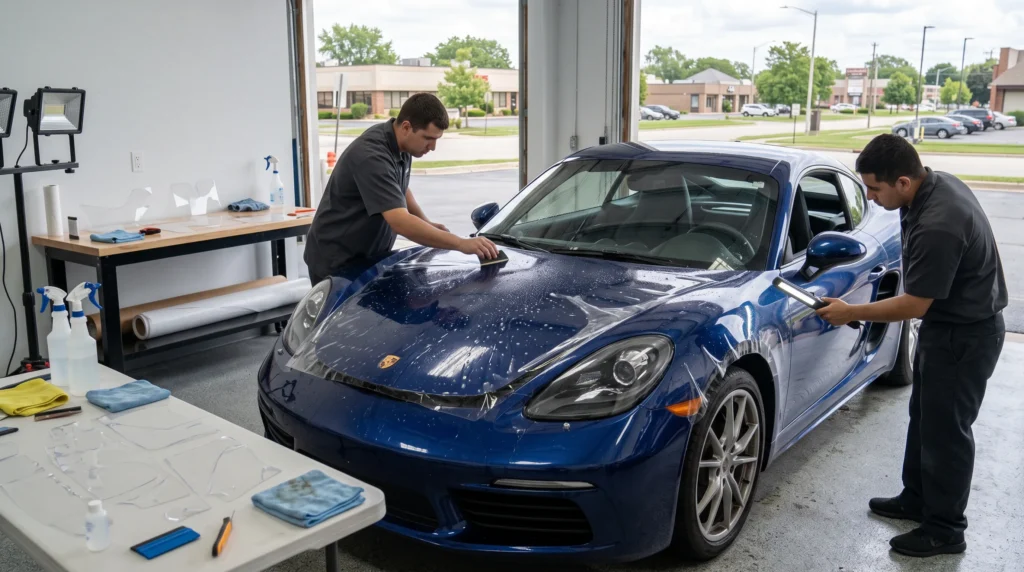
That flexibility lets vehicle owners choose coverage based on where they are most concerned about paint damage.
Why Elmhurst and Lombard Drivers Consider PPF
Elmhurst has direct access to I-290, I-294, and I-88, according to City transportation planning material. Those interstate connections give drivers easy access across the Chicago area but also mean plenty of time around higher-speed traffic.
Lombard residents use major roads including North Avenue, Roosevelt Road, Butterfield Road, and Route 53. The Village lists these roads among the state routes affecting local travel.
That combination of local streets and high-speed roads can expose vehicle paint to:
- Loose gravel
- Small stones
- Sand
- Road grit
- Bugs
- Dirty road spray
- Construction debris
- Winter slush
- Salt residue
The front bumper, hood, and front fenders usually receive much of the direct impact.
That is why many drivers researching Paint Protection Film in Elmhurst & Lombard, IL start by looking at front-end coverage.
Other owners want broader protection for doors, rocker panels, rear quarters, and other painted sections.
What Does PPF Protect Against?
PPF works by placing a physical film between paint and the outside environment.
3M says its Series 150 film is made to guard paint against:
- Stone chips
- Scratches
- Bugs
- Road tar
- Salt
- Stains
- UV exposure
- Outdoor weather
XPEL also describes PPF as a transparent polyurethane film designed to protect against scratches, chips, stains, and environmental damage.
You can read more at XPEL Frequently Asked Questions.
The film becomes the sacrificial surface.
A stone that would otherwise strike the clear coat hits the PPF first.
A light scratch may mark the film instead of the paint.
That is the main reason PPF differs from liquid paint-protection products.
Partial Front PPF Coverage
Partial-front PPF focuses on selected forward-facing areas.
A package may include:
- Front bumper
- Partial hood
- Partial front fenders
- Side mirrors
Exact coverage depends on the installer and the vehicle.
Partial-front protection can fit someone who wants to address the areas most likely to meet road debris without covering the entire hood and fenders.
One thing to think about is the film boundary.
When PPF stops partway across the hood or fender, the edge may be visible from certain angles.
Dirt can also collect near that boundary between washes.
Some owners are fine with that look.
Others prefer complete panel coverage.
Full Front PPF Coverage
Full-front PPF usually covers the complete forward-facing painted panels.
A common setup includes:
- Full hood
- Full front fenders
- Front bumper
- Side mirrors
Full-panel coverage removes the line that partial PPF can leave across the hood and fenders.
For someone who spends plenty of time on I-88, I-290, I-294, or other busy roads, full-front Paint Protection Film in Elmhurst & Lombard, IL may offer a good balance between targeted protection and broader film coverage.
The front bumper and hood are often where drivers notice rock chips first.
Full-front PPF places film across both.
Full Body PPF Coverage
Full-body PPF extends protection across most painted exterior surfaces.
Depending on the vehicle, that can include:
- Front bumper
- Hood
- Front fenders
- Mirrors
- Doors
- Rocker panels
- Rear quarter panels
- Trunk
- Liftgate
- Rear bumper
- Other painted pieces
This changes the goal from front-end impact protection to broad exterior paint coverage.
Doors can pick up scratches in parking areas.
Rocker panels sit close to road grit.
Rear bumpers can be marked while loading cargo.
Quarter panels can pick up contact from road debris or parking-lot use.
Full-body PPF puts a film barrier over those areas too.
Small High-Wear Areas for PPF
PPF can also be useful on small sections of the vehicle.
Common high-wear areas include:
- Door cups
- Door edges
- Trunk loading ledges
- Rear bumper loading areas
- Rocker sections
- Areas behind wheel openings
These smaller pieces can protect paint from repeated contact.
Door cups often pick up fingernail or ring marks.
Door edges can touch walls or nearby objects.
A loading ledge can be scratched by bags, boxes, tools, or sports equipment.
You do not need to cover the complete car for PPF to serve a useful purpose.
Which PPF Coverage Fits a Daily Driver?
Start with the way the vehicle is used.
Front-End PPF May Fit If:
- You commute several days each week
- You spend time on highways
- Rock chips are your biggest concern
- You want the hood and bumper protected
- You do not need side and rear panels covered
Full-Body PPF May Fit If:
- You want broader paint coverage
- Parking-lot scratches concern you
- Door and rocker protection matter
- You want most factory paint behind film
- You plan to keep the vehicle for years
The right coverage depends on your own use rather than a fixed rule.
A weekend vehicle, family SUV, luxury sedan, and high-mileage commuter do not face the same pattern of exposure.
How Illinois Winter Roads Affect Paint
Winter changes what vehicles encounter on the road.
The Illinois Department of Transportation says it primarily uses rock salt together with liquid treatments such as salt brine or beet juice during winter operations.
IDOT also says sand may be used for traction under some conditions.
See IDOT Winter Road Conditions.
That winter material can end up across:
- Front bumpers
- Lower doors
- Rocker panels
- Wheel arches
- Rear quarter panels
- Rear bumpers
A daily driver can collect salt-containing spray over and over throughout winter.
That is one reason Paint Protection Film in Elmhurst & Lombard, IL can appeal to drivers who use their vehicles year-round.
Does PPF Protect Against Road Salt?
PPF places a physical layer over covered paint.
3M specifically lists salt among the hazards its Series 150 film is made to resist.
That means winter residue reaches the film before the paint on covered areas.
PPF still needs washing.
Leaving road salt and grime on a vehicle for long periods is not a good maintenance plan.
During winter, pay attention to:
- Front bumper
- Lower doors
- Rockers
- Wheel arches
- Rear bumper
- Lower quarter panels
If your PPF covers only the front, the rest of the vehicle still needs normal cleaning.
What Is Self-Healing PPF?
Some modern films have a surface designed to recover from light scratches and swirl marks.
3M says its Series 150 film uses self-healing technology that allows minor scratches to disappear when heat reaches the surface.
XPEL also says its PPF can self-heal minor scratches and swirl marks.
Self-healing can help with:
- Light wash swirls
- Fine towel marks
- Minor surface scratches
- Shallow scuffs
It does not repair:
- Deep cuts
- Tears
- Punctures
- Missing film
- Collision damage
- Paint damage underneath
The depth of the damage matters.
A light surface mark and a cut through the film are not the same problem.
Can PPF Stop Every Rock Chip?
No.
PPF can absorb many everyday impacts, but no film can promise that every object striking the vehicle will leave no mark.
Impact force changes from one situation to another.
A small piece of road grit is different from a large stone or metal debris.
PPF helps by putting a film layer between the object and the paint.
A hard impact may damage the PPF.
A stronger impact may reach the paint beneath it.
That does not mean the film failed to serve a purpose.
Covered paint no longer takes every minor hit directly.
Clear, Satin, and Color PPF Options
PPF is no longer limited to one clear gloss appearance.
Clear Gloss PPF
Clear gloss PPF protects paint while keeping the factory color visible.
3M describes its Series 150 as having high clarity, a gloss finish, stain resistance, and self-healing behavior.
Clear film can work well when you already like the vehicle’s factory paint.
Satin or Matte PPF
Satin or matte PPF changes how the underlying paint reflects light.
XPEL’s STEALTH film is one current example of satin PPF.
The manufacturer describes it as a film that can give glossy paint a satin appearance while still protecting against scratches, chips, and environmental damage.
Color PPF
Color PPF combines a visual change with a thicker protective film.
XPEL says its Color PPF is thicker than traditional vinyl and is designed to protect against rock chips, scratches, and environmental contamination.
The Detail Dynasty also offers Color PPF for drivers who want to compare it with clear film or Vinyl Wrap.
Why Paint Preparation Matters
Clear PPF sits over the existing paint.
That means the finish underneath remains visible.
Before installation, the vehicle may need:
- Washing
- Road-grime removal
- Bonded-contamination removal
- Panel-edge cleaning
- Existing-film removal
- Adhesive cleanup
- Paint inspection
The condition going under the film matters.
PPF is not a substitute for cleaning or repairing a damaged panel.
A clear film installed over visible paint defects can leave those defects visible afterward.
Does Paint Correction Come Before PPF?
Sometimes.
Paint correction is used to reduce certain defects before film installation.
Those may include:
- Swirl marks
- Fine scratches
- Wash marks
- Haze
- Other correctable paint defects
Not every car needs the same work.
A nearly new car may need little correction.
Another new vehicle may already show marks from dealership washing or transport.
A used vehicle may need more.
The Detail Dynasty offers Paint Correction when the surface needs work before PPF goes on.
PPF vs Ceramic Coating
PPF and ceramic coating do different jobs.
Paint Protection Film
PPF provides a thicker physical film over the paint.
It is commonly chosen for:
- Rock chips
- Light scratches
- Road debris
- Physical surface protection
Ceramic Coating
Ceramic coating is a liquid-applied surface treatment.
It is commonly used for:
- Water beading
- Easier washing
- Chemical resistance
- Environmental contamination
- Surface gloss
A coating does not provide the same physical barrier as PPF.
If stones and road debris are your main concern, Paint Protection Film is the better service to compare.
If maintenance and water behavior are your larger concerns, Ceramic Coating may fit what you want.
Can Ceramic Coating Go Over PPF?
Compatible ceramic coatings can be installed over PPF.
The film and coating still perform different roles.
PPF supplies the physical barrier.
The coating changes how water, grime, and contamination behave on the outer surface.
Some owners choose both because they want physical protection plus easier cleaning.
If you plan to combine the two, discuss the products and order of work before installation.
How Long Does Paint Protection Film Last?
PPF service life varies.
XPEL says paint protection film commonly lasts about 5 to 10 years.
The manufacturer says lifespan can be affected by:
- Film quality
- Installation
- Road conditions
- Climate
- Mileage
- Driving style
- Storage
- Maintenance
3M currently backs qualifying Series 150 film with a 10-year consumer warranty under its written terms.
A warranty period and actual film condition are not exactly the same.
A bumper on a high-mileage commuter can take many more impacts than a rear door on a garage-kept weekend vehicle.
That is why real-world service life varies.
How to Care for PPF
PPF still needs routine care.
Wash the Vehicle Regularly
Do not allow bugs, road grime, salt, or bird residue to stay on the film longer than necessary.
Use Clean Wash Media
Dirty wash mitts and towels can drag grit across the surface.
Be Careful Around Film Edges
Avoid forcing high-pressure water directly into film edges.
Remove Bugs Promptly
Front bumpers and mirrors can collect bugs during warm weather.
Use a method suitable for the film.
Watch for Damage
During washing, check for:
- Cuts
- Lifting
- Punctures
- Impact marks
- Damaged edges
A small issue is easier to inspect before it becomes larger.
When Should PPF Be Replaced?
PPF does not automatically need replacement because it reaches a certain age.
Condition matters too.
Film may need inspection when you notice:
- Deep cuts
- Tears
- Punctures
- Lifting edges
- Heavy impact damage
- Film separation
- Severe staining
- Accident damage
- Body work underneath the film
One damaged panel does not always mean every piece of PPF has to come off.
Because film is often installed one panel at a time, a damaged section may be replaceable while other areas remain in place.
Tesla PPF Near Elmhurst and Lombard
Tesla owners can also choose model-focused film coverage.
The Detail Dynasty provides Tesla Paint Protection Film along with related Tesla services.
Tesla owners can also review:
Cybertruck owners can review our Cybertruck Paint Protection Film and Cybertruck Color PPF pages.
Paint Protection Film in Elmhurst & Lombard, IL: Which Coverage Should You Choose?
Start with the areas you worry about most.
If the front bumper and hood are your main concern, partial-front or full-front coverage may fit your needs.
If you want to avoid a partial-film line across the hood and fenders, full-front PPF is worth comparing.
If door scratches, rocker wear, rear-quarter damage, and other exterior contact bother you too, broader coverage may fit better.
Think about:
- Daily mileage
- Highway use
- Winter driving
- Parking conditions
- Vehicle age
- How long you plan to keep the car
- Whether you want the factory appearance to stay the same
- Whether you want a satin or color change
Then ask what film will be installed and which panels are included.
A clear coverage plan makes it much easier to compare PPF choices.
Schedule PPF Near Elmhurst and Lombard
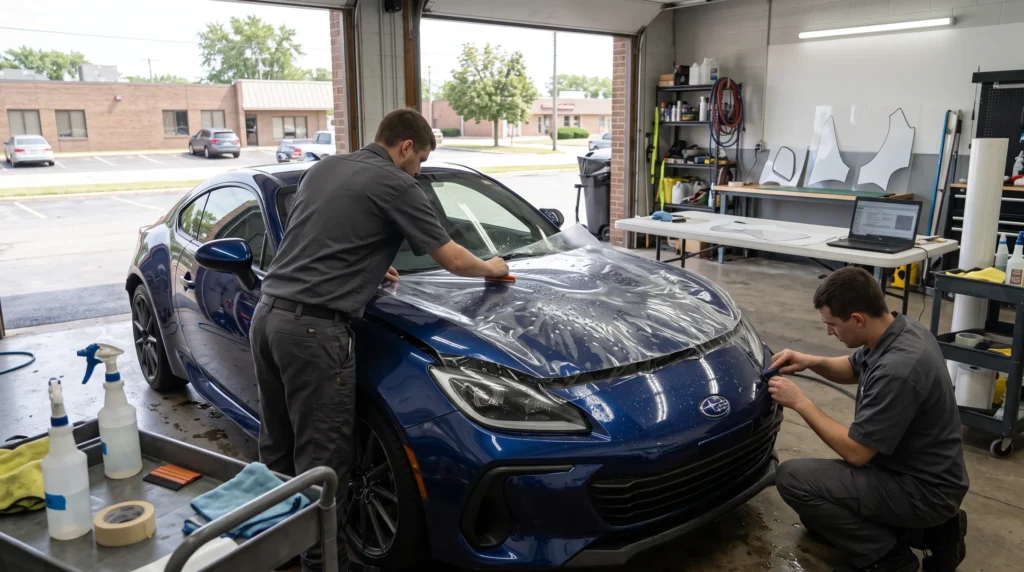
If you are researching Paint Protection Film in Elmhurst & Lombard, IL, The Detail Dynasty can help you compare partial-front, full-front, full-body, clear, satin, and Color PPF.
Our automotive detailing and protection studio is based in Skokie, IL & Chicago’s North Shore.
Related services include:
- Paint Protection Film
- Color PPF
- Paint Correction
- Ceramic Coating
- Vinyl Wrap
- Exterior Detailing
- Window Tint
Call (773) 216-3104 or visit our contact page to schedule an appointment.
Frequently Asked Questions
1. What does Paint Protection Film in Elmhurst & Lombard, IL protect against?
PPF is made to help protect automotive paint against stone chips, scratches, bug damage, road tar, salt, stains, UV exposure, and everyday road conditions. It places a physical film over the paint so many hazards contact the film first.
2. Is full-front PPF a good choice for a daily commuter?
Full-front PPF can work well for commuters because it commonly covers the front bumper, complete hood, front fenders, and mirrors. Those areas receive much of the direct debris exposure during higher-speed driving.
3. How long does paint protection film last?
XPEL says PPF commonly lasts about 5 to 10 years. Film quality, installation, climate, mileage, road conditions, storage, driving habits, and maintenance can affect service life.
4. Does PPF protect against Illinois winter road salt?
PPF creates a physical film layer over covered paint, and 3M lists salt among the hazards its Series 150 film is made to resist. IDOT confirms that rock salt and liquid treatments such as salt brine are used on Illinois roads during winter.
5. Can scratches in PPF heal?
Some films can recover from light surface scratches and swirls. 3M’s Series 150 uses heat-responsive self-healing technology for minor scratches. Deep cuts, punctures, and tears do not repair themselves the same way.
6. Is ceramic coating the same as PPF?
No. PPF is a thicker polyurethane film designed for physical protection. Ceramic coating is a liquid-applied surface treatment used more for water behavior, chemical resistance, environmental contamination, and easier washing.
7. Where can I get Paint Protection Film near Elmhurst and Lombard, IL?
The Detail Dynasty provides professional Paint Protection Film installation from our dedicated garage facility in Skokie, IL & Chicago’s North Shore. Drivers from Elmhurst and Lombard can call (773) 216-3104 or visit our contact page to schedule an appointment.
Sources
- 3M Paint Protection Film Series 150
Publisher: 3M
Publication Date: Not listed, accessed October 2026
Used for: Stone-chip, scratch, bug, salt, road-tar, stain, UV, weather protection, self-healing behavior, gloss finish, and 10-year consumer warranty. - 3M Paint Protection Film Series 150 Product Bulletin
Publisher: 3M
Publication Date: June 2025
Used for: Heat-responsive self-healing behavior, film clarity, stain resistance, outdoor exposure, and protective uses. - XPEL Frequently Asked Questions
Publisher: XPEL
Publication Date: Current page accessed October 2026
Used for: PPF definition, typical 5-to-10-year lifespan, self-healing behavior, full-vehicle coverage, satin film, and Color PPF information. - Illinois Department of Transportation Winter Road Conditions
Publisher: Illinois Department of Transportation
Publication Date: Current page accessed October 2026
Used for: Illinois use of rock salt, salt brine, other liquid winter treatments, and sand. - Elmhurst Comprehensive Plan
Publisher: City of Elmhurst
Publication Date: City planning document accessed October 2026
Used for: Elmhurst transportation access including I-290, I-294, and I-88. - Lombard Public Works Construction Alerts and Road Closures
Publisher: Village of Lombard
Publication Date: Current municipal page accessed October 2026
Used for: State roadway references including Butterfield Road, Roosevelt Road, North Avenue, and Route 53.
