
Paint correction process is the step-by-step way pros remove swirls, light scratches, water spot etching, and dullness so your paint looks crisp again. If you drive in Skokie, IL & Chicago’s North Shore, your finish deals with tight parking lots, winter grime, road salt, automatic wash brushes, and sun exposure that can slowly haze up the clear coat. The right process fixes the look at the surface level, then locks in the result with long-term protection.
If you want a paint inspection and a clear plan for your vehicle, call (773) 216-3104 or book a visit at thedetaildynasty.com/contact-us.
Table of contents
- What paint correction is (and what it is not)
- Why Skokie, IL & Chicago’s North Shore paint takes a beating
- Paint correction process step-by-step
- Step 1: Inspection and a plan
- Step 2: Safe wash to strip buildup
- Step 3: Decontamination so the pad stays clean
- Step 4: Tape and protect edges
- Step 5: Test spot to dial in the combo
- Step 6: Compounding stage (cut)
- Step 7: Polishing stage (refine)
- Step 8: Panel wipe and true inspection
- Step 9: Protection options after paint correction
- One-step vs two-step paint correction
- What paint correction cannot fix
- How to keep the finish looking sharp
- FAQs
- Sources
What paint correction is (and what it is not)
Paint correction is a mechanical polishing process that levels tiny defects in the clear coat so the surface reflects light evenly again. That means swirls and light scratches can disappear because the “valleys” get leveled out. Industry definitions describe paint correction as removing a controlled amount of clear coat, not covering defects up with a wax or glaze. International Detailing Association (IDA) glossary backs up how the clear coat is the top layer, and notes most vehicles have roughly 1.5 to 2.0 mils of clear coat thickness. That thin layer is why skill and restraint matter. :contentReference[oaicite:0]{index=0}
What paint correction is not:
- A quick wax that hides swirls for a few weeks
- A repaint
- A magic fix for peeling clear coat or deep gouges you can catch with a fingernail
Now here’s the thing: when it’s done correctly, paint correction can be one of the most noticeable upgrades you can make to a daily driver or a weekend car in Skokie, IL & Chicago’s North Shore.
Why Skokie, IL & Chicago’s North Shore paint takes a beating
Skokie, IL & Chicago’s North Shore drivers see paint damage from a few repeat offenders:
- Winter road salt and grime that sticks to the lower panels
- Brush washes that leave circular swirls
- Tight parking in areas like Evanston, IL or Lincolnwood, IL where door dings and scuffs happen
- Highway debris when you’re running up to Glenview, IL, Park Ridge, IL, or Des Plaines, IL
- Hard water spotting after summer washes that dry too fast
Bottom line: if you want the “wet” look to stay, you need both correction and protection, especially in Skokie, IL & Chicago’s North Shore.
Paint correction process step-by-step
Step 1: Inspection and a plan
A real paint correction starts with inspection under proper lighting. The goal is to map out:
- Swirl patterns and scratch direction
- Water spot etching zones (hood, roof, trunk are common)
- Sensitive areas (sharp body lines, edges, repainted panels)
A shop will often check paint thickness before heavier correction when the history is unknown. The reason is simple: clear coat is thin. The IDA glossary notes the clear coat is a thin top layer, and most vehicles sit around the 1.5 to 2.0 mil range for clear coat. :contentReference[oaicite:1]{index=1}
Next steps: decide what “perfect” means for your car. A daily driver plan can aim for strong improvement with safe margins. A show-level plan can chase higher clarity, as long as the paint supports it.
Step 2: Safe wash to strip buildup
Correction starts with a clean surface. A proper wash step helps prevent grinding grit into the paint during later stages.
Typical focus points:
- Pre-rinse and foam to loosen grit
- Two-bucket method or controlled wash technique
- Soft microfiber drying to avoid fresh marring
This is one reason a controlled garage setting matters. Dust, wind, and direct sun can work against you.
Step 3: Decontamination so the pad stays clean
After washing, contamination can still be bonded to the paint. These particles can clog pads, reduce cut, and add micro-marring.
A full decon often includes:
- Iron remover for brake dust fallout
- Clay or synthetic clay media to pull embedded grit (done carefully to reduce marring)
What this means: you get a smoother surface, and your compounds/polishes can do their job without fighting hidden debris.
Step 4: Tape and protect edges
Before machine work, pros tape off:
- Rubber trim
- Plastic edges
- Badges
- Sharp body lines
Edges and raised lines can heat up faster and have less paint. Tape is cheap insurance.
Step 5: Test spot to dial in the combo
This is the part most people skip, and it’s where pros save paint.
A test spot answers:
- What pad and compound removes defects efficiently?
- Does the paint haze easily?
- Do we need a second refining step?
If a vehicle has a harder clear, it may need more cut. Softer paint may correct quickly but also haze quickly. The test spot prevents over-correction.
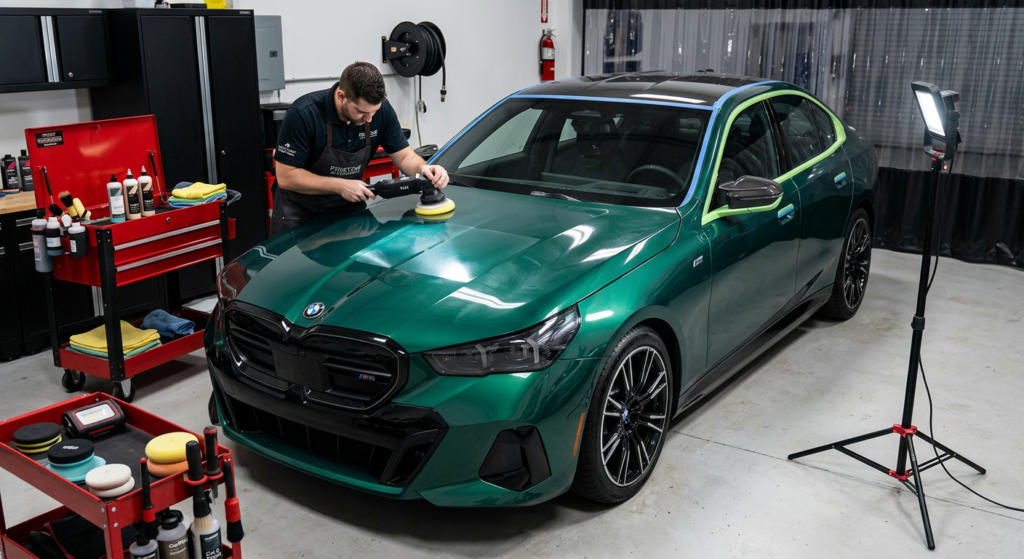
Step 6: Compounding stage (cut)
Compounding removes the bulk of defects by leveling the clear coat. A manufacturer like 3M describes compounds designed to remove sanding scratches and surface defects as part of a paint finishing system. :contentReference[oaicite:2]{index=2}
This stage is about:
- Controlled machine movement
- Working small sections
- Managing heat and pressure
- Keeping pads clean (compressed air or pad brushing)
The catch is: heavy cut can leave micro-marring or haze. That’s normal. It gets cleaned up in the refining stage.
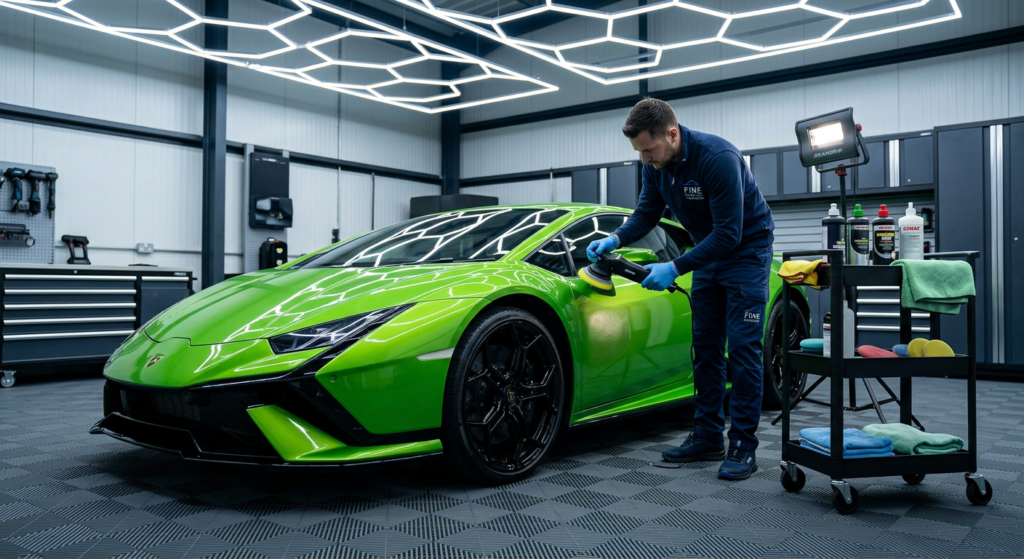
Step 7: Polishing stage (refine)
Polishing is where clarity and gloss come back. The goal is to refine the finish so it looks sharp in sun, shade, and under shop lighting.
A two-stage correction often looks like:
- Compound + cutting pad (defect removal)
- Finishing polish + softer pad (gloss refinement)
For many cars in Skokie, IL & Chicago’s North Shore, a one-step polish can still produce a big jump in gloss if the defects are moderate. The right call depends on your paint condition and your goals.
Step 8: Panel wipe and true inspection
Polishes can leave oils behind that hide faint haze. That’s why pros use a panel wipe or dedicated paint prep fluid before final inspection and before coating.
Gtechniq describes Panel Wipe as a product designed to remove polish residues so coatings can bond properly. :contentReference[oaicite:3]{index=3}
CARPRO describes Eraser as a cleaner for removing polishing oils and residues before applying coatings or sealants. :contentReference[oaicite:4]{index=4}
After the wipe-down, the paint gets checked again under strong lighting. If there’s remaining haze, the finishing step can be reworked until the finish is clean.
Step 9: Protection options after paint correction
Paint correction is the “make it right” step. Protection is the “keep it right” step.
Most common options after correction:
- Ceramic coating for long-term protection and easier washing
- Paint protection film (PPF) for impact and chip resistance on high-hit zones (front bumper, hood, fenders)
- Sealant or wax for shorter-term protection (often chosen for seasonal plans)
If you’re already thinking about PPF or ceramic coating, paint correction is usually the prep step that helps those products look better and bond to a cleaner surface.
If you want to talk through the right protection plan for Skokie, IL & Chicago’s North Shore driving, call (773) 216-3104 or book at thedetaildynasty.com/contact-us.
One-step vs two-step paint correction
A common question is “Do I need one step or two?”
One-step paint correction process
A one-step focuses on:
- Moderate defect removal
- Strong gloss improvement
- Faster turnaround than a multi-stage job
Best fit:
- Newer cars with light swirls
- Leased vehicles you want to clean up
- Daily drivers in Skokie, IL & Chicago’s North Shore that need a refresh
Two-step paint correction process
A two-step is used when:
- Swirls are heavy and widespread
- The paint is dull from years of washing
- There’s heavier water-spot etching
Best fit:
- Black or dark colors where swirls show easily
- Garage-kept enthusiast cars headed to meets around Wilmette, IL, Winnetka, IL, or Highland Park, IL
- Vehicles getting ceramic coating where you want max clarity first
Here’s what matters: the “right” process is the one that hits your goal while keeping the clear coat healthy.
What paint correction cannot fix
Paint correction can do a lot, but it has limits.
It cannot fix:
- Peeling clear coat
- Cracked paint
- Deep scratches through the clear into base coat
- Rust
- Stone chips that removed paint
Those issues often need body work and refinishing.
How to keep the finish looking sharp
Once your paint correction process is complete, maintenance is what keeps it looking that way in Skokie, IL & Chicago’s North Shore.
A simple routine that helps:
- Hand wash with clean microfiber towels
- Skip brush washes
- Use proper drying towels to avoid reintroducing swirls
- Top up protection as needed (based on what’s on the paint)
If you want a pro maintenance plan, your best move is to schedule a visit and get the paint looked at in person. Call (773) 216-3104 or book at thedetaildynasty.com/contact-us.
FAQs
1) What is the paint correction process?
The paint correction process is machine polishing that levels defects in the clear coat so swirls, light scratches, and haze are reduced or removed, restoring clarity and gloss.
2) Does paint correction remove clear coat?
Yes. Paint correction works by removing a controlled amount of clear coat to level defects. The IDA glossary notes clear coat is thin, commonly around 1.5 to 2.0 mils on most vehicles, which is why the process needs a careful approach. :contentReference[oaicite:5]{index=5}
3) How do I know if my car needs paint correction in Skokie, IL & Chicago’s North Shore?
If your paint looks dull in sunlight, you see spiderweb swirls, water spot rings, or your gloss is uneven across panels, you’re a strong candidate.
4) Should paint correction happen before ceramic coating?
Yes, if you want the best look. Coatings lock in what’s already there. Panel wipes are often used to remove polish residues so coatings can bond to clean paint. :contentReference[oaicite:6]{index=6}
5) Is one-step paint correction worth it?
For many daily drivers with moderate swirls, one-step correction can deliver a big improvement. If defects are deeper, a two-step may be the better match.
6) Can paint correction remove deep scratches?
It depends. If a scratch is only in the clear coat, correction may reduce it a lot. If it goes through the clear into base coat, it will still be visible and may need touch-up or refinishing.
7) How long do paint correction results last?
Results last as long as your wash habits and protection plan allow. Good washing and a quality protection layer can keep the finish looking crisp much longer than a quick wax alone.
Sources
- Glossary of Detailing Terms, International Detailing Association, (page updated date varies by entry). :contentReference[oaicite:7]{index=7}
- 3M Perfect-It Paint Finishing System, 3M, (page date not listed). :contentReference[oaicite:8]{index=8}
- PWv2 Panel Wipe, Gtechniq, (page date not listed). :contentReference[oaicite:9]{index=9}
- Eraser, CARPRO, (page date not listed). :contentReference[oaicite:10]{index=10}
