
Paint correction before ceramic coating is the step that makes the coating look better and stick the way it’s meant to. In Skokie, IL & Chicago’s North Shore, daily driving brings swirl marks, wash scratches, water-spot etching, and dull paint from salt, grime, and quick tunnel washes. If those defects stay in the clear coat, a ceramic coating will not “fix” them. It will seal them in.
If you want your coating to lay down clean, look sharp in the sun, and hold up through Midwest seasons, paint correction needs to happen first. To schedule an inspection, call (773) 216-3104 or book here: thedetaildynasty.com/contact-us.
Table of contents
- Ceramic coating does not hide paint defects
- What paint correction actually does
- Bonding matters: why prep is the real deal
- The “locked-in” effect: why coating first is a headache later
- What a proper pre-coating process looks like
- Wash and decontamination
- Test spot and correction
- Panel wipe before coating
- Coating application in small sections
- Common Skokie, IL & Chicago’s North Shore paint problems that must be corrected first
- How much correction do you need before ceramic coating?
- When paint correction may not be the answer
- FAQs
Ceramic coating does not hide paint defects
Ceramic coatings are protection products. They are not paint repair. If your paint has:
- Swirl marks from automatic wash brushes
- Light scratches from drying with rough towels
- Water-spot rings on the hood and roof
- Haze that makes metallic flake look muted
…the coating will still sit on top of that surface. You might get more gloss, and washing can feel easier, yet the defects remain visible because the clear coat is still uneven.
Here’s what matters: ceramic coating is like a clear layer of armor. Armor does not straighten the panel underneath it.
That’s why drivers around Skokie, IL & Chicago’s North Shore who want a coating for the long run usually start with paint correction first.
What paint correction actually does
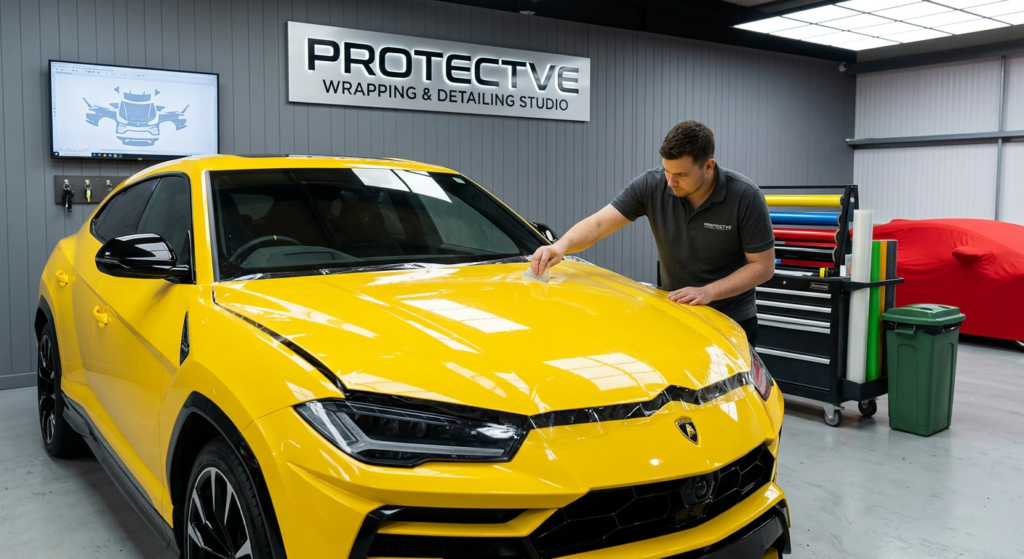
Paint correction is machine polishing that levels the clear coat enough to remove or reduce visible defects. In normal terms, it:
- Smooths out the “micro valleys” that cause swirls to show in sunlight
- Restores clarity so reflections look crisp again
- Brings back depth, especially on black, blue, and dark gray paint
It also sets the stage for the coating. When the paint is clean and refined, the coating can lay down evenly, look more uniform, and show off the finish instead of spotlighting flaws.
Now here’s the thing: this isn’t about chasing perfection on every car. The goal is to correct the paint to the level that matches your expectations and your paint’s condition, then protect it.
To get a clear recommendation for your vehicle in Skokie, IL & Chicago’s North Shore, call (773) 216-3104 or schedule at thedetaildynasty.com/contact-us.

Bonding matters: why prep is the real deal
Ceramic coatings are designed to bond to clean paint. If the surface is still loaded with polishing oils, residues, or fillers, bonding can suffer.
Coating makers and prep products spell this out in plain language:
- CARPRO describes Eraser as a cleaner that removes oils, silicones, and polishing dust to support maximum bonding for coatings.
Source: CARPRO Eraser product page. :contentReference[oaicite:0]{index=0} - Gtechniq’s Crystal Serum Light application document includes a step to wipe down each panel with Panel Wipe before applying the coating.
Source: CSL application information PDF. :contentReference[oaicite:1]{index=1} - Gtechniq’s Crystal Serum Light product page states that for best results, paint should be corrected and free from defects before application.
Source: CSL product page. :contentReference[oaicite:2]{index=2} - A CARPRO coating manual for CQ DLight instructs users to wash/decontaminate, then wipe down with Eraser with the surface dry and free of oils and moisture.
Source: CQ DLight manual PDF. :contentReference[oaicite:3]{index=3}
Bottom line: paint correction first, then a proper wipe-down, is not a “nice extra.” It’s part of how coatings are meant to be installed.
The “locked-in” effect: why coating first is a headache later
A common mistake is coating a car that still has swirls and etching because the owner wants protection fast. The result is usually disappointment for two reasons:
1) The defects look clearer, not better
Coatings can increase gloss and reflectivity. That sharper reflection can make swirls stand out more in direct sun.
2) Fixing it later becomes more work
If you coat first and decide later that you hate the swirls, you typically have to remove the coating before you can fully correct the paint again. That means extra polishing time and extra steps.
What this means for Skokie, IL & Chicago’s North Shore drivers: if you’re paying for long-term protection, it makes sense to correct the paint first so you love the look you’re protecting.
What a proper pre-coating process looks like
Every vehicle is different, yet the prep flow follows the same logic: clean the surface, correct it, strip residues, then coat.
Wash and decontamination
This stage removes traffic film, road salt residue, bonded grime, and embedded particles. Many coating manuals call out washing and decontamination as early steps. :contentReference[oaicite:4]{index=4}
In Skokie, IL & Chicago’s North Shore, this matters because winter road spray and brake dust can cling to lower doors, rocker panels, and rear bumpers.
Test spot and correction
A smart shop does a test spot first. It answers:
- How hard is your clear coat?
- What pad and polish combo gets the result without extra haze?
- Do you need a one-step polish or a multi-step correction?
Then correction is performed panel-by-panel to remove swirls, light scratches, and dullness before protection goes on.
Panel wipe before coating
After polishing, the paint needs a final wipe-down to remove polishing residues and oils so the coating can bond well.
That step shows up directly in manufacturer-related guidance:
- Gtechniq’s CSL application instructions call for Panel Wipe prior to coating. :contentReference[oaicite:5]{index=5}
- CARPRO describes Eraser as a coating-prep cleaner to remove polishing oils and residues. :contentReference[oaicite:6]{index=6}
Coating application in small sections
Many instructions guide applying coatings in small areas to control leveling and curing. The CSL application sheet references working in roughly 2 ft by 2 ft sections. :contentReference[oaicite:7]{index=7}
This is one reason an indoor garage setup is such a big deal. Controlled lighting and a stable environment help the installer see high spots and level the coating cleanly.
Common Skokie, IL & Chicago’s North Shore paint problems that must be corrected first
Let’s break it down. These are the problems we see all the time in Skokie, IL & Chicago’s North Shore, and why paint correction needs to come first.
Swirl marks from automatic washes
Tunnel washes can leave circular marring across the hood, doors, and trunk. If coated as-is, those circles still show, just under a tougher top layer.
Water-spot etching
Hard-water spotting can leave rings that are more than mineral deposits. Some spots etch into the clear coat. Correction is the step that removes or reduces that etching so it doesn’t stay visible.
Light scratches and scuffs from daily use
Door handle scratches, loading scuffs near trunks, and random marks from wiping dust off dry paint are common. Polishing is where these get addressed.
Haze on dark paint
Dark colors show everything. If the paint looks “gray” instead of deep and glossy, correction is usually the fix.
How much correction do you need before ceramic coating?
There’s no single answer, yet there are two common paths.
One-step polish before ceramic coating
A one-step correction can be a great fit when:
- Defects are mostly light swirls
- The car is newer or maintained decently
- You want strong improvement without chasing every mark
Multi-step paint correction before ceramic coating
A multi-step job is more common when:
- Swirls are heavy across most panels
- There is widespread water-spot etching
- The paint is dull and lacks clarity
The real question is: what level of finish do you want to protect? If you want a coating because you care about the look, correction is where that look comes from.
To get a plan that matches your paint and your goals in Skokie, IL & Chicago’s North Shore, call (773) 216-3104 or book at thedetaildynasty.com/contact-us.
When paint correction may not be the answer
Paint correction can’t fix everything. Some problems point to body work instead:
- Clear coat peeling
- Cracked paint
- Rust
- Deep scratches that cut through color
If you can feel a scratch clearly with a fingernail, it may still be visible after polishing. A skilled correction can often reduce its look, yet it may not vanish.
FAQs
1) Why does paint correction need to happen before ceramic coating?
Because coatings protect what’s already there. Correction removes swirls and haze first, then the coating seals in a cleaner finish.
2) Can ceramic coating fill swirl marks?
No. Coatings do not level the clear coat the way polishing does. Any visible swirls remain under the coating.
3) What happens if I ceramic coat my car without paint correction?
Your car gains protection, yet you may still see swirls, etching, and dull areas. Later correction often means polishing through the coating first, which adds time.
4) Do coating brands really require a panel wipe after polishing?
Yes. Gtechniq’s CSL application instructions call for wiping down panels with Panel Wipe before coating. :contentReference[oaicite:8]{index=8}
5) Is CARPRO Eraser only for coatings?
It’s commonly used before coatings because it removes oils and residues left by polishing to support coating bonding. :contentReference[oaicite:9]{index=9}
6) How do I know if my paint in Skokie, IL & Chicago’s North Shore needs a one-step or multi-step correction?
A proper inspection and test spot are the fastest way to tell. Harder paint may need more cut; softer paint may correct quickly but haze easily.
7) What should I do next if I want ceramic coating done right?
Book an inspection so the shop can check defects, talk through goals, and recommend the correction level before coating. Call (773) 216-3104 or schedule here: thedetaildynasty.com/contact-us.
Sources (for citing facts)
- Crystal Serum Light Application Information, Gtechniq, April 2024, https://www.gtechniq.com.au/wp-content/uploads/2024/04/CSL-Application-Information.pdf :contentReference[oaicite:10]{index=10}
- Eraser, CARPRO, Publication date not listed, https://carpro.global/product/eraser/ :contentReference[oaicite:11]{index=11}
- Crystal Serum Light, Gtechniq, Publication date not listed, https://gtechniq.com/shop/auto/ceramic-coatings/crystal-serum-light/ :contentReference[oaicite:12]{index=12}
- CARPRO CQ DLight Manual, CARPRO (hosted by bb-carcare.be), December 2021 (file date based on URL path), https://www.bb-carcare.be/wp-content/uploads/2021/12/CARPRO__CQ_DLight_Manual-1.pdf :contentReference[oaicite:13]{index=13}
- Ceramic Coating Application Instructions, OPTEKUT (Optek Films), Publication date not listed, https://optekut.com/ceramic-coating-application/ :contentReference[oaicite:14]{index=14}
