

Window Tinting in Des Plaines & Niles, IL can make daily driving more comfortable by reducing solar heat, glare, and UV exposure while adding privacy and changing the look of your vehicle. The right film depends on how much visible light you want through the glass, how much heat rejection matters to you, what your vehicle already has from the factory, and where the film will be installed.
A dark film is not automatically the film with the strongest heat rejection. Modern ceramic tint can manage a large amount of solar and infrared energy while remaining lighter than many drivers expect. That gives drivers more room to balance heat control, privacy, outward visibility, and Illinois tint rules.
The Detail Dynasty installs automotive window tint from our dedicated garage facility in Skokie, IL & Chicago’s North Shore. If you drive from Des Plaines or Niles and are comparing film types, shades, and legal tint setups, this guide covers what you should know before scheduling your vehicle.
Table of Contents
- What Is Automotive Window Tint?
- Why Des Plaines and Niles Drivers Choose Window Tint
- What VLT Means
- Common Window Tint Shades
- Ceramic Window Tint Explained
- Does Darker Tint Block More Heat?
- Window Tint for Privacy
- Window Tint for Heat Rejection
- Window Tint and UV Exposure
- Illinois Window Tint Rules
- Factory Privacy Glass and Aftermarket Tint
- Choosing Tint for a Daily Driver
- Window Tint for SUVs and Crossovers
- Tesla Window Tint Near Des Plaines and Niles
- What Happens During Tint Installation
- Window Tint Aftercare
- Schedule Window Tint Near Des Plaines and Niles
- Frequently Asked Questions
What Is Automotive Window Tint?
Automotive window tint is a thin film applied to vehicle glass.
Depending on the product, window film can affect:
- Visible light transmission
- Solar heat entering the cabin
- Infrared energy
- UV exposure
- Glare
- Privacy
- Exterior appearance
Film type matters because two windows can look nearly the same from outside while performing differently in sunlight.
One film may be dark but offer moderate solar control.
Another film may be lighter while rejecting more infrared energy.
For drivers researching Window Tinting in Des Plaines & Niles, IL, the shade is only part of the decision.
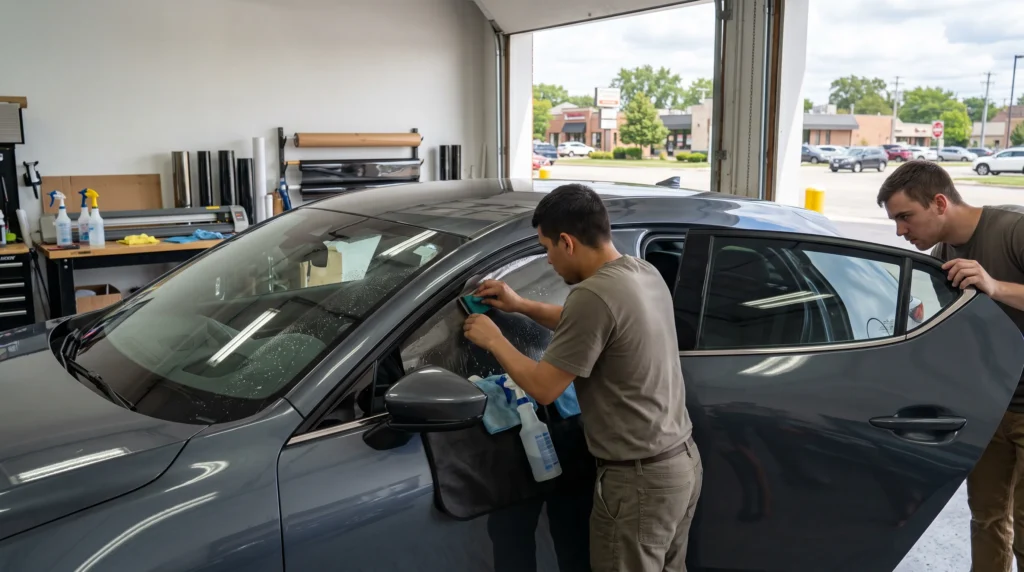
You can review The Detail Dynasty’s Window Tint service when comparing tint options for your vehicle.
Why Des Plaines and Niles Drivers Choose Window Tint
Vehicle owners around Des Plaines and Niles can spend plenty of time driving through Chicago-area traffic, parking outside, and dealing with bright sunlight through side and rear glass.
Window tint can help make that experience more comfortable.
Common reasons drivers choose tint include:
- Less solar heat inside the cabin
- Reduced glare
- More privacy
- UV reduction
- Darker glass appearance
- Less direct sunlight on interior surfaces
The benefits you care about should guide your film choice.
If privacy matters most, VLT may sit near the top of your list.
If cabin heat is your biggest concern, solar and infrared performance deserve more attention.
If you drive after dark often, outward visibility should be part of the decision too.
What VLT Means
VLT stands for Visible Light Transmittance.
It tells you how much visible light passes through the glass and film.
A higher percentage means more visible light passes through.
A lower percentage means less visible light passes through.
That usually creates a darker appearance.
| VLT | General Appearance |
|---|---|
| 70% | Very light |
| 50% | Light |
| 35% | Medium |
| 20% | Dark |
| 5% | Very dark |
These descriptions are visual guides rather than legal recommendations.
The final reading on the vehicle may differ from the film label because factory glass already has its own light-transmission level.
That matters when Illinois law requires a minimum amount of light transmission on certain windows.
Common Window Tint Shades
70% Window Tint
A 70% film is very light.
Many people may not notice it immediately from outside.
Lighter ceramic films can still provide heat and UV control, which makes this type of shade worth looking at when you want solar protection without a dark appearance.
50% Window Tint
A 50% film creates a mild shaded look.
It can add some privacy while still allowing a large amount of visible light through the glass.
This percentage also appears in certain Illinois front side-window configurations.
35% Window Tint
A 35% film creates a more visible tinted appearance.
It can offer more privacy than 50% while still allowing a fair amount of visible light through.
Illinois law also references 35% light transmission in one permitted side-window setup.
20% Window Tint
A 20% film looks much darker.
It can provide stronger privacy during daylight, but where the film is installed matters.
Do not assume that because a 20% film is sold for automotive use, it is permitted on every window in Illinois.
5% Window Tint
A 5% film lets very little visible light through.
It creates a very dark appearance and can make outward visibility harder after sunset.
For a daily driver, nighttime use deserves just as much thought as daytime privacy.
Ceramic Window Tint Explained
Ceramic window tint uses ceramic technology within the film to manage solar and infrared energy.
3M’s Ceramic IR Series uses nano-ceramic construction and is offered in several VLT levels. 3M states that the series can reject up to 66% of total solar energy, provide up to 95% infrared rejection under its stated measurement method, and reject up to 99.9% of UV light.
The film is also metal-free, which 3M says means it will not interfere with GPS, satellite radio, mobile devices, or 5G signals.
For someone considering Window Tinting in Des Plaines & Niles, IL, ceramic tint may make sense when heat control matters as much as appearance.
Why Ceramic Tint Appeals to Daily Drivers
Ceramic tint can give you strong solar performance without forcing you into a very dark shade.
That can suit drivers who want:
- Heat rejection
- UV reduction
- Less glare
- A lighter appearance
- Privacy without going extremely dark
- Non-metal film construction
The exact performance depends on the film and shade selected.
Look at the specifications for the product being installed rather than relying only on the word “ceramic.”
Does Darker Tint Block More Heat?
Not always.
This is one of the biggest misunderstandings around automotive tint.
VLT measures visible light.
Heat control is measured through other figures.
3M’s current Color Stable Series shows this difference clearly. The company lists solar-energy rejection separately from visible-light transmission and offers several shade choices within the same film family.
A darker film can block more visible light while a lighter film with different construction rejects more solar or infrared energy.
That means choosing Window Tinting in Des Plaines & Niles, IL based only on how dark the sample looks may not give you the result you want.
If heat is your concern, compare the heat-control data for the exact film.
Window Tint for Privacy
Privacy is one of the easiest tint benefits to see.
Lower VLT generally makes the cabin harder to see from outside.
The effect still changes with lighting.
During a bright afternoon, outside reflections can make the glass appear darker.
At night, interior lights can make passengers and belongings easier to see.
Tint can make the cabin less visible, but it should not be treated as a security system.
A lower-VLT film can provide more visual privacy, but it also reduces the amount of visible light reaching your eyes when looking out.
That tradeoff matters at night.
Window Tint for Heat Rejection
Heat rejection depends on film construction.
3M says its Ceramic IR Series can reject up to 66% of total solar energy and up to 95% of infrared energy under the company’s stated test conditions.
Those are maximum figures across the film family rather than a promise that every shade performs identically.
When comparing film, ask about:
- VLT
- Total Solar Energy Rejection
- Infrared rejection
- UV rejection
These numbers tell you more than the shade name by itself.
The real question is whether you want heat control, privacy, appearance, or a mix of all three.
Window Tint and UV Exposure
Automotive film can also reduce UV light entering through treated glass.
3M states that its Ceramic IR Series rejects up to 99.9% of UV light.
Its Color Stable Series also combines UV control, privacy, and solar-energy rejection within a non-metal film.
Reducing UV exposure can also reduce the amount of sunlight reaching:
- Seats
- Dashboard surfaces
- Door panels
- Trim
- Other cabin materials
Window tint does not stop all interior aging.
Time, heat, cleaning products, use, and material type also affect the cabin.
UV reduction is still one reason drivers choose film even when they do not want very dark windows.
Illinois Window Tint Rules
Drivers considering Window Tinting in Des Plaines & Niles, IL should understand that Illinois does not use one legal tint percentage for every window.
Current Illinois law is found in 625 ILCS 5/12-503.
Illinois Windshield Tint
Illinois generally prohibits tinted film across the full front windshield.
The statute permits a nonreflective tinted strip along the uppermost portion of the windshield as long as it does not extend more than six inches downward from the top.
That means a full dark windshield should not be treated as a normal legal tint setup.
Illinois Front Side-Window Tint
The windows immediately beside the driver have their own rules.
One permitted setup allows at least 50% light transmittance on the windows beside the driver when none of the windows behind the driver’s seat are treated below 30% light transmittance. The statute states that law enforcement should observe a 5% variance when measuring the glass.
Another permitted setup allows at least 35% light transmittance on the front side windows when none of the windows behind the driver’s seat are treated below 35% light transmittance, subject to the conditions in the statute.
Illinois law also includes provisions for certain vehicles with manufacturer-installed rear tint and for qualifying medical circumstances.
This is why the whole vehicle should be considered before film is selected.
This section is general information rather than legal advice. Current Illinois law should be checked when the tint plan is made.
Factory Privacy Glass and Aftermarket Tint
Many SUVs, trucks, vans, and crossovers come with darker rear glass from the factory.
That glass is commonly called privacy glass.
Factory privacy glass is not exactly the same thing as aftermarket window film.
The glass itself has a darker appearance from the factory.
Aftermarket film adds another layer over the glass.
That matters because adding film to already-dark glass can lower the finished VLT more than you might expect from the film label alone.
It can also affect how you plan the front windows under Illinois rules.
Before choosing Window Tinting in Des Plaines & Niles, IL, account for what your vehicle already has.
Choosing Tint for a Daily Driver
A daily driver may be used in bright sunlight, rain, cloudy weather, early mornings, and late nights.
That makes balance worth thinking about.
If Heat Is Your Main Concern
Compare ceramic-film performance and solar-energy figures.
Do not assume you need the darkest shade.
If Privacy Is Your Main Concern
Lower VLT creates a darker appearance and generally makes the cabin harder to see from outside.
Stay within the Illinois rules for the window being treated.
If Night Driving Is Common
Think carefully before choosing a very dark shade.
A tint that feels comfortable at noon can make it harder to see through a side window at night.
If Appearance Matters Most
Compare how several shades look on glass.
A 50%, 35%, and 20% film can give the same vehicle very different character.
Window Tint for SUVs and Crossovers
SUVs and crossovers often start with darker rear privacy glass.
Owners commonly want one of two things.
The first is a closer visual match between the front and rear windows.
The second is added heat-control film across the rear glass even when that glass already looks dark enough.
These are different goals.
If the rear already has the appearance you want, a lighter high-performing film may be considered when solar control matters more than added darkness.
The finished VLT still needs to account for the original glass.
Tesla Window Tint Near Des Plaines and Niles
Tesla vehicles can have large glass areas and model-specific window shapes.
The Detail Dynasty offers dedicated Tesla Window Tint services.
Cybertruck owners can also review our Cybertruck Window Tint service.
Tesla owners can also review:
The same Illinois tint rules need to be considered when selecting film for a Tesla.
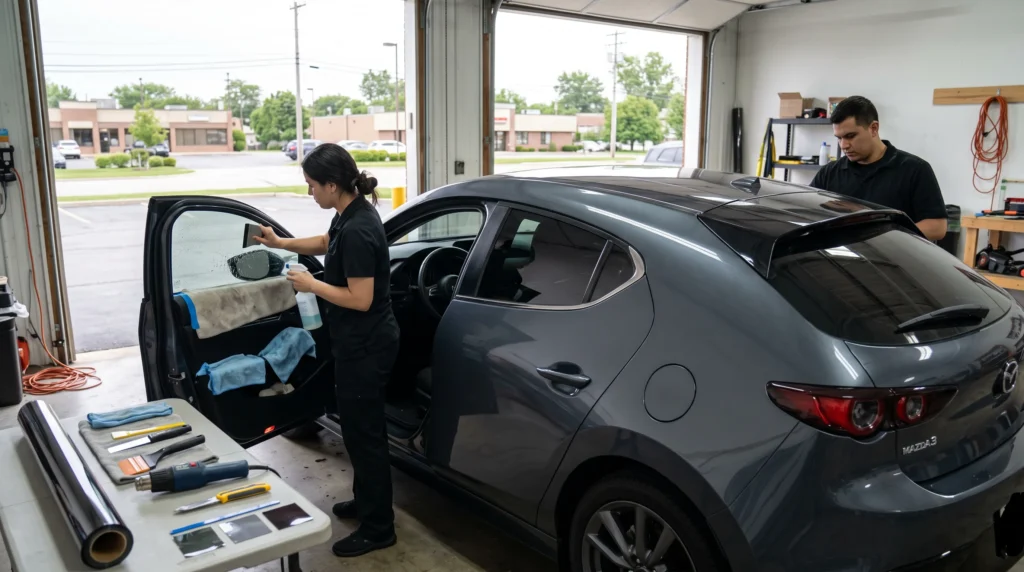
What Happens During Tint Installation
Professional tint installation starts with clean glass.
The installer needs to remove dirt, residue, and contamination that could become trapped between the glass and film.
The process may include:
- Inspecting the glass
- Removing old film when needed
- Cleaning the inside glass
- Preparing edges and corners
- Fitting film to the glass
- Applying the film with mounting solution
- Removing moisture
- Checking the film position
- Inspecting the finished window
Curved rear glass may require more film shaping than flat side glass.
Door windows also move through seals, which makes clean edges and accurate fit important.
The Detail Dynasty performs tint installations indoors from our garage facility in Skokie, IL & Chicago’s North Shore.
That gives the work a controlled setting away from outdoor wind and airborne debris.
Window Tint Aftercare
Fresh tint needs time to dry.
Do not treat newly installed film exactly like glass that has been tinted for months.
Your installer should tell you how long to keep the side windows closed and when interior glass cleaning can begin.
During the drying period, you may notice:
- Mild haze
- Small moisture pockets
- Slight cloudiness
These conditions can be part of normal drying.
Do not press, poke, or peel at fresh film because you see moisture underneath it.
Cleaning Tinted Windows
Once the film has dried according to the installer’s directions:
- Use soft microfiber towels
- Avoid abrasive pads
- Avoid aggressive scrubbing
- Use a cleaner suitable for automotive window film
Gentle cleaning helps keep the film looking clear.
Window Tinting in Des Plaines & Niles, IL: What Should You Choose?
Start with what bothers you about your current glass.
Is the cabin too warm?
Do you want more privacy?
Does bright sunlight create glare?
Do you want darker glass for appearance?
Do you drive at night often?
Does the vehicle already have factory rear privacy glass?
Those questions can narrow the film and shade choices quickly.
Then check the film specifications.
For heat, look at solar and infrared performance.
For privacy, look at VLT.
For daily use, think about nighttime visibility.
For Illinois compliance, consider the full vehicle setup rather than one window at a time.
That approach makes Window Tinting in Des Plaines & Niles, IL much easier to plan.
Other Vehicle Protection Services
Window tint can be scheduled on its own or alongside other vehicle work.
The Detail Dynasty also provides:
- Paint Protection Film
- Color PPF
- Ceramic Coating
- Paint Correction
- Vinyl Wrap
- Exterior Detailing
- Interior Detailing
- Auto Detailing
If several services are planned, discuss them when scheduling so the work can be arranged in the right order.
Schedule Window Tint Near Des Plaines and Niles
If you are researching Window Tinting in Des Plaines & Niles, IL, The Detail Dynasty can help you compare film choices, shade levels, privacy, solar control, and your vehicle’s existing glass.
Our automotive detailing and protection studio is based in Skokie, IL & Chicago’s North Shore.
Tell us what you drive and what you want from your tint. We can discuss film and coverage choices before installation.
Call (773) 216-3104 or visit our contact page to schedule an appointment.
Frequently Asked Questions
1. What tint percentage should I choose for a daily driver?
The right VLT depends on privacy, nighttime visibility, heat goals, existing factory glass, and Illinois law. Lighter films let more visible light through, while lower-VLT films produce a darker appearance.
2. Does ceramic window tint reduce heat?
Yes, depending on the film. 3M states that its Ceramic IR Series can reject up to 66% of total solar energy and up to 95% of infrared energy under its stated testing method.
3. Does darker tint always reject more heat?
No. Visible darkness and heat rejection are separate measurements. A lighter ceramic film can provide stronger solar control than a darker film with different construction.
4. Is 35% tint legal on front side windows in Illinois?
Illinois permits at least 35% light transmittance on the windows immediately beside the driver under one setup where none of the windows behind the driver’s seat are treated below 35% light transmittance, subject to the statute’s conditions.
5. Can I tint my entire windshield in Illinois?
Illinois generally prohibits tinted film across the full front windshield. A nonreflective strip is permitted along the uppermost portion if it does not extend more than six inches downward from the top.
6. Can window tint be installed over factory privacy glass?
Aftermarket film can be installed over many factory-tinted windows, but the existing glass affects final VLT and darkness. The complete glass setup should be considered before selecting film.
7. Where can I get Window Tinting near Des Plaines and Niles, IL?
The Detail Dynasty provides professional Window Tint installation from our dedicated garage facility in Skokie, IL & Chicago’s North Shore. Drivers from Des Plaines and Niles can call (773) 216-3104 or visit our contact page to schedule an appointment.
Sources
- Illinois Compiled Statutes, 625 ILCS 5/12-503
Publisher: Illinois General Assembly
Publication Date: Current statute accessed October 2026
Used for: Illinois windshield tint limits, front side-window rules, factory rear-glass provisions, and other tint requirements. - Illinois Public Act 98-0153
Publisher: Illinois General Assembly
Publication Date: 2013
Used for: 50% and 35% front side-window configurations and the stated 5% enforcement variance. - 3M Automotive Window Film Ceramic IR Series
Publisher: 3M
Publication Date: Not listed, accessed October 2026
Used for: Ceramic construction, VLT choices, total solar-energy rejection, infrared rejection, UV rejection, and non-metal design. - 3M Automotive Window Film Color Stable Series
Publisher: 3M
Publication Date: Not listed, accessed October 2026
Used for: VLT options, solar-energy rejection, ceramic nano-technology, privacy, and non-metal construction. - Village of Niles Maps and GIS
Publisher: Village of Niles
Publication Date: Current municipal page accessed October 2026
Used for: Official Niles municipal geographic reference.
