
Window Tinting in Highland Park, IL can give drivers more privacy without forcing them into a tint setup that conflicts with Illinois law. The challenge is understanding that window tint rules are not based on one legal percentage for the entire vehicle. Windshields, front side windows, rear side windows, factory glass, and aftermarket film can all affect the setup.
Privacy also depends on more than choosing the darkest film available. A darker VLT can make the cabin harder to see from outside, but it also reduces the amount of visible light passing through the glass. That matters during nighttime driving and when checking mirrors, pedestrians, cyclists, or vehicles around you.
At The Detail Dynasty, we install automotive window tint from our dedicated garage facility in Skokie, IL & Chicago’s North Shore. For Highland Park drivers looking for more privacy, the goal should be finding a shade that fits your preferences, your vehicle, and the current Illinois rules.
Table of Contents
- How Window Tint Creates Privacy
- What VLT Means for Window Tint
- How Much Privacy Do Common Tint Shades Provide?
- What Illinois Law Says About Windshield Tint
- Illinois Rules for Front Side Windows
- Why Rear Window Tint Affects Your Front Tint Choice
- Factory Privacy Glass vs Aftermarket Tint
- Can You Get Privacy Without Extremely Dark Tint?
- Privacy vs Nighttime Visibility
- Heat Rejection and Privacy Are Different
- Choosing Tint for a Daily Driver
- Window Tint for SUVs and Crossovers
- Tesla Window Tint Near Highland Park
- Why Professional Window Tint Installation Matters
- Schedule Window Tinting Near Highland Park
- Frequently Asked Questions
How Window Tint Creates Privacy
Window Tinting in Highland Park, IL can reduce how easily people outside the vehicle can see into the cabin.
The amount of privacy depends heavily on visible light transmission, commonly called VLT.
Lower VLT means less visible light passes through the filmed glass.
That usually gives the glass a darker appearance.
Privacy can also change based on lighting conditions. During bright daylight, a tinted vehicle may look much darker from outside than it does at night when interior lights are on.
That is why a tint percentage should not be treated as a perfect privacy rating.
Window tint can help make personal belongings and the cabin less visible, but no shade should be treated as a security system. Items left inside a parked vehicle can still be seen under certain lighting conditions.
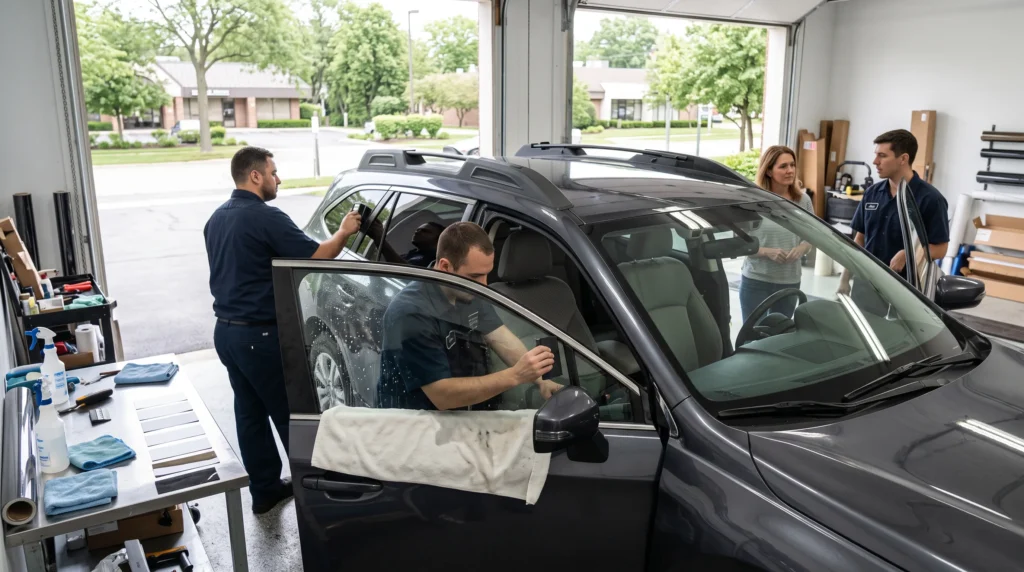
Drivers considering Window Tinting in Highland Park, IL can review The Detail Dynasty’s Window Tint service before deciding which shade fits their goals.
What VLT Means for Window Tint
VLT stands for Visible Light Transmittance.
It describes the percentage of visible light that passes through filmed glass.
3M defines VLT as the percentage of visible light passing directly through filmed glass. A higher VLT means a lighter film.
A few common shade levels make the concept easier to understand:
| VLT | General Appearance | Privacy Level |
|---|---|---|
| 70% | Very light | Low |
| 50% | Light | Mild |
| 35% | Medium | Noticeable |
| 20% | Dark | Higher |
| 5% | Very dark | Very high during many daylight conditions |
These descriptions are visual guides rather than legal recommendations.
The percentage printed on a film box also does not automatically equal the final VLT of the completed window.
Factory glass already transmits a certain amount of light. Once film is installed over that glass, the combined measurement can differ from the film’s rated VLT.
That matters when Window Tinting in Highland Park, IL needs to meet a legal light-transmission limit.
How Much Privacy Do Common Tint Shades Provide?
Drivers usually think about tint percentages in terms of appearance first.
Privacy increases as less visible light passes into the cabin, but every shade changes visibility differently.
50% Window Tint
A 50% tint is fairly light.
It can soften the view into the cabin without making the glass appear heavily tinted.
Drivers looking for a subtle appearance may prefer this range, especially on windows where Illinois law limits how dark the completed setup may be.
35% Window Tint
A 35% tint provides more visible privacy than 50%.
From outside, the cabin appears darker while still allowing a fair amount of visible light through the glass.
This shade is also relevant to Illinois law because the state statute describes certain vehicle configurations where at least 35% light transmittance is required on the windows immediately beside the driver.
20% Window Tint
A 20% film looks much darker.
It can give rear passenger areas a stronger privacy effect during daylight.
The legal issue is where the film is installed and what other glass on the vehicle is doing.
A 20% film should not be assumed legal on the windows beside the driver simply because it is sold for automotive use.
5% Window Tint
A 5% tint allows very little visible light through.
It produces a very dark appearance and can make the interior difficult to see from outside during many daytime conditions.
That level of darkness can also make outward visibility harder when driving at night.
Privacy should never be the only factor in choosing a shade.
What Illinois Law Says About Windshield Tint
Drivers searching for Window Tinting in Highland Park, IL should pay close attention to the windshield.
Illinois Vehicle Code Section 12-503 generally prohibits tinted film across the front windshield.
The statute does permit a nonreflective tinted strip along the uppermost portion of the windshield, as long as the material does not extend more than six inches down from the top.
That means privacy goals should normally be addressed through legally permitted side and rear window configurations rather than placing dark film across the full windshield.
The windshield rule is also separate from heat-control goals.
A vehicle owner looking for heat reduction should not assume that a full dark windshield is necessary or permitted.
Illinois Rules for Front Side Windows
The windows directly beside the driver receive special treatment under Illinois law.
Section 12-503 describes several permitted configurations.
One provision allows nonreflective film that permits at least 50% light transmittance on the windows immediately beside the driver when none of the windows behind the driver’s seat are treated below 30% light transmittance. The statute states that law enforcement should observe a 5% variance when metering that light transmission.
Another provision allows at least 35% light transmittance on the windows beside the driver when none of the windows behind the driver’s seat are treated below 35% light transmittance, again under the conditions written into the statute.
The relationship between the front and rear windows is what catches many vehicle owners by surprise.
You cannot always choose the front side-window shade without looking at the rest of the vehicle.
Why Rear Window Tint Affects Your Front Tint Choice
Suppose you want strong rear-seat privacy.
It might seem natural to choose very dark tint for the rear and then pick whatever shade you prefer for the front doors.
Illinois law does not work that way in every vehicle setup.
Section 12-503 connects certain permitted front-side light-transmission levels to how the windows behind the driver are treated.
This means Window Tinting in Highland Park, IL should be considered as a complete vehicle setup rather than a collection of unrelated windows.
Before selecting film, consider:
- Existing factory glass
- Front side-window VLT
- Rear side-window VLT
- Rear window treatment
- Windshield tint strip
- Whether rear glass was tinted by the manufacturer
- Final measured VLT after film installation
The completed vehicle is what matters.
Factory Privacy Glass vs Aftermarket Tint
Many SUVs, crossovers, vans, and trucks leave the factory with dark rear glass.
This is commonly called privacy glass.
Factory privacy glass and aftermarket window film are not necessarily the same thing.
Privacy glass gets its darker appearance from the glass itself, while aftermarket film is applied to the glass surface.
Illinois law contains a separate provision addressing vehicles with certain manufacturer-installed smoked or tinted rear glass and permits qualifying front-side treatment under the conditions written in the statute.
This is one reason an installer should look at the vehicle itself before treating a legal tint percentage as universal.
A sedan with clear factory rear windows may call for a different tint plan than an SUV that already has dark rear privacy glass.
Can You Get Privacy Without Extremely Dark Tint?
Yes.
Many drivers can create a noticeable privacy effect without choosing the darkest film available.
A medium shade can reduce visibility into the cabin while leaving more visible light available to the driver.
Lighting also plays a major role.
During bright daylight, reflected outdoor light can make a moderately tinted window look darker from outside. At night, interior lights may make passengers easier to see.
This is why Window Tinting in Highland Park, IL should balance privacy with how the vehicle is actually used.
If you frequently drive after sunset, a lighter shade may feel more comfortable than an extremely dark film.
If rear-seat privacy matters more than front-seat privacy, the tint plan may use different shades where the law and vehicle setup permit them.
Privacy vs Nighttime Visibility
Dark tint works in both directions.
If less light can travel into the vehicle, less visible light can travel through the glass toward your eyes when you are looking out.
During a bright afternoon, this may not feel like a problem.
At night, the situation changes.
Street lighting can vary from one road to another. Darker side glass may make it harder to see details outside when:
- Turning onto a poorly lit street
- Backing into a parking space
- Checking for pedestrians
- Watching for cyclists
- Looking through a side mirror
- Entering a dark driveway
The right privacy level is personal, but outward visibility deserves a place in the decision.
A daily driver should still feel comfortable after the sun goes down.
Heat Rejection and Privacy Are Different
A common mistake is assuming that the darkest tint automatically provides the highest heat rejection.
It does not.
VLT measures visible light.
Heat-control measurements deal with solar energy and infrared energy.
3M describes Total Solar Energy Rejection, or TSER, as the percentage of total solar energy rejected by filmed glass. It also lists infrared measurements separately from VLT.
That means a lighter high-performance film can provide strong heat control without looking extremely dark.
3M’s current Color Stable Series, as one manufacturer reference, offers several VLT options while listing solar-energy rejection, UV protection, and privacy as separate film characteristics.
This distinction can help drivers who want Window Tinting in Highland Park, IL for both privacy and cabin comfort.
Choose the shade for the appearance and visibility you want, then compare heat performance for the film itself.
Choosing Tint for a Daily Driver
A daily driver has different needs from a show vehicle that spends most of its time indoors.
Your car may need to work well during bright summer afternoons, cloudy mornings, nighttime drives, and long highway trips.
Before choosing a shade, ask yourself:
- How much privacy do I want?
- How much nighttime driving do I do?
- Does my vehicle already have rear privacy glass?
- Is heat reduction one of my goals?
- Do I want all side windows to look similar?
- How much visible light do I want through the front doors?
- What setup fits Illinois law?
The answers can narrow the choices quickly.
If Privacy Is Your Main Goal
Focus on the windows where privacy matters most while keeping the legal relationship between front and rear glass in mind.
If Night Driving Is Common
Consider how a darker VLT will affect your view through side glass.
If Heat Is the Bigger Concern
Do not choose by darkness alone.
Compare TSER and infrared performance.
Window Tint for SUVs and Crossovers
SUVs and crossovers often arrive with darker rear glass from the manufacturer.
That creates a different starting point from a sedan with clear glass.
Some owners want the front side windows to visually match the rear.
Others want the entire vehicle to have added heat-control film.
These are two different goals.
Putting film on existing privacy glass changes the final VLT. The completed glass may become much darker than the film’s label suggests.
This is why tint selection should account for the original glass before installation.
Drivers seeking Window Tinting in Highland Park, IL should have the vehicle’s current glass considered before picking film solely from a sample board.
Tesla Window Tint Near Highland Park
Tesla vehicles have large glass areas and distinctive window shapes, so film selection deserves careful thought.
The Detail Dynasty provides Tesla Window Tint services for Tesla owners.
Cybertruck drivers can also review our Cybertruck Window Tint service.
Tesla owners looking for more exterior protection can also consider:
The same Illinois tint rules still need to be considered when choosing the finished setup.
Why Professional Window Tint Installation Matters
The finished appearance depends on more than the film itself.
Vehicle glass needs careful preparation before tint is applied.
An installer also works around:
- Window seals
- Curved rear glass
- Defroster lines
- Trim
- Tight glass edges
- Moving door windows
- Factory tint
Dust, fibers, creases, poor trimming, or trapped debris can affect the final look.
The Detail Dynasty performs window tint work from our dedicated garage facility in Skokie, IL & Chicago’s North Shore.
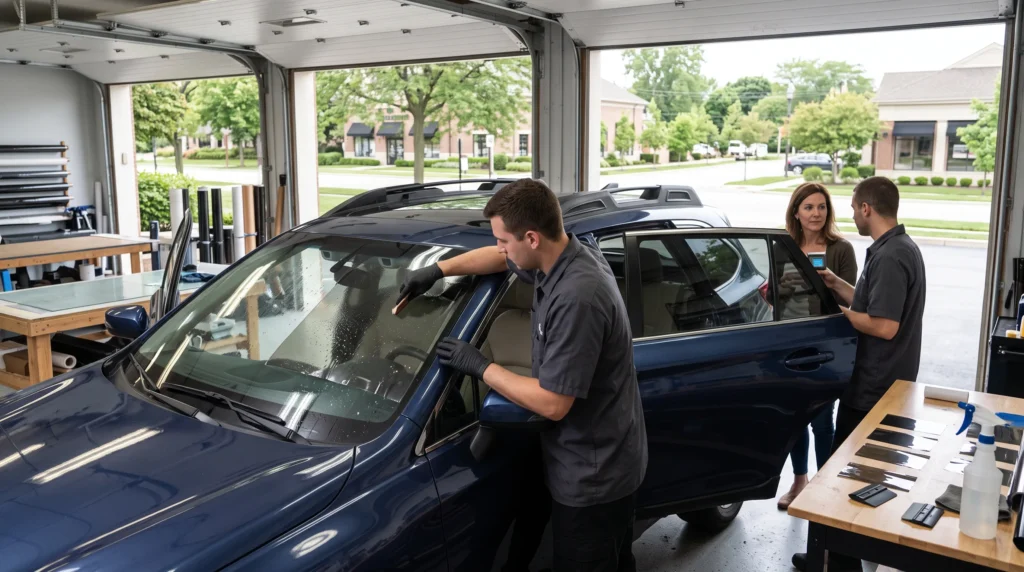
Working in a controlled indoor setting gives our team a suitable place to prepare glass, position film, trim edges, and inspect the completed work.
Drivers can also discuss related services such as Paint Protection Film, Ceramic Coating, Paint Correction, Vinyl Wrap, and Auto Detailing.
Window Tinting in Highland Park, IL: Privacy Without Guesswork
Privacy is one of the most noticeable reasons to tint vehicle windows.
The goal is not simply to make every window as dark as possible.
A better approach is to find the amount of privacy you want while accounting for visibility, the existing glass, film performance, and Illinois law.
Remember these points:
- Lower VLT generally creates a darker appearance.
- Film VLT and final glass VLT are not always identical.
- Illinois limits full-windshield tint.
- Front side-window rules depend partly on the treatment behind the driver.
- Factory rear privacy glass can affect your tint plan.
- Darker film is not automatically better at rejecting heat.
- Very dark tint can reduce nighttime visibility.
When those pieces are considered together, Window Tinting in Highland Park, IL becomes much easier to plan.
Schedule Window Tinting Near Highland Park
If you want more privacy from Window Tinting in Highland Park, IL, The Detail Dynasty can help you review tint shades and film choices for your vehicle.
Our automotive detailing and protection studio is based in Skokie, IL & Chicago’s North Shore.
Tell us what you drive, whether it already has factory privacy glass, how much privacy you want, and how you use the vehicle.
We can discuss film choices and coverage without suggesting that one percentage fits every car.
Call (773) 216-3104 or visit our contact page to schedule an appointment.
Frequently Asked Questions
1. What tint gives the most privacy?
Lower-VLT film generally gives more visual privacy because less visible light passes through the glass. A 20% film usually appears darker than a 35% or 50% film. The shade still needs to fit the window location, vehicle setup, visibility needs, and Illinois law.
2. Is 35% window tint legal in Illinois?
Illinois law permits at least 35% light transmittance on the windows immediately beside the driver under one configuration described in Section 12-503, where none of the windows behind the driver’s seat are treated below 35% light transmittance. Other configurations have different requirements.
3. Can I put dark tint on my entire windshield in Illinois?
Illinois generally prohibits tinted film across the full front windshield. A nonreflective strip may be installed along the uppermost portion as long as it does not extend more than six inches down from the top.
4. Does factory privacy glass count when choosing front window tint?
It can affect the applicable setup. Illinois law contains provisions dealing with manufacturer-installed smoked or tinted glass behind the driver, so the existing factory glass should be considered before choosing aftermarket film.
5. Does darker window tint block more heat?
Not automatically. VLT measures visible light transmission, while solar and infrared performance are measured separately. A lighter high-performance film can reject more solar energy than a darker film with weaker heat-control properties.
6. Can window tint give privacy without making my car extremely dark?
Yes. Medium tint shades can make the cabin less visible from outside while allowing more visible light through than extremely dark film. The result also changes with outdoor and interior lighting.
7. Where can I get Window Tinting near Highland Park, IL?
The Detail Dynasty provides professional Window Tint installation from our dedicated garage facility in Skokie, IL & Chicago’s North Shore. Highland Park drivers can call (773) 216-3104 or use our contact page to schedule an appointment.
Sources
- Illinois Compiled Statutes, 625 ILCS 5/12-503
Publisher: Illinois General Assembly
Publication Date: Current statute accessed October 3, 2026
Used for: Windshield tint rules, front side-window VLT requirements, rear-window relationships, enforcement variance, and manufacturer-tinted rear glass provisions.
Read Section 12-503 - 3M Automotive Window Film Color Stable Series
Publisher: 3M
Publication Date: Not listed
Used for: VLT definition, privacy, UV protection, and separation of visible-light and solar-energy measurements.
View 3M Color Stable Series - 3M Automotive Window Film Crystalline Series Technical Data Sheet
Publisher: 3M
Publication Date: Revision F, August 2025
Used for: VLT, UV block, TSER, glare reduction, IRER, and IRR performance measurements across multiple tint levels.
