

Window Tinting in Mundelein & Vernon Hills, IL gives vehicle owners a way to reduce solar heat, cut glare, add privacy, and change the look of their glass without making every window extremely dark. The right setup depends on your vehicle, the film you select, the amount of visible light you want, and Illinois window tint rules.
A daily-use sedan may call for a different setup than an SUV with factory privacy glass. A Tesla with large glass areas raises another set of questions. Some owners care most about heat. Others want privacy or a darker appearance. Many want a balance of all three.
The Detail Dynasty installs automotive window tint from our dedicated garage facility in Skokie, IL & Chicago’s North Shore. For vehicle owners coming from Mundelein and Vernon Hills, this guide explains film types, VLT percentages, privacy, heat rejection, Illinois rules, and what to consider before scheduling tint installation.
Table of Contents
- Why Drivers Choose Window Tint
- What VLT Means
- Common Window Tint Shades
- Ceramic Window Tint Explained
- Does Darker Tint Reject More Heat?
- Window Tint for Privacy
- Window Tint for Heat Rejection
- Window Tint and UV Exposure
- Illinois Window Tint Rules
- Factory Privacy Glass and Aftermarket Tint
- Choosing Tint for a Daily-Use Vehicle
- Window Tint for SUVs and Crossovers
- Tesla Window Tint
- Why Indoor Tint Installation Matters
- Schedule Window Tinting Near Mundelein and Vernon Hills
- Frequently Asked Questions
Why Drivers Choose Window Tint
Mundelein and Vernon Hills are both Lake County communities, and vehicle owners throughout this part of northern Illinois deal with changing conditions throughout the year.
Bright summer sun can make the interior uncomfortable after a vehicle sits outside. Low-angle sunlight can create glare during morning and afternoon trips. A vehicle parked in a busy shopping area may also leave occupants wanting more privacy.
Automotive window film can address several of those concerns at once.
Depending on the film, tint can help with:
- Solar heat rejection
- Infrared heat rejection
- Glare reduction
- UV protection
- Privacy
- A darker glass appearance
- Interior comfort
The Village of Mundelein identifies the community as being in the center of Lake County, while Vernon Hills municipal records identify Vernon Hills as a Lake County municipality.
For someone researching Window Tinting in Mundelein & Vernon Hills, IL, the first question should not be, “What is the darkest tint available?”
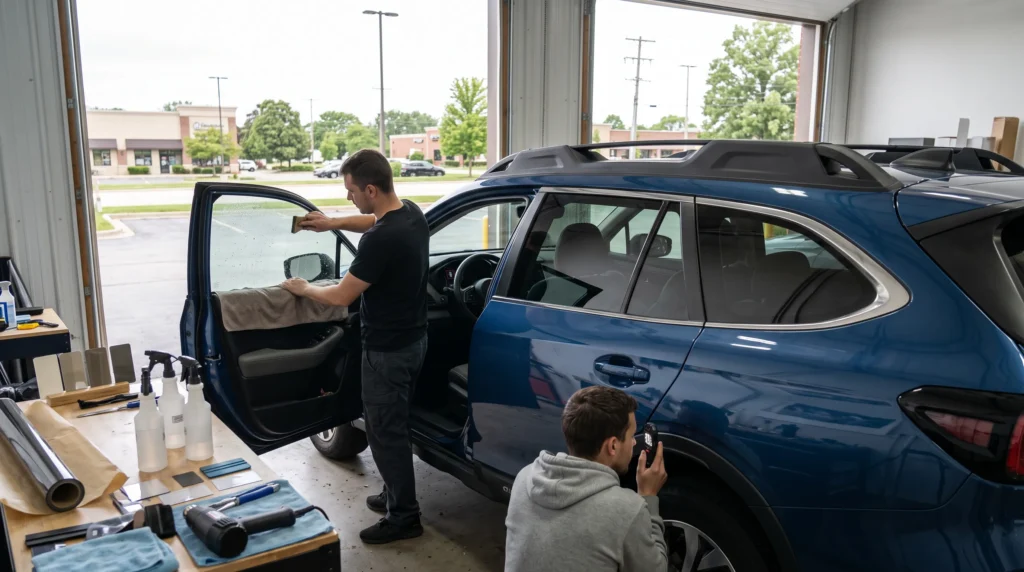
A better starting point is deciding what you want your tint to do.
What VLT Means
VLT stands for Visible Light Transmittance.
It measures how much visible light passes through filmed glass.
A higher number means more visible light passes through.
A lower number means less visible light passes through.
That produces a darker appearance.
Here is a simple way to compare common VLT levels:
| VLT | Appearance | General Privacy |
|---|---|---|
| 70% | Very light | Low |
| 50% | Light | Mild |
| 35% | Medium | Noticeable |
| 20% | Dark | Higher |
| 5% | Very dark | Very high in many daylight conditions |
These descriptions are visual guides, not legal recommendations.
The final light transmission of a vehicle window also depends on the glass underneath the film.
If factory glass already reduces some visible light, placing aftermarket film over it can produce a completed reading that differs from the percentage printed on the film.
That matters when Illinois law sets a minimum light-transmission level for a window.
Common Window Tint Shades
70% Window Tint
A 70% film is very light.
From outside, many people may barely notice that film is installed.
Light film can make sense when your goals center on heat control and UV reduction rather than a dark appearance.
With higher-performing ceramic products, light film can still reject a meaningful amount of solar energy.
50% Window Tint
A 50% tint creates a subtle shaded appearance.
It provides more privacy than clear glass without giving the vehicle a heavily tinted look.
This percentage also matters under Illinois law because one permitted front side-window configuration references at least 50% light transmittance.
35% Window Tint
A 35% tint creates a more noticeable change.
The cabin becomes harder to see from outside, especially during bright daytime conditions.
Illinois law also references at least 35% light transmittance for certain front side-window configurations, depending on the treatment of the glass behind the driver’s seat.
20% Window Tint
A 20% film is noticeably darker.
It can give rear seating areas much more privacy and create a darker exterior look.
Where the film is installed matters. A percentage that may work on one portion of a vehicle should not be assumed legal on every window.
5% Window Tint
A 5% film allows very little visible light to pass through.
It creates strong daytime privacy but can also make it harder to see through the glass in low-light conditions.
For a vehicle used every day, nighttime visibility should be considered before selecting such a dark shade.
Ceramic Window Tint Explained
Ceramic window tint uses ceramic particles within the film to manage solar and infrared energy.
As one manufacturer reference, 3M states that its Ceramic IR Series can reject up to 66% of total solar energy and provide up to 95% infrared rejection under the company’s stated testing method.
3M also lists up to 99.9% UV rejection for that film family and offers several VLT levels.
The film is metal-free, which means it is designed not to interfere with GPS, satellite radio, mobile devices, or similar electronics.
This combination can appeal to owners who want heat rejection without automatically choosing the darkest film.
Why Ceramic Film Can Work Well for Daily Use
Think about a vehicle that spends hours sitting outside.
When sunlight passes through the glass, solar energy enters the cabin.
A higher-performing ceramic film can reduce some of that incoming solar energy while still allowing the owner to choose from different visible-light levels.
That can make ceramic tint worth considering if you want:
- Heat rejection
- UV protection
- A lighter shade
- Less glare
- More privacy
- Non-metal construction
Film specifications vary by brand and series, so the figures for the exact product matter more than the word “ceramic” by itself.
Does Darker Tint Reject More Heat?
Not necessarily.
Tint darkness and heat rejection measure different things.
VLT measures visible light.
Heat-control figures may include:
- Total Solar Energy Rejection
- Infrared Energy Rejection
- Infrared Rejection
A darker film can reduce more visible light while a lighter film with different construction rejects more solar energy.
This is one reason comparing Window Tinting in Mundelein & Vernon Hills, IL by appearance alone can lead to the wrong choice.
If cabin comfort matters, ask about the performance figures for the exact film and shade.
A dark sample looks convincing in your hand. The technical data tells you what the film is designed to do with incoming solar energy.
Window Tint for Privacy
Privacy is one of the easiest tint benefits to notice.
Less visible light entering the cabin generally makes it harder to see inside from outside.
The effect still changes with lighting.
During a bright afternoon, exterior reflections can make tinted glass look darker. At night, an illuminated interior may become easier to see through.
Window tint should also not be treated as theft prevention.
Even dark glass does not guarantee that belongings inside cannot be seen.
Finding a Useful Privacy Level
For many daily-use vehicles, the best privacy level is not always the darkest possible shade.
A medium shade may give you the appearance you want while allowing better outward visibility after sunset.
Consider:
- How often you travel at night
- Whether rear-seat privacy matters
- Whether the vehicle has factory privacy glass
- Whether you want front and rear glass to look similar
- Your Illinois legal setup
These factors can point you toward a more practical shade.
Window Tint for Heat Rejection
Heat rejection depends heavily on film construction.
3M lists its Ceramic IR automotive film as rejecting up to 66% of total solar energy and up to 95% of infrared energy under its published specifications.
Those are maximum figures within the film series rather than a promise that every shade has identical measurements.
For this reason, ask about the exact shade you are considering.
A 70% version may have different figures from a 35% or 20% version in the same product family.
Here is what matters: choose your visible shade and heat-control performance together.
Do not assume one percentage tells you both.
Window Tint and UV Exposure
Automotive film can also reduce UV passing through treated glass.
3M states that its Ceramic IR Series rejects up to 99.9% of ultraviolet light.
UV reduction can also help reduce sun exposure reaching seats, dashboards, door panels, and other interior surfaces.
Tint cannot stop all interior aging. Heat, use, cleaning methods, materials, and time still affect the cabin.
UV rejection is one more reason some vehicle owners choose film even when they do not want extremely dark windows.
Illinois Window Tint Rules
Illinois window tint rules require more attention than choosing one percentage for every piece of glass.
Section 12-503 of the Illinois Vehicle Code sets rules for the windshield and windows directly beside the driver.
Illinois Windshield Tint
Illinois law generally does not permit tinted film across the full front windshield.
The statute permits nonreflective tinted film along the uppermost portion of the windshield as long as it does not extend more than six inches down from the top.
That windshield rule should be considered separately from side and rear window choices.
Front Side-Window Tint
Illinois law sets several conditions for the windows immediately beside the driver.
One permitted configuration allows nonreflective film with at least 50% light transmittance when none of the windows behind the driver’s seat are treated below 30% light transmittance. The statute includes a 5% variance for law-enforcement meter readings.
Another permitted configuration allows at least 35% light transmittance on the windows immediately beside the driver when none of the windows behind the driver’s seat are treated below 35% light transmittance, under the conditions stated in the statute.
The law also addresses certain vehicles with manufacturer-installed smoked or tinted glass behind the driver.
This is why a tint shop needs to look at the whole vehicle rather than treating the front doors as an isolated decision.
Illinois also has provisions involving qualifying medical conditions.
Window-tint laws can change, so the current statute should be checked when your vehicle is being planned. This section is general information, not legal advice.
Factory Privacy Glass and Aftermarket Tint
Many SUVs, trucks, vans, and crossovers come with darker rear glass from the factory.
That glass is often called privacy glass.
Factory privacy glass and aftermarket window film are different.
Privacy glass receives its darker appearance through the glass itself. Aftermarket tint adds a separate film layer to the glass.
This distinction matters for two reasons.
First, factory glass affects the amount of visible light already passing through the window.
Second, Illinois law includes language covering certain manufacturer-installed rear smoked or tinted glass.
If film is installed over factory privacy glass, the completed window can become much darker than the film percentage alone might suggest.
For vehicle owners researching Window Tinting in Mundelein & Vernon Hills, IL, having the existing glass checked before choosing film can prevent surprises.
Choosing Tint for a Daily-Use Vehicle
A vehicle that is used throughout the week needs to work under many lighting conditions.
You may leave home before sunrise, park outdoors during the afternoon, return after dark, or spend hours on the road during bright daylight.
Your tint should make sense across that full range.
If Heat Is Your Main Concern
Look at solar and infrared performance.
Do not choose only by VLT.
A lighter ceramic film may deliver the type of heat control you want while keeping the glass relatively light.
If Privacy Is Your Main Concern
Lower VLT generally creates more visual privacy.
Think about where privacy matters most and how dark you are comfortable going within the law.
If Nighttime Visibility Matters Most
Consider a lighter film.
A dark shade that feels comfortable in bright sunlight can feel very different on a poorly lit street after sunset.
If Appearance Matters Most
Look at the film on actual automotive glass when possible.
Two films with similar VLT figures can differ in tone, reflection, and overall appearance.
Window Tint for SUVs and Crossovers
SUVs and crossovers are common candidates for tint because many already have dark rear privacy glass.
Owners often want to make the front side windows visually closer to the rear.
Another owner may want film installed over the rear privacy glass for solar control rather than added darkness.
These are not the same goal.
If the rear already looks dark enough, a lighter high-performing film may be considered when solar control is the bigger concern.
The front windows must still fit the Illinois rules that apply to that vehicle configuration.
This is where measuring and planning become useful before the installation begins.
Tesla Window Tint
Tesla vehicles can benefit from the same careful film selection.
Large glass areas mean the film type, shade, and coverage deserve attention.
The Detail Dynasty offers dedicated Tesla Window Tint services.
Cybertruck owners can also review our Cybertruck Window Tint service.
Tesla owners interested in protecting other areas of the vehicle can also review:
The same Illinois tint rules still need to be considered when selecting shades for a Tesla.
Why Indoor Tint Installation Matters
Window tint installation requires clean glass and careful film placement.
Vehicle windows may include:
- Curved surfaces
- Defroster lines
- Tight edges
- Rubber seals
- Moving door glass
- Trim
- Existing factory tint
Dust, fibers, folds, poor trimming, or debris trapped between the glass and film can affect the finished appearance.
The Detail Dynasty performs automotive window tint work from our dedicated garage facility in Skokie, IL & Chicago’s North Shore.
An indoor setting gives our installers a controlled place to prepare the glass, position the film, finish edges, and inspect the work.
If you are planning several vehicle-protection services, you can also review our Paint Protection Film, Ceramic Coating, Paint Correction, Vinyl Wrap, and Auto Detailing pages.
Window Tinting in Mundelein & Vernon Hills, IL: What Should You Choose?
Start with how you use your vehicle.
If you want strong heat rejection, pay close attention to film construction and solar-performance data.
If privacy matters most, VLT becomes a larger part of the decision.
If you spend plenty of time behind the wheel at night, do not ignore outward visibility.
If your SUV already has factory privacy glass, account for that existing darkness before placing another film over it.
A good tint plan considers all of these pieces at once:
- Film construction
- VLT
- Heat rejection
- UV reduction
- Privacy
- Existing factory glass
- Nighttime visibility
- Illinois law
Window Tinting in Mundelein & Vernon Hills, IL does not need to mean choosing the darkest film available. A well-chosen setup can give you the appearance, privacy, and solar control you want while remaining practical for everyday use.
Schedule Window Tinting Near Mundelein and Vernon Hills
If you are comparing Window Tinting in Mundelein & Vernon Hills, IL, The Detail Dynasty can help you review tint shades and film choices for your vehicle.
Our automotive detailing and protection studio is based in Skokie, IL & Chicago’s North Shore.
Tell us what you own, whether it has factory privacy glass, how much tint you want, and whether your biggest concern is heat, glare, UV exposure, privacy, or appearance.
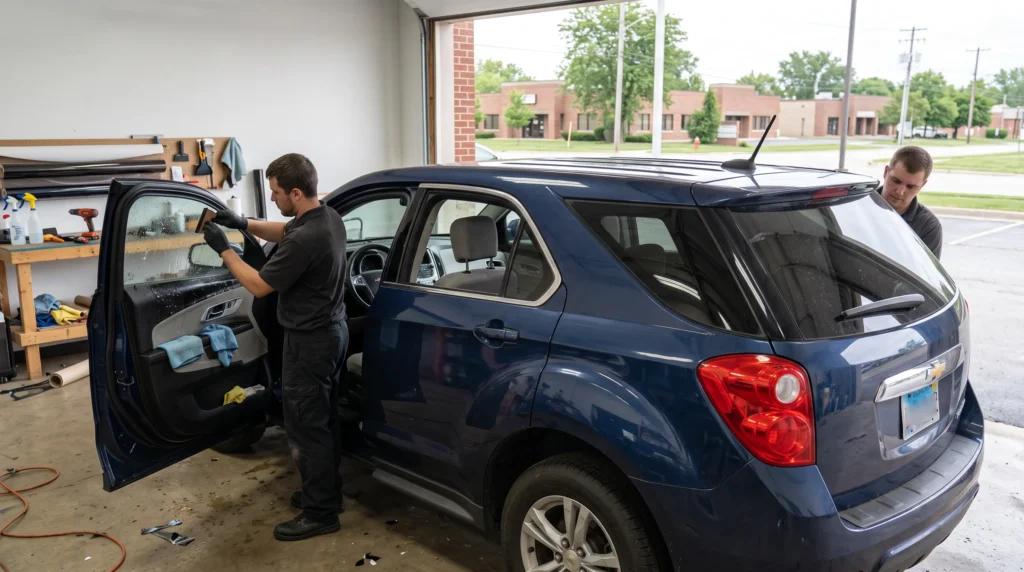
Call (773) 216-3104 or visit our contact page to schedule an appointment.
Frequently Asked Questions
1. What tint percentage is best for a daily-use vehicle?
There is no single percentage that fits every vehicle. A daily-use setup should account for daylight comfort, nighttime visibility, privacy, existing factory glass, and Illinois law. Common choices include lighter 50% and 35% films, while darker film may be used where the vehicle configuration and law permit it.
2. Does ceramic window tint reduce heat?
Ceramic film is designed to manage solar and infrared energy. 3M states that its Ceramic IR Series can reject up to 66% of total solar energy and provide up to 95% infrared rejection under its published testing conditions. Performance varies by film and shade.
3. Does darker tint always block more heat?
No. Darkness measures visible light transmission. Heat rejection is measured separately. A lighter ceramic film can provide stronger solar control than a darker film built with different materials.
4. Can I tint my entire windshield in Illinois?
Illinois generally does not permit tinted film across the full front windshield. Section 12-503 permits a nonreflective tint strip along the uppermost portion of the windshield, provided it does not extend more than six inches down from the top.
5. Is 35% tint legal on the front side windows in Illinois?
Illinois law permits at least 35% light transmittance on the windows immediately beside the driver under a setup where none of the windows behind the driver’s seat are treated below 35% light transmittance, subject to the conditions in Section 12-503. Vehicle configuration matters, so the whole tint setup should be checked.
6. Can window film be installed over factory privacy glass?
Yes, film can be installed over many factory-tinted windows, but the existing glass affects the finished darkness. If the rear glass is already dark, adding film can reduce visible light transmission further. Film may also be chosen for heat or UV control rather than extra darkness.
7. Where can I get Window Tinting near Mundelein and Vernon Hills, IL?
The Detail Dynasty provides professional Window Tint installation from our dedicated garage facility in Skokie, IL & Chicago’s North Shore. Vehicle owners from Mundelein and Vernon Hills can call (773) 216-3104 or visit our contact page to schedule an appointment.
Sources
- Illinois Compiled Statutes, 625 ILCS 5/12-503
Publisher: Illinois General Assembly
Publication Date: Current statute accessed October 2026
Used for: Illinois windshield tint restrictions, front side-window VLT rules, enforcement variance, factory rear-glass provisions, and medical-condition provisions. - 3M Automotive Window Film Ceramic IR Series
Publisher: 3M
Publication Date: Not listed
Used for: Ceramic film construction, VLT, solar-energy rejection, infrared rejection, UV rejection, privacy, and non-metal construction. - For Residents, Village of Mundelein
Publisher: Village of Mundelein
Publication Date: Not listed
Used for: Mundelein’s location within Lake County, Illinois. - Village of Vernon Hills Official Municipal Records
Publisher: Village of Vernon Hills
Publication Date: Current municipal material accessed October 2026
Used for: Vernon Hills’ identification as a municipality in Lake County, Illinois.
