
Window Tinting in Wheeling, IL can change far more than the look of your car. The right automotive window film can reduce the amount of solar heat entering the cabin, cut glare, block UV light, and add privacy. The hard part is choosing the right film and shade for your vehicle.
A darker tint does not always mean better heat rejection. Film construction matters just as much as visible darkness. Modern ceramic films can reject a large amount of solar energy while remaining much lighter than many drivers expect.
At The Detail Dynasty, we install automotive window tint from our dedicated garage facility in Skokie, IL & Chicago’s North Shore. If you drive from Wheeling and are trying to choose between film types, VLT percentages, and heat-rejection levels, this guide explains what those numbers mean before you schedule an installation.
Table of Contents
- What Is Automotive Window Tint?
- Why Wheeling Drivers Choose Window Tint
- Window Tint Film Types Explained
- What Window Tint Percentage Means
- Common Window Tint Shades
- Does Darker Tint Reject More Heat?
- How Heat Rejection Is Measured
- Ceramic Window Tint and Heat Rejection
- Window Tint and UV Protection
- Understanding Illinois Window Tint Laws
- Choosing Tint for a Daily Driver
- Window Tint for Tesla Vehicles
- Why Professional Tint Installation Matters
- Schedule Window Tinting Near Wheeling
- Frequently Asked Questions
What Is Automotive Window Tint?
Automotive window tint is a thin film applied to vehicle glass.
Depending on the film, it can change how much visible light, infrared energy, ultraviolet light, and total solar energy passes through the glass.
Tint can serve several purposes at once:
- Reduce solar heat entering the cabin
- Reduce glare from sunlight
- Block much of the sun’s UV radiation
- Add privacy
- Change the exterior appearance of the vehicle
- Make bright daytime driving more comfortable
Not every film performs the same way.
Two films that look equally dark can have very different heat-rejection numbers because the technology inside the film can differ.
That distinction matters when shopping for Window Tinting in Wheeling, IL.
If your biggest concern is cabin heat rather than darkness alone, film performance deserves as much attention as the shade.

You can also review our Window Tint service to learn more about automotive tint installation through The Detail Dynasty.
Why Wheeling Drivers Choose Window Tint
Drivers around Wheeling spend time on suburban streets, highways, parking lots, and stop-and-go traffic throughout the Chicago area.
When direct sunlight enters a vehicle through untreated glass, the cabin can become uncomfortable. Bright sunlight can also create glare across the windshield, side glass, mirrors, screens, and interior surfaces.
Window film can help manage some of that solar exposure.
3M states that some of its automotive films reject solar energy and infrared radiation while also blocking high percentages of UV light. Performance depends on the film series and shade selected.
For someone researching Window Tinting in Wheeling, IL, it helps to separate three things:
- Film technology
- Visible darkness
- Heat rejection
They are connected, but they are not the same measurement.
Window Tint Film Types Explained
Automotive tint is available in several film constructions. The names used by manufacturers can differ, so the exact specifications of a film matter more than a broad category name.
Dyed Window Tint
Dyed films use color within the film construction to reduce visible light and create a darker appearance.
Drivers often associate this type of tint with:
- Added privacy
- Glare reduction
- A darker exterior appearance
- Entry-level tint applications
Heat performance varies by product.
Choosing film only because it looks dark can be misleading if cabin heat reduction is one of your main goals.
Metallized Window Tint
Some automotive films use metallic components to reflect portions of incoming solar energy.
Metal-containing films can provide heat control, but film construction can affect electronic compatibility.
3M lists both metallized and non-metallized automotive films in its product range. Its non-metallized films are marketed as being designed not to interfere with mobile devices, GPS, satellite radio, and similar electronics.
That can matter in modern vehicles filled with wireless technology.
Ceramic Window Tint
Ceramic window tint uses microscopic ceramic materials rather than relying on a metal layer for its heat-control properties.
One major reason drivers consider ceramic film is that strong heat rejection does not require extremely dark glass.
3M’s Ceramic IR automotive film uses nano-ceramic technology and is offered in several tint levels. According to 3M, the series can reject up to 66% of total solar energy and up to 95% of infrared energy under the manufacturer’s stated test conditions.
The real question is not simply, “How dark is it?”
A better question is, “How does this exact film perform at the shade I want?”
What Window Tint Percentage Means
Window tint percentages usually refer to Visible Light Transmittance, or VLT.
VLT tells you how much visible light passes through the glass and film.
A higher VLT number means more visible light passes through.
A lower VLT number means less visible light passes through.
Here is a simple comparison:
| VLT | General Appearance |
|---|---|
| 70% | Very light |
| 50% | Light |
| 35% | Medium |
| 20% | Dark |
| 5% | Very dark |
These descriptions are only visual guides.
The finished measurement can depend on both the film and the factory glass underneath it. Automotive glass may already reduce some visible light before any aftermarket film is installed.
That is also why tint legality should be based on measured light transmission and current Illinois rules rather than the film roll label alone.
Common Window Tint Shades
70% Window Tint
A 70% film is very light.
Many people would not immediately describe it as dark tint. High-performing films at lighter VLT levels can still provide meaningful solar-energy control.
This is a good illustration of why shade and heat rejection should not be treated as the same thing.
50% Window Tint
A 50% film allows about half of visible light through the film under the film’s rated conditions.
It provides a noticeable but relatively light appearance.
Under Illinois law, 50% VLT also appears in certain permitted front-side-window combinations, depending on the treatment of glass behind the driver’s seat. More on that below.
35% Window Tint
A 35% shade creates a more noticeable tinted appearance while still allowing a fair amount of visible light into the cabin.
Illinois law also references 35% light transmittance in certain combinations involving windows immediately next to the driver and the windows behind the driver.
20% Window Tint
A 20% film creates a considerably darker appearance.
Before choosing this level, where the film will be installed matters.
Illinois does not simply apply one legal VLT number to every piece of vehicle glass. The rules vary by window location and how other windows on the vehicle are treated.
5% Window Tint
A 5% shade lets very little visible light pass through the film.
It creates a very dark appearance and can greatly reduce visibility through tinted glass compared with lighter shades.
A dark shade should never be selected based only on appearance. Nighttime visibility and applicable Illinois regulations need to be considered.
Does Darker Tint Reject More Heat?
Not necessarily.
This is one of the biggest misunderstandings surrounding automotive window tint.
A dark film may reduce a lot of visible light while another, lighter film may provide better solar heat control.
3M illustrates this difference with its automotive film lineup. The company’s Crystalline Series is designed to reject high levels of solar and infrared energy without requiring an extremely dark appearance. Its Ceramic IR Series also provides heat rejection across multiple VLT choices.
Now here’s the thing: visible darkness is only one specification.
If heat reduction matters to you, pay attention to measurements such as:
- VLT
- TSER
- IRR
- IRER
- UV rejection
Those figures tell you far more about the film than the shade name by itself.
How Heat Rejection Is Measured
Tint specifications can look confusing because several percentages may appear on the same data sheet.
Here is what the most common measurements mean.
VLT: Visible Light Transmittance
VLT measures the percentage of visible light passing through the filmed glass.
Higher VLT means lighter glass.
Lower VLT means darker glass.
TSER: Total Solar Energy Rejection
TSER means Total Solar Energy Rejection.
3M defines TSER as the percentage of total solar energy rejected by filmed glass. A higher TSER value means less solar energy is transmitted through the glass under the stated test setup.
For drivers concerned about how much solar energy enters the cabin, TSER is a useful number to compare.
IRR: Infrared Rejection
IRR measures infrared rejection across a stated portion of the infrared spectrum.
The measurement range matters.
3M notes that its IRR figure measures solar infrared energy within the 900 to 1,000 nanometer wavelength range.
Two manufacturers may present infrared numbers differently, so comparing a headline IR percentage without reading how it was measured can give an incomplete picture.
IRER: Infrared Energy Rejection
IRER uses a broader infrared wavelength range.
3M defines its IRER measurement across 780 to 2,500 nanometers and says the figure accounts for transmitted and absorbed infrared energy that can be reradiated into the vehicle.
Here’s what matters: look at the full performance data for the exact film rather than relying on one large percentage printed on marketing material.
Ceramic Window Tint and Heat Rejection
Ceramic tint is popular with drivers whose goals include comfort and heat control.
3M says its Ceramic IR Series can reject up to 66% of total solar energy and up to 95% of infrared energy, depending on the film version and test measurement. It is also metal-free.
The same product family comes in multiple VLT levels.
That means drivers do not have to assume they need the darkest possible film to get strong heat performance.
This can be useful for someone who wants:
- Heat rejection
- A lighter appearance
- Better daytime visibility than a very dark shade
- Reduced glare
- UV protection
- Film without a metallic construction
The exact performance depends on the film installed and the glass beneath it.
When comparing Window Tinting in Wheeling, IL, ask about the specifications for the exact film and shade being proposed for your vehicle.
Window Tint and UV Protection
Automotive window film can also reduce UV exposure through vehicle glass.
3M says its Ceramic IR Series rejects up to 99.9% of ultraviolet light, depending on the specific film.
UV exposure is also associated with fading and deterioration of vehicle fabrics and leather. 3M identifies UV protection as one reason automotive film can help protect interior materials.
That makes tint relevant even for drivers who are not looking for extremely dark windows.
Heat control, UV reduction, glare control, and privacy can all be addressed at different tint levels.
Understanding Illinois Window Tint Laws
Illinois window-tint rules are more detailed than a single legal tint percentage.
Under the current Illinois Vehicle Code, Section 12-503, aftermarket tint generally may not cover the full front windshield. A nonreflective strip is permitted along the upper portion of the windshield as long as it does not extend more than six inches down from the top.
The law also sets conditions for the windows immediately next to the driver.
The statute provides, among other combinations:
- If the rear windows are not treated below 30% light transmittance, the windows directly next to the driver may use nonreflective film allowing at least 50% light transmittance, subject to the statute’s stated 5% enforcement variance.
- If the rear windows are not treated below 35% light transmittance, the front side windows may allow at least 35% light transmittance, also subject to the stated 5% enforcement variance.
- Vehicles with manufacturer-installed smoked or tinted rear glass have another rule allowing at least 50% light transmittance on the windows directly next to the driver, subject to the conditions in the statute.
Illinois also provides certain medical-condition provisions within the statute.
Because vehicle type, factory glass, window location, and existing tint can affect what is permitted, the safest approach is to review the current Illinois Vehicle Code for your vehicle before choosing a shade.
Laws can change, and this article is informational rather than legal advice.
Choosing Tint for a Daily Driver
There is no single tint shade that fits every driver.
Start by thinking about what bothers you most inside the vehicle.
If Cabin Heat Is Your Main Concern
Compare the film’s TSER and infrared performance rather than automatically choosing the darkest film.
A high-performing ceramic film may give you the heat control you are looking for without going extremely dark.
If Privacy Is Your Main Concern
Visible darkness becomes more relevant.
Lower VLT allows less visible light through and makes the cabin harder to see from outside.
Illinois rules still determine how dark certain windows can legally be.
If Glare Bothers You
Reducing visible light can help cut glare, but going too dark can also affect how well you see through the glass when outside light levels drop.
The best balance depends on the driver’s preferences and where the film will be installed.
If You Want a Factory-Like Appearance
A lighter or medium tint can change the look without giving the vehicle a very dark appearance.
Film color also matters. Some tint products have a neutral charcoal appearance, while others can appear slightly different depending on construction and lighting.
Window Tint for Tesla Vehicles
Tesla vehicles have large glass areas, which can make window-film selection an important part of cabin comfort and appearance.
The Detail Dynasty offers dedicated Tesla Window Tint services for Tesla owners.
Cybertruck owners can also review our Cybertruck Window Tint service.
When tinting any Tesla, film selection should take the vehicle’s glass configuration into account rather than assuming the same shade and coverage plan works for every model.
Tesla owners interested in more exterior protection can also review our Tesla Paint Protection Film and Tesla Ceramic Coating services.
Why Professional Tint Installation Matters
Window film needs to be installed on carefully prepared glass.
Dust, hair, debris, poor trimming, creases, and trapped contamination can affect how the finished tint looks.
Curved rear glass and complex window shapes also require careful film handling.
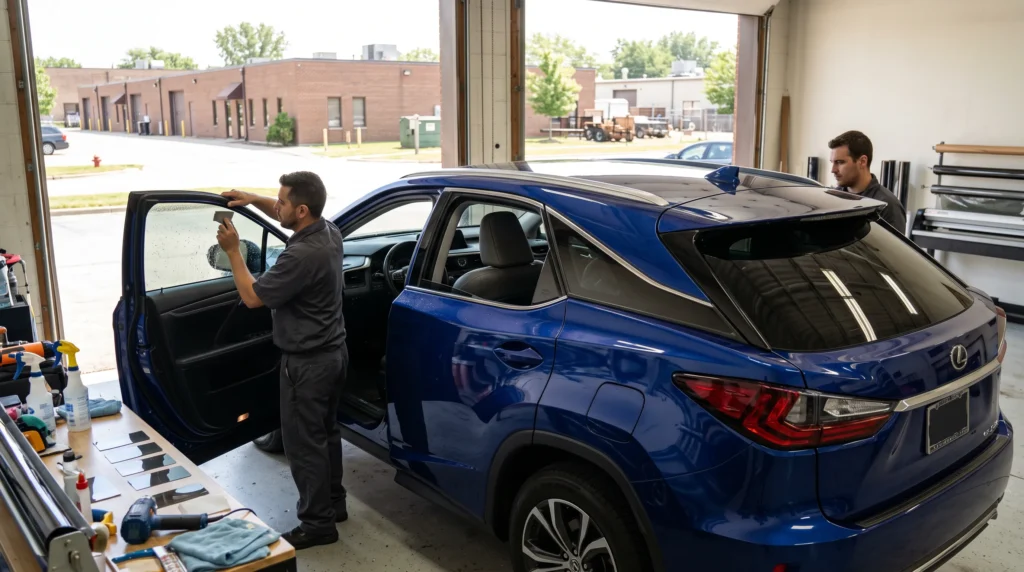
At The Detail Dynasty, tint installation takes place at our dedicated garage facility in Skokie, IL & Chicago’s North Shore.
A controlled shop environment gives the installer a cleaner place to prepare glass and apply automotive film than an uncontrolled outdoor setting.
Professional installation also gives you a chance to talk through:
- Tint shade
- Film type
- Heat performance
- Privacy
- Factory glass
- Vehicle use
- Illinois tint requirements
- Coverage options
If you are also planning other exterior work, The Detail Dynasty offers related vehicle services including Paint Protection Film, Ceramic Coating, Vinyl Wrap, Paint Correction, and Auto Detailing.
Window Tinting in Wheeling, IL: What Should You Choose?
The right window tint comes down to what you want the film to do.
If your goal is mostly appearance, shade may sit near the top of your list.
If your goal is cabin comfort, compare solar-energy and infrared measurements.
If you want both, look for a film that combines the appearance you prefer with the heat performance you want.
Keep Illinois law in the discussion from the beginning.
A 20% film, 35% film, 50% film, and 70% film can look very different, but darkness alone does not tell you how well each film rejects heat.
That is why choosing Window Tinting in Wheeling, IL should involve more than pointing at a shade sample.
Look at the film construction. Look at VLT. Look at TSER. Look at its infrared measurements. Think about nighttime visibility. Then make sure the planned installation fits the current Illinois rules for your vehicle and window locations.
Schedule Window Tinting Near Wheeling
If you are comparing film types and shades for Window Tinting in Wheeling, IL, The Detail Dynasty can help you review the available choices for your vehicle.
Our automotive detailing and protection studio is based in Skokie, IL & Chicago’s North Shore.
Tell us what you drive and what matters most to you, whether that is heat rejection, privacy, glare reduction, appearance, or a mix of those goals.
Call (773) 216-3104 or visit our contact page to schedule an appointment.
Frequently Asked Questions
1. What window tint is best for heat rejection?
Heat rejection depends on film construction and its measured performance rather than darkness alone. Ceramic and multilayer films can provide strong solar-energy and infrared rejection at lighter VLT levels. Compare TSER, IRR, IRER, and VLT specifications for the exact film being installed.
2. Does 5% tint reject more heat than 35% tint?
Not automatically. A darker film blocks more visible light, but a lighter film with stronger solar-energy or infrared performance can reject more heat than a darker film with weaker heat-control properties.
3. What does 35% window tint mean?
A 35% VLT rating means the film is rated to allow about 35% of visible light through under its specified testing conditions. The finished vehicle glass measurement can differ because factory glass already has its own light-transmission level.
4. Is ceramic window tint worth considering for a daily driver?
Ceramic tint can make sense for drivers interested in heat rejection without relying on metal-based film or extremely dark glass. Check the specifications of the exact ceramic film because performance varies between products.
5. Can I tint my windshield in Illinois?
Illinois law generally prohibits tint across the full front windshield. The Illinois Vehicle Code permits a nonreflective tint strip along the uppermost portion of the windshield that does not extend more than six inches from the top. Always check the current statute before installation.
6. What tint percentage is legal in Illinois?
Illinois does not use one simple percentage for every vehicle window. The rules depend on window location, rear-window treatment, and whether the rear glass was tinted by the manufacturer. Section 12-503 of the Illinois Vehicle Code should be reviewed for the exact vehicle configuration.
7. Where can I get Window Tinting near Wheeling, IL?
The Detail Dynasty provides professional Window Tint installation from our dedicated garage facility in Skokie, IL & Chicago’s North Shore. Wheeling vehicle owners can call (773) 216-3104 or use our contact page to schedule an appointment.
Sources
- 3M Automotive Window Film Ceramic IR Series
Publisher: 3M
Publication Date: Not listed
Used for: Ceramic film construction, total solar-energy rejection, infrared rejection, UV rejection, tint levels, and metal-free design. - 3M Light, Sun & Heat Control Films for Post Factory Installations
Publisher: 3M
Publication Date: Not listed
Used for: VLT, TSER, IRR, IRER terminology and differences among automotive film technologies. - 3M Automotive Window Film Color Stable Series
Publisher: 3M
Publication Date: Not listed
Used for: VLT, infrared measurement terminology, ceramic nanoparticle construction, and non-metal film information. - Illinois Compiled Statutes, 625 ILCS 5/12-503
Publisher: Illinois General Assembly
Publication Date: Current statute accessed October 2026
Used for: Illinois windshield tint limits, front-side-window light-transmission rules, enforcement variance, factory-tinted rear-glass provisions, and medical-condition provisions.
